REVIEW · KUSADASI
Ephesus Small Group Day Tour from Kusadasi
Book on Viator →Operated by Alaturca Ephesus · Bookable on Viator
Ephesus at 8:30am hits different. This small-group day tour from Kusadasi strings together major UNESCO ruins, the House of the Virgin Mary, and a quick dose of Selçuk architecture, with hotel pickup and entrance fees included. The plan is packed, but smart: you see the big monuments, plus the everyday Roman details that make the ruins feel real.
I like that the group is capped at 15 people, so the guide can actually keep things moving without losing half the group. I also like how the Ephesus walk is built around the places you’ll want to remember most: the Celsus Library, the Great Theatre, and the Odeion—plus a stop at Isabey Mosque after lunch.
One consideration: depending on your day, you may spend time at craft-shop style stops (like carpet or leather demonstrations). If you hate shopping pressure, ask ahead and set your boundaries before you get there.
In This Review
- Quick take: what makes this tour work
- Getting to Ephesus before the day turns loud
- Meryemana (Virgin Mary’s House): a calm pause with a story
- Ancient Ephesus: why this place feels bigger than it is
- The Odeon and Hadrian’s Temple: entertainment plus imperial pride
- Celsus Library and the Great Theatre: the best photo stops aren’t random
- Temple of Artemis: a Seven Wonders stop with one surviving pillar
- Isabey Mosque in Selçuk: Seljuk style in a short visit
- Lunch buffet: one included meal that actually matters
- Price and value: what $174.60 covers
- Craft-shop stops and sales pressure: how to plan around it
- Who this tour is best for
- Should you book the Ephesus small group day tour from Kusadasi?
- FAQ
- How long is the Ephesus small group day tour from Kusadasi?
- What time does the tour start?
- Is hotel pickup and drop-off included?
- What sights are included besides Ephesus?
- Is lunch included?
- Are entrance fees included?
- How big is the group?
- Is the tour offered in English?
- Do I need a printed ticket?
- What is the cancellation policy?
Quick take: what makes this tour work
- Small group (max 15): easier listening, better pace, less chaos.
- Big-ticket sites with fees included: Ephesus monuments, Mary’s House, and Isabey Mosque are covered.
- Lunch buffet break: you’re not stuck snacking your way through the day.
- Early start from Kusadasi: pickup usually falls between 8:00 and 9:00am, with a start time around 8:30am.
- Day is long and full: about 7 hours, with several short stops instead of long hangs.
- Possible craft stops: you may encounter sales-oriented workshops along the way.
Getting to Ephesus before the day turns loud
This tour starts early, with a pickup from your central Kusadasi hotel that typically runs from 8:00am to 9:00am. Your listed start time is 8:30am, but the exact pickup window can shift based on how many people the operator is collecting that morning. The key practical step: contact the pickup operator to confirm your final pickup time, since it’s decided the day before.
Once you’re on the air-conditioned coach, the guide uses the drive to set context. You’ll hear how Ephesus was a major Roman center in Asia Minor, peaking roughly between 1 AD and 2 AD, and why that mattered for daily life—trade, politics, religion, and public entertainment.
For planning your day, think of it like this: the morning is for the heavy history, and the afternoon mixes faith sites with a shorter architectural stop. It’s a good structure if you want “see a lot” without being stuck in nonstop bus time.
If you're still narrowing it down, here are other tours in Kusadasi we've reviewed.

Meryemana (Virgin Mary’s House): a calm pause with a story
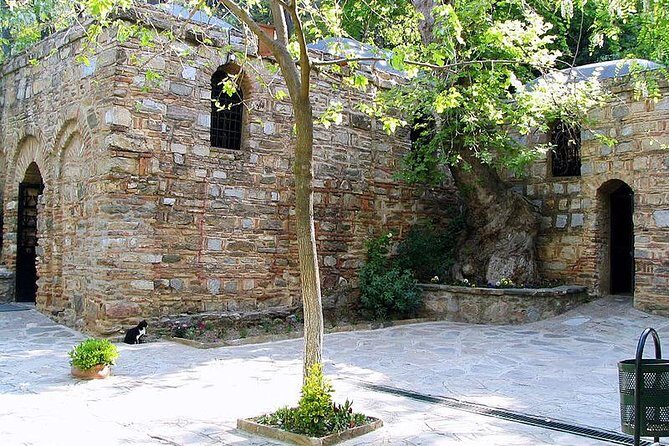
The first stop is Meryemana, also called the House of the Virgin Mary (Meryem Ana Evi). The idea here is simple: this is a place associated with the belief that Mary spent her last years in Ephesus, alongside St. John. Whether you approach it as faith, history, or both, the setting adds meaning—it’s on Bulbul Mountain, away from the big ruin crowds.
You’ll have about 45 minutes at this stop, with admission included. Inside, you’ll see the shrine of the Virgin Mary, and the site includes a spring that’s described as having healing qualities. That means the visit isn’t just “look and move on.” It’s meant to feel like a pause in the schedule.
Practical tip: dress for sun and steps. Even when a place is “just a short visit,” the ground underfoot and the uphill feel can surprise you. Comfortable shoes matter more here than at a level promenade.
Ancient Ephesus: why this place feels bigger than it is
After Meryemana, the tour focuses on the main event: the Ancient City of Ephesus, one of Turkey’s best-preserved ruin sites. The time budget is around 2 hours, and that’s right for this kind of UNESCO walking tour. You’re not going to “complete” Ephesus like a textbook. You’ll get the high-impact route that helps you understand what you’re seeing.
Ephesus was a trading hub and a religious center. One detail worth keeping in mind as you walk: it was strongly tied to the cult of Cybele, the Anatolian fertility goddess. That helps explain why so many structures feel linked to civic identity, not just worship.
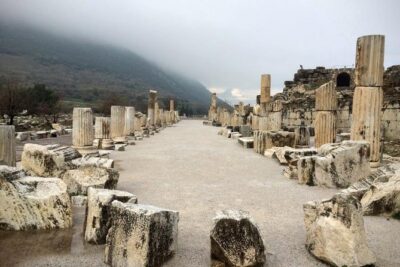
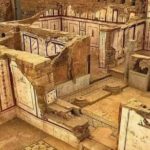
The guide-led route covers the core “Roman city functions,” so you’re not only staring at columns. You’ll see public spaces like the Agora, walk the Arcadian Way with its grand marble-paved feel, and also get glimpses into daily life through areas like the Public Latrines and Roman Baths. Those are the stops that often turn ruins into a story you can picture.
A realistic drawback: 2 hours inside a huge site can feel like fast food for history. If you have a slow-travel mindset, plan to let the guide do the heavy lifting and just stop longer when you feel drawn in.
The Odeon and Hadrian’s Temple: entertainment plus imperial pride
Ephesus wasn’t only religion and commerce. It was also showtime and status. That’s where two smaller stops help your understanding a lot.
First comes the Odeion, a small semi-circular theater from the 2nd century AD, financed by Publius Vedius Antonius and his wife Flavia Paiana. This matters because it shows how funding for public entertainment wasn’t random—it came from people invested in public life. The Odeion was used for political meetings, social events, concerts, and performances.
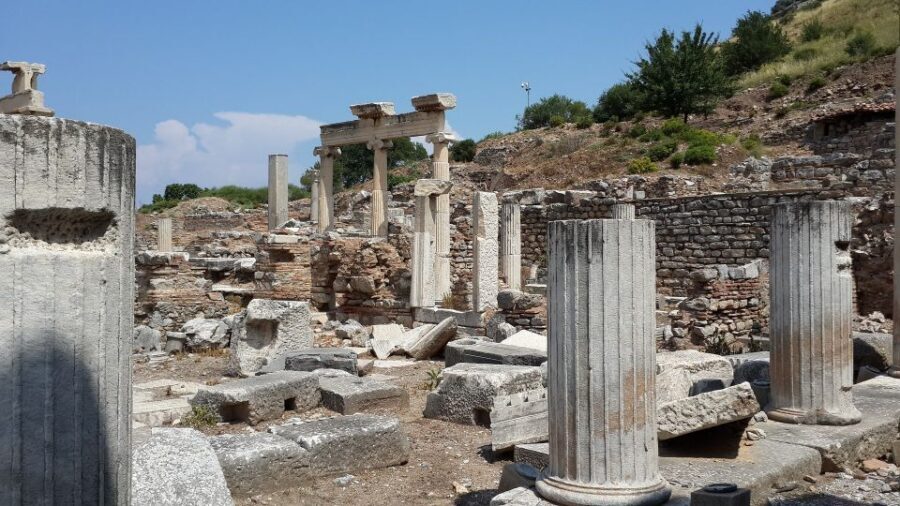
Then you’ll see the Temple of Hadrian, one of the best-preserved structures on Curetes Street. It was built in the beginning of the 2nd century AD by P. Quintilius, tied to Hadrian’s visit to the city from Athens. This is a good “pause and look” moment, because the architecture is a clear example of how Rome branded cities: bring the emperor into the stone, and make loyalty visible.
Timing is tight—around 15 minutes at each stop—so keep your expectations aligned. This is a guided highlight walk, not a slow architecture study.
Celsus Library and the Great Theatre: the best photo stops aren’t random
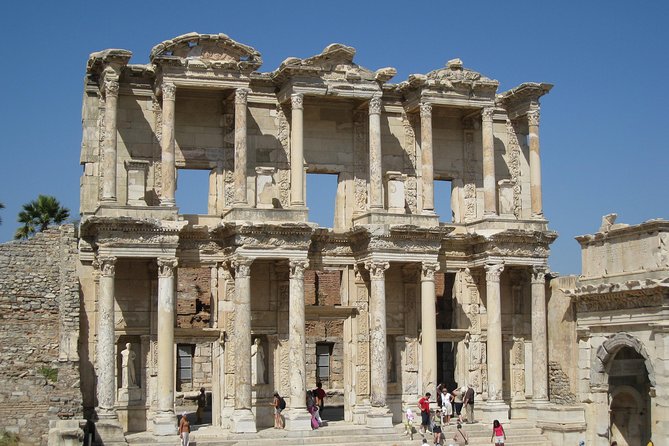
Two names you’ll hear constantly at Ephesus are Celsus and the theatre. This tour gives you both, and the key is that the guide explains what you’re looking at.
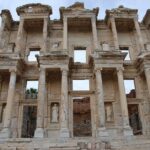
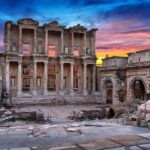
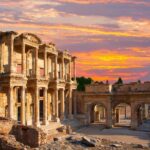
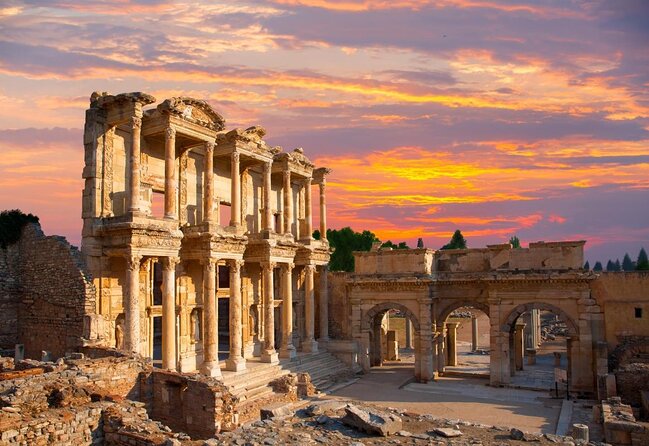
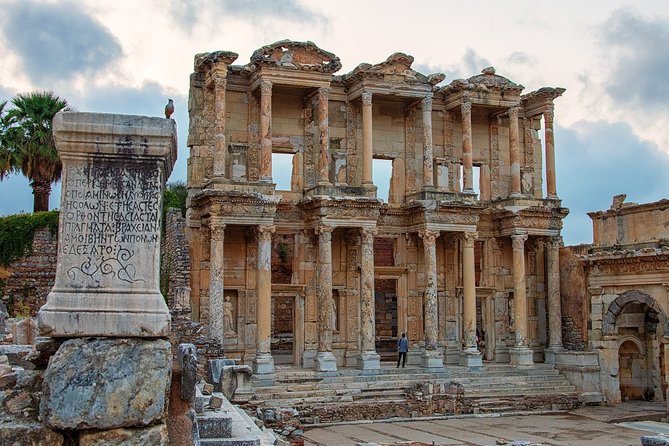
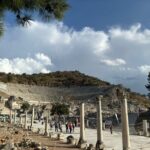
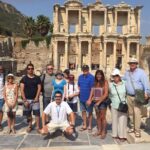
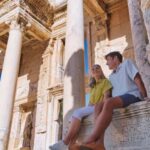
The Bibliothèque de Celsus (Celsus Library) is dated to the early 2nd century AD and is the best-known monument in Ephesus. It’s been extensively restored, and that restoration can be part of the experience: it helps you see the design intent. The facade is convex and the middle columns and capitals are larger than the ends, which creates a visual illusion—so what looks “bigger than it is” is actually an optical trick.
In the facade niches, you’ll see replicas of the Four Virtues: Sophia (Wisdom), Arete (Goodness), Ennoia (Thought), and Episteme (Knowledge). That detail is useful because it turns the library from a decorative front into a statement about values the city wanted to display.
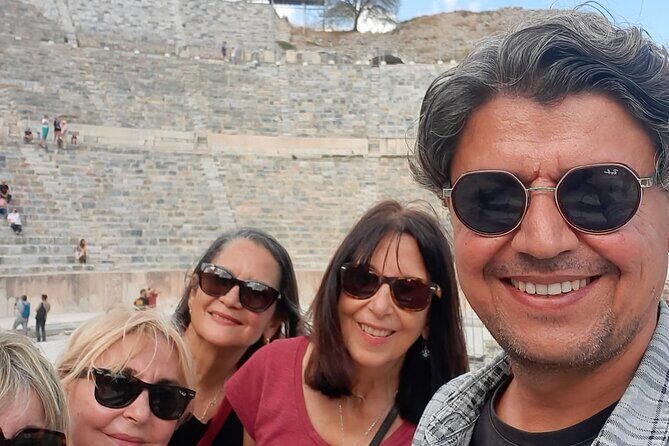
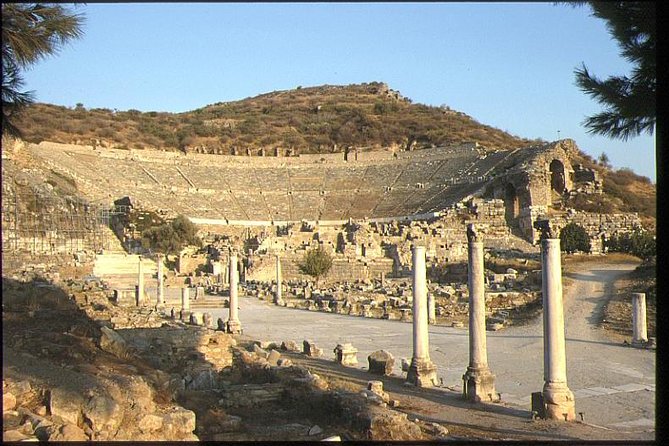
Next is the Great Theatre, with marble construction and a capacity around 24,000 spectators. It’s not just impressive in size—this is where Roman civic life shows up. You’re walking into a space designed for public spectacle on a scale that’s hard to grasp until you stand in it. The tour usually gives about 20 minutes here, which is enough time to orient yourself and appreciate the scale without feeling rushed through every angle.
Tip for the theatre: take a minute to look at the stage area and seating tiers. Even if you don’t remember every detail, you’ll remember the feeling of the space.

Temple of Artemis: a Seven Wonders stop with one surviving pillar
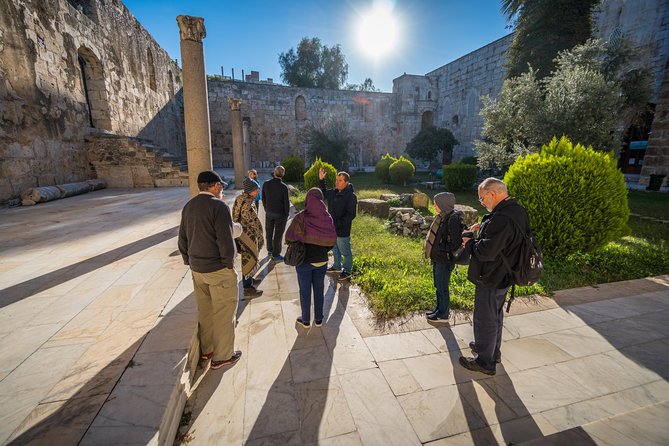
For many people, the Temple of Artemis is the “wait, what’s left?” moment of the day. This site, called Artemision, was once one of the Seven Wonders of the Ancient World. Today, you’ll find an empty-field feel with just a lone reconstructed pillar remaining—though it’s enough to connect the dot between what used to be immense and what survives.
The tour gives about 20 minutes here, which is reasonable. The important part is your context: at its zenith, the temple counted 127 columns. Knowing that number makes the single pillar hit harder, in a good way. You’re not just seeing a leftover object; you’re seeing evidence of time’s power.
If you’re the type who likes “big reputation, small remains,” this stop will satisfy you. If you want more intact ruins, temper expectations and focus on the story.
Isabey Mosque in Selçuk: Seljuk style in a short visit
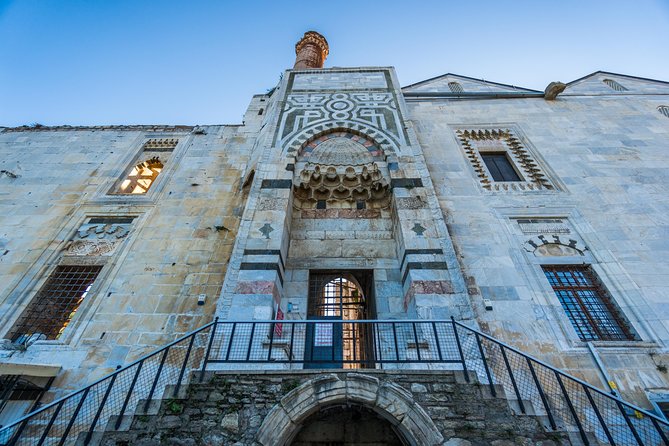
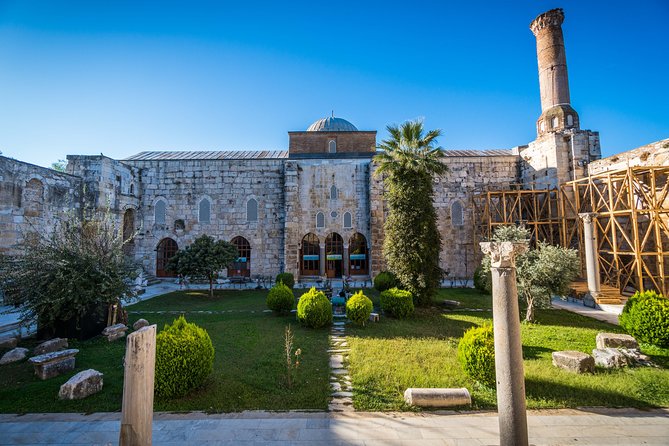
After lunch, the tour continues to nearby Selçuk for Isabey Mosque, built in a post-Seljuk/pre-Ottoman transitional style. A date in Arabic above the entrance states it was built in 1375, which helps anchor the stop historically.
This is one of the quieter moments of the day, with around 20 minutes on-site. That’s enough to see the architecture and understand why this area matters beyond Roman Ephesus. It’s a reminder that this region didn’t stop being important after antiquity.
Practical note: mosque stops can involve clothing norms. The tour data doesn’t specify dress rules, so check your own comfort level and carry a light layer or scarf if you think it might help.
Lunch buffet: one included meal that actually matters
Lunch is included, typically as a buffet at a local restaurant. You’ll want this break. With a day that combines a mountain-side faith stop, a big archaeological walk, and multiple quick monument visits, a proper meal is part of making the day enjoyable rather than just “efficient.”
The tour lists drinks as not included, so if you drink soda, tea, or water, budget for it on your own. My advice: choose water if you can, pace it, and don’t let the mid-day meal push you into losing time for the final stops.
Price and value: what $174.60 covers
At $174.60 per person, this isn’t a “cheap” excursion—but it’s also not just a bus ticket. Your included items are the big value drivers:
- Hotel/port pickup and drop-off
- An air-conditioned vehicle
- A local guide
- Entrance fees and taxes
- A buffet lunch
- A mobile ticket
Those additions matter because Ephesus entrances and a guided route cost real money on their own. Also, the guided pacing is the benefit of a day tour: you’re guided through the must-see parts so you spend less time trying to map the site yourself.
If you prefer DIY, you might find cheaper options. But if you’d rather show up, walk the right route, and leave the planning for someone else, the pricing makes sense.
Craft-shop stops and sales pressure: how to plan around it
Here’s the one area to take seriously before you book. Some versions of this type of Ephesus day run include stops connected to local crafts—commonly carpet and leather showrooms or demonstrations. The tour data you have doesn’t list which shops, but there is enough signal to treat this as a real possibility.
If you dislike sales pitches, do two things:
- Ask your operator ahead of time whether your day includes carpet or leather stops and how long they take.
- Decide your boundary early. You can usually be polite and say no. It’s harder to do later when you’ve already invested time in the showroom.
Think of these stops as optional-energy drains. The real core value is Ephesus and the Virgin Mary’s House. Everything else should support that, not steal it.
Who this tour is best for
This tour fits you best if you want a guided, high-coverage day with major landmarks and included costs. It’s also a good match if you like structure—short stops, clear priorities, and a guide who explains what you’re seeing as you go.
It’s less ideal if you:
- want long, slow museum-style time in fewer places
- hate any shopping stop, even brief ones
- need lots of downtime between segments
The good news: with the max 15 group size, you have a better chance of keeping the day enjoyable than on bigger buses.
Should you book the Ephesus small group day tour from Kusadasi?
I’d book it if your priority is Ephesus highlights done with minimal hassle, plus a meaningful stop at Meryemana and a short architectural add-on in Selçuk. The included lunch and entrance fees help the day feel “paid for” in advance, and the small group size keeps the experience from turning into a stampede.
I wouldn’t book it without one quick check if shopping stops make you cranky. Ask whether carpet or leather showrooms are part of your itinerary, and set your expectations for how much time you’ll spend inside them. If the answer is yes and you know you’ll feel pressured, you may prefer a tour that keeps the day strictly on ruins and religious sites.
If you do book, come with comfortable shoes, a bit of patience for a packed schedule, and a camera ready for the Celsus Library facade and the scale of the Great Theatre.
FAQ
How long is the Ephesus small group day tour from Kusadasi?
It’s about 7 hours.
What time does the tour start?
The listed start time is 8:30am, but your hotel pickup time can vary. Pickup is usually between 8:00am and 9:00am in Kusadasi.
Is hotel pickup and drop-off included?
Yes. Hotel pickup and drop-off are included.
What sights are included besides Ephesus?
You’ll visit Meryemana (House of the Virgin Mary), Isabey Mosque, and you also stop at the Temple of Artemis.
Is lunch included?
Yes. You get a lunch buffet included. Drinks are not included.
Are entrance fees included?
Yes. The tour includes entrance fees and taxes.
How big is the group?
The tour is limited to a maximum of 15 travelers.
Is the tour offered in English?
Yes. It’s offered in English.
Do I need a printed ticket?
No. You’ll receive a mobile ticket.
What is the cancellation policy?
You can cancel for a full refund up to 24 hours in advance of the experience start time. If you cancel less than 24 hours before, the amount won’t be refunded.