REVIEW · KUSADASI
Private Tour: Ephesus Day Trip from Kusadasi with Lunch
Book on Viator →Operated by Neon Tours · Bookable on Viator
Ephesus is better with a private guide. This day trip turns big-name ruins into a clear, walkable route—complete with hotel pickup, a real sense of the city’s layers, and time at the places you came for, like the Library of Celsus and the Great Theatre.
I especially liked how the day mixes Roman city sights with Christian-era meaning, so you see why Ephesus mattered to more than one audience. I also like that the pacing builds in breaks: lunch lands mid-day, and later you shift from street-level ruins to quieter stops like Meryemana.
The one possible drawback is time. The full outing is about 8 hours, and if you want long wandering time at every site, you may feel a bit “scheduled,” especially around the more religious stops.
In This Review
- Key things I’d watch for on this Ephesus day trip
- Private means you see the “why,” not just the “what”
- Morning logistics: 9:00 am pickup and the ride into history
- Ancient Ephesus: the 2-hour core that hits the big monuments
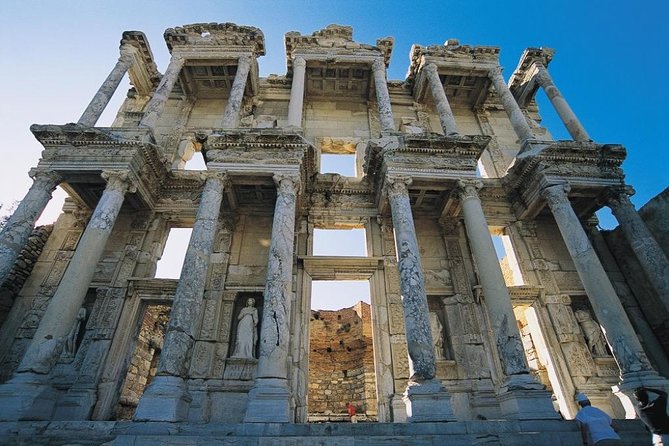
- Library of Celsus and the Great Theatre: why these are the headliners
- Fountains, temples, and baths: seeing daily life in Roman Ephesus
- A surprisingly spiritual second half: Meryemana (Virgin Mary’s House)
- Temple of Artemis plus extra theatre stops: short breaks, good variety
- Lunch on the route: traditional Turkish food, timed right
- The guide makes or breaks Ephesus (and this tour tends to nail it)
- Price and value: what $285 per person really buys you
- Fitness, heat, and footwear: plan for comfortable walking
- Who should book this Ephesus private tour?
- Should you book? My honest take for Kusadasi visitors
- FAQ
- How long is the Ephesus day trip from Kusadasi?
- What time does the tour start?
- Is hotel pickup and drop-off included?
- Is this a private tour?
- What’s included with lunch?
- Which admission tickets are included?
- Do you visit the Virgin Mary’s House?
- Is the Archaeological Museum of Ephesus included?
- Is it suitable for young children?
- What if a museum is closed on the day?
- Is there free cancellation?
Key things I’d watch for on this Ephesus day trip
- Private, hotel-to-hotel pickup in Kusadasi keeps your morning stress low.
- Library of Celsus + Great Theatre are the headline stops, and you get guided context.
- Meryemana (Virgin Mary’s House) adds a meaningful spiritual layer beyond the ancient city.
- Turkish lunch is planned in the middle, so you’re not hunting food during the hottest ruins.
- Multiple included admission stops help value versus piecing tickets yourself.
- Comfortable vehicle transport matters here because the route includes more than one cluster of ruins and museums.
Private means you see the “why,” not just the “what”
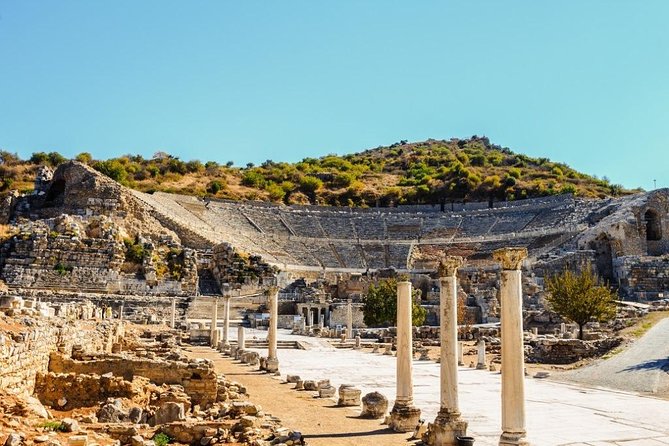
Ephesus can turn into a blur if you’re herded with a lot of people and a short timetable. On this private tour, your guide sets the rhythm, explains what you’re looking at, and helps you connect the dots across temples, baths, theaters, and street life.
This matters because Ephesus is not one single monument. You’re moving through a whole urban system—civic spaces, religious spaces, and entertainment zones—so commentary really helps you read the ruins instead of just taking photos.
If you're still narrowing it down, here are other tours in Kusadasi we've reviewed.

Morning logistics: 9:00 am pickup and the ride into history
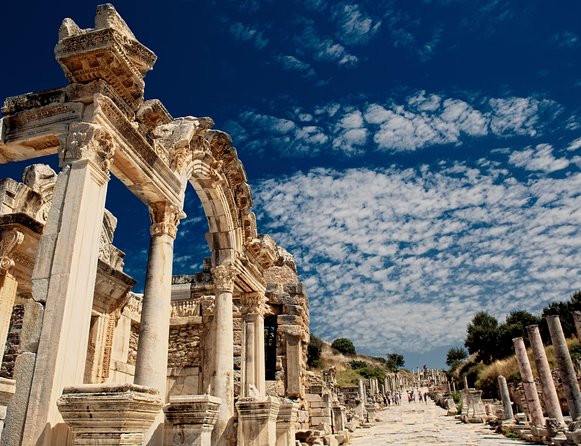
Your day starts at 9:00 am with pickup from your Kusadasi hotel. You’ll meet your local guide and ride in an air-conditioned vehicle, which is a big deal in Turkey when the sun climbs and the day gets long.
On the drive, you’ll hear mythological and historical storytelling tied to this ancient city. It’s a helpful warm-up because Ephesus is full of proper names—Hadrian, Domition, Trojan—and the stories give those names a human frame before you step onto the stones.
Ancient Ephesus: the 2-hour core that hits the big monuments
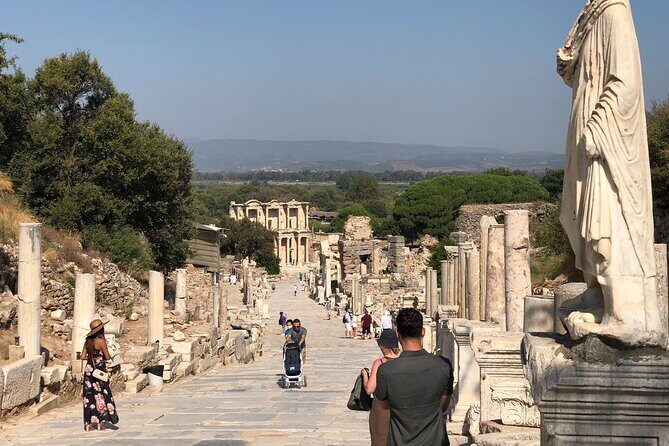
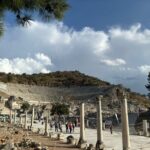
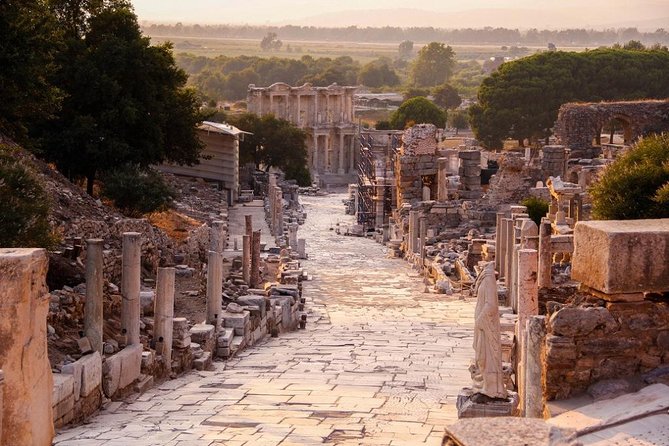
The main block of time is spent inside the Ancient City of Ephesus, with about 2 hours and admission included. This is where you’ll see the places most people picture when they think Ephesus: the Library of Celsus, the Great Theatre, and the central civic and religious structures around them.
The good news is that 2 hours is long enough for a guided walk that connects landmarks. The tradeoff is that it’s not “all day in ruins,” so you’ll want to pay attention and let the guide steer you through the most meaningful sections.
Library of Celsus and the Great Theatre: why these are the headliners
Let’s talk about the two strongest anchors of the day.
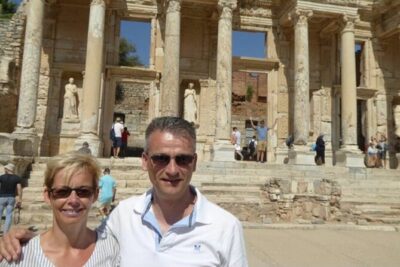
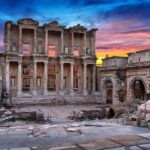
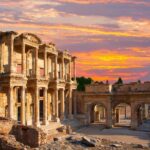
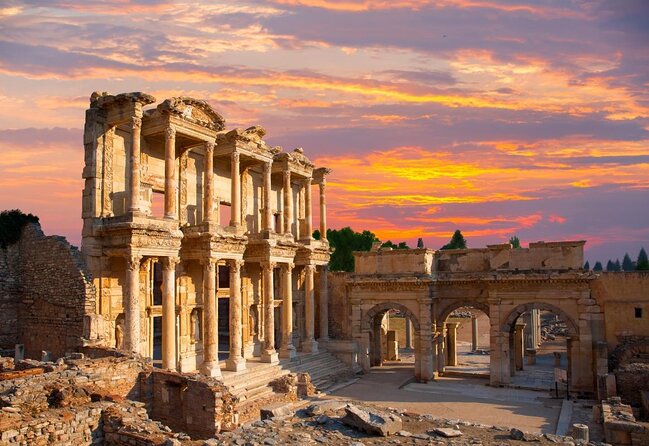
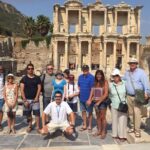
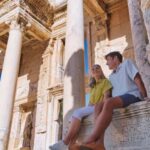
First, the Library of Celsus. It’s a two-story spectacle that feels almost too dramatic for something made of stone that age. The guide’s job is to show how it fits into a city that was both commercial and scholarly—so it lands as more than a pretty façade.
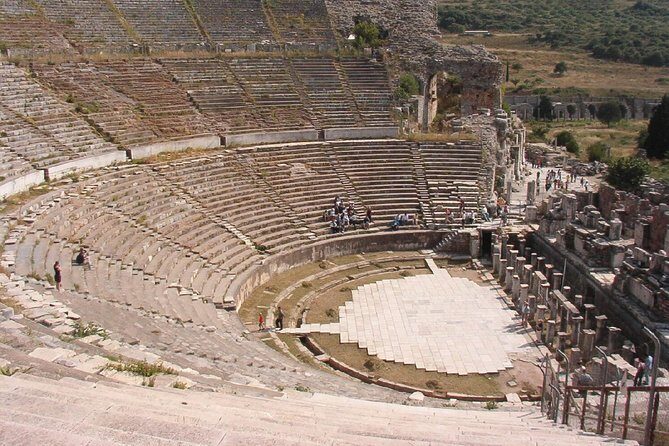
Then you move to the Great Theatre, which once hosted crowds of about 24,000. Even if you don’t study ancient architecture, you’ll understand the point when you’re standing in the right place: this was public entertainment at serious scale, not a small-town performance space.
Fountains, temples, and baths: seeing daily life in Roman Ephesus
After the “must-see” monuments, your route includes a spread of sites that help you feel how Ephesus functioned.
You’ll see the Fountains of Trojan and the Temple area connected with Hadrian and Domition. These stops aren’t just for name recognition. They show how religion, public ceremony, and civic pride overlapped in Roman-era urban design.
You also go through areas tied to daily public rhythms, including parts described as Various and Scholastic Baths, plus the Bouloterion (a council-related building) and a Private House stop. Even in short segments, these kinds of ruins help you understand that the city wasn’t only temples and theaters—it was also people living, meeting, bathing, learning, and governing.

A surprisingly spiritual second half: Meryemana (Virgin Mary’s House)
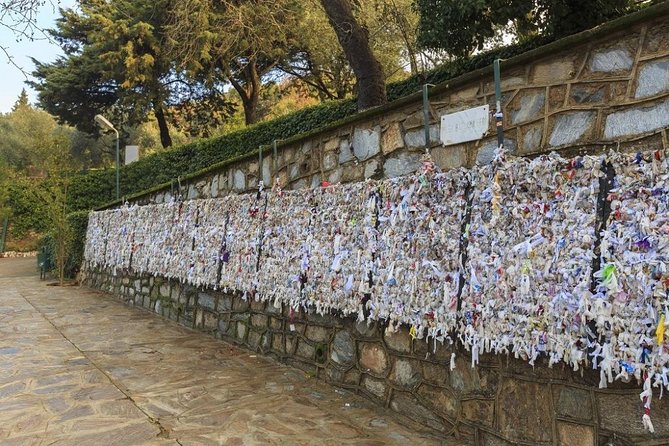
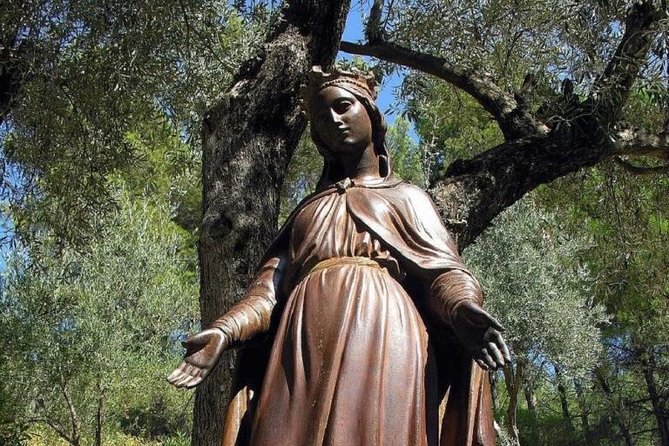
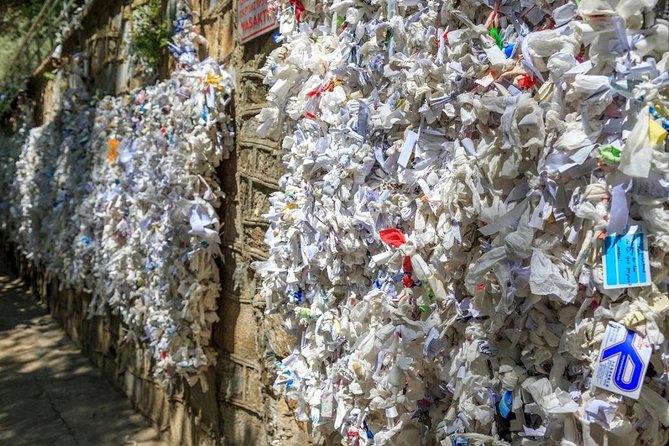
After lunch, the day shifts to Meryemana, the House of the Virgin Mary. This is the stop many people remember because it changes the mood: you go from the dense logic of a Roman city to a quieter place with strong religious meaning.
Your guide’s context here is key. Ephesus isn’t just an ancient tourist site; it’s been claimed through later Christian tradition as well, and seeing that connection helps the day feel whole.
There’s also time for the Archaeological Museum of Ephesus (admission included). Museums can feel like an optional add-on, but here it’s practical: you get artifacts that help you understand what the ruins looked like in use, not just after centuries of exposure.
Temple of Artemis plus extra theatre stops: short breaks, good variety
Your schedule includes a fast photo-and-walk stop at the Temple of Artemis for about 15 minutes, and it’s listed as free admission.
Then you have additional theatre-related time blocks:
- Efes Antik Kenti Tiyatrosu (Grand Theatre), about 30 minutes with admission included
- The Odeion, about 30 minutes with admission included
These added stops give you a sense that Ephesus entertainment wasn’t one single building. You get different angles and functions within the theatre complex world—without having to commit to a long, slower crawl.
One practical note: because some of the time blocks are brief, bring a photo game plan. Decide what you want most (front façades, seating areas, specific architecture), and you’ll be less tempted to wander off.
Lunch on the route: traditional Turkish food, timed right
You stop for lunch at a local restaurant during the middle of the day. The tour description keeps it simple: traditional Turkish lunch, tasty and filling enough to power you through the afternoon.
This is more valuable than it sounds. If you skip lunch or grab something too light, you’ll start feeling it during museum time and the later walking. With this plan, you get food before you go into the quieter, often more reflective stops.
The guide makes or breaks Ephesus (and this tour tends to nail it)
This is one of those tours where the person talking matters a lot. People have highlighted guides by name—Levent, Ilker, Ilene, Zeydep, and Selin Usun—and the common theme is energy plus clarity.
Even when you already know Ephesus is famous, the guide helps you avoid the classic ruins mistake: staring at stones without understanding what you’re seeing. When the commentary connects Library of Celsus, Hadrian-related sites, theatre seating, and the museum artifacts, the whole day clicks.
If you can choose or request, I’d suggest asking for a guide type that matches your style. If you like stories and explanations, lean into that. If you just want a clean route, still ask for “a few key facts at each stop” so you don’t leave with only photos.
Price and value: what $285 per person really buys you
At $285 per person, this isn’t the budget version of an Ephesus day trip. So the question isn’t whether it’s expensive—it’s whether it’s efficient and worth it for your group.
Here’s what you’re paying for:
- Private transport by vehicle, not a shared bus crush
- Hotel pickup and drop-off in Kusadasi
- A local guide for the whole day
- Lunch included
- Admission included for key stops (with Temple of Artemis listed as free)
If you’re comparing it to a ship excursion or large-group tour, the value comes from less time waiting, fewer crowds during key ruins, and a route that’s paced to a real sightseeing flow. If you’re traveling with just two people, the private factor can feel especially worth it—because you’re not paying for an experience you can barely hear.
If you’re very price-sensitive, you might find cheaper group options elsewhere. But for a day built around walking, entry tickets, and guided context, this price can make sense—especially when you factor in lunch and transport that you don’t have to arrange yourself.
Fitness, heat, and footwear: plan for comfortable walking
The tour is listed as requiring moderate physical fitness. You’ll be walking through uneven ancient surfaces, and you’ll spend time outdoors in the sun. So pack like you mean it.
I’d recommend:
- Good walking shoes with grip
- Sunscreen and a hat
- Water (you’ll likely want it even after lunch)
Also, it’s not recommended for children aged 4 and under, and children 18 and under must be accompanied by an adult. If you’re traveling with teens or older kids, ask whether the short stops will work for their attention span.
Who should book this Ephesus private tour?
This tour is a great fit if you want:
- A focused Ephesus day without racing
- Guided explanation for the Library of Celsus and Great Theatre
- A blend of ancient ruins and Christian-era meaning through Meryemana
- Pickup convenience in Kusadasi plus lunch included
It may be less ideal if you:
- Want to spend 4–5 hours wandering Ephesus with zero structure
- Dislike religious sites and spiritual context (this itinerary includes Meryemana and related stops)
- Travel with very young kids who may struggle with moderate walking
Should you book? My honest take for Kusadasi visitors
If you want Ephesus to feel organized, readable, and not just crowded, I’d book this. The combination of private transport, guided stops at the big monuments, and the lunch-and-museum rhythm helps you get the most from limited time.
I’d only hesitate if you’re the type who wants maximum freedom to roam at your own speed. In that case, the schedule may feel a bit tight, especially after the morning ruins when you still have museum time and Meryemana on the calendar.
Overall, this is the kind of tour that works well when you treat it as a “guided learning day” rather than a “freeform ruins day.” You’ll leave with more than pictures—you’ll understand what each major stone site was for.
FAQ
How long is the Ephesus day trip from Kusadasi?
It runs about 8 hours (approx.).
What time does the tour start?
The start time is 9:00 am.
Is hotel pickup and drop-off included?
Yes. Hotel pickup and drop-off are included.
Is this a private tour?
Yes. It’s listed as private, meaning only your group participates.
What’s included with lunch?
Lunch is included, described as a traditional Turkish lunch.
Which admission tickets are included?
Admission is included for the Ancient City of Ephesus and for stops like Meryemana and the theatre-related sites listed in the itinerary. The Temple of Artemis stop is listed as free.
Do you visit the Virgin Mary’s House?
Yes. You visit Meryemana (the House of the Virgin Mary).
Is the Archaeological Museum of Ephesus included?
Yes. You visit the Archaeological Museum of Ephesus as part of the day.
Is it suitable for young children?
It’s not recommended for children aged 4 and under, and children 18 and under must be accompanied by an adult.
What if a museum is closed on the day?
If museums are closed, the tour notes you’ll visit an alternative similar museum.
Is there free cancellation?
Yes. You can cancel for a full refund up to 24 hours before the experience’s start time.