REVIEW · KUSADASI
Ephesus Half Day Tour From Kusadasi Hotels / Selcuk Hotels
Book on Viator →Operated by Turkey Tours Company · Bookable on Viator
Ephesus feels effortless, even on a tight schedule. This half-day tour runs from Kuşadası hotels, Selçuk hotels, and cruise ports with small-group guidance and an air-conditioned vehicle, so you spend more time sightseeing and less time figuring things out. I especially like the clear, history-focused guiding that makes the big marble sights easier to understand, and the way the route strings together Ephesus plus the Temple of Artemis without dragging the day out. One thing to consider: the main Ephesus entrance fee is 40€ and it is not included in the tour price.
You’re usually out for about 4 to 5 hours, with pickup and drop-off handled door-to-door. The group is capped at 14 travelers, and you get a mobile ticket plus insurance, which helps if you’re on a cruise and need everything to stay smooth.
Expect a lot of walking on uneven ancient stone. Comfortable shoes matter, and if you’re short on time, this is exactly why this format works.
In This Review
- Key highlights at a glance
- Getting From Kusadası (or Selçuk) Into Ephesus Without Losing Time
- Price and Entry Fees: What You Pay Now vs. What You Pay at Ephesus
- Ancient City of Ephesus: Marble Streets, Gates, and the 25,000-Seat Amphitheater
- Temple of Artemis: One of the Seven Wonders in a Quick Stop
- Prytaneion, Baths of Varius, and the Pollio Fountain: The Quiet Stops With Meaning
- Prytaneion: the sacred flame story
- Baths of Varius: Roman comfort, mosaics, and cold-hot-hot
- Fountain of Pollio: where the water system becomes the attraction
- Timing, Pace, and What to Bring for a Smooth 4–5 Hour Day
- Should You Book This Ephesus Half-Day Tour From Kusadası or Selçuk?
- FAQ
- How long is the Ephesus half-day tour?
- Do I get hotel or cruise port pickup?
- Is the group size small?
- What’s included in the tour price?
- What entrance fees should I expect?
- Can I pay for skip-the-line tickets?
- Are meals included?
- Are tips included?
- What if I’m on a cruise and need to be back on time?
- Can I cancel for a full refund?
Key highlights at a glance
- Small-group size (max 14) means less waiting around and more guide attention.
- Hotel or port pickup and drop-off helps you skip the stress of transfers on your own.
- Air-conditioned vehicle keeps the ride pleasant, especially in warm months.
- Main entry is the one extra cost (40€) while several other stops are listed as free.
- Temple of Artemis is included as a fast, meaningful stop tied to the Seven Wonders story.
- Return-on-time for cruise passengers is built into the plan.
Getting From Kusadası (or Selçuk) Into Ephesus Without Losing Time
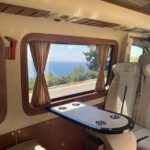
The biggest win here is the “don’t make me plan” approach. You get pickup and drop-off from Kusadası hotels, Selçuk hotels, or directly from the cruise ship area, then you’re driven to Ephesus in a fully air-conditioned vehicle. For half a day, that matters. You avoid the trial-and-error of buses, taxi bargaining, or losing time to logistics.
This tour is also designed for people who need a clean schedule. The route is short enough to work for cruise travelers, and the operator states a guaranteed return on time to the cruise. If you’re traveling with a child or you just want the highlight reel, the compact format is the point.
One extra practical note: the tour mentions extra transfer fees for some hotel areas. If you’re staying in Ozdere hotels, plan on paying 20€ per person for transfers both ways. For Guzelcamli hotels, it’s 25€ per person both ways. If your hotel is outside the standard pickup zone, that’s the kind of detail that can make or break your timing.
Other Selcuk tours we've reviewed in Kusadasi
Price and Entry Fees: What You Pay Now vs. What You Pay at Ephesus
The advertised price is $68.23 per person, and it includes a professional licensed guide, pickup and drop-off, insurance, and a fully air-conditioned vehicle. That’s a solid base value because Ephesus days can get expensive once you add transport and guide time.
Here’s the part to budget for: the entrance fee for the Ancient City of Ephesus is 40€, and it’s not included in the tour price. The good news is that multiple smaller stops on the same route are listed as free, including the Temple of Artemis, the Prytaneion, the Baths of Varius, and the Fountain of Pollio.
If you want to reduce waiting, the info provided says you can pay the guide for skip-the-line tickets. So in practice, you should plan to have some euros ready on the day. Also note that meals and beverages are not included, so you’ll either eat before/after or bring something simple for energy.
Finally, guide and driver tips are not included. In Turkey, tipping is common, so it’s fair to set aside a little extra if the guiding style matches what you hoped for.
Ancient City of Ephesus: Marble Streets, Gates, and the 25,000-Seat Amphitheater
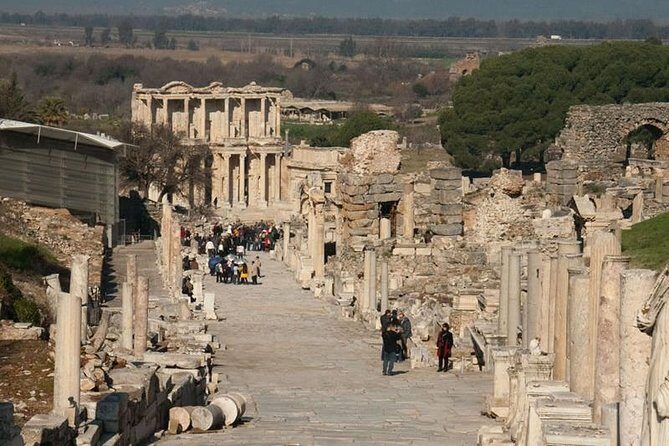
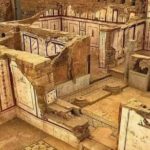
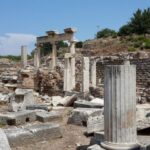
This is the heart of the day, with about 2 hours 30 minutes focused on the Ancient City of Ephesus. And it’s not just “old stones in the sun.” Ephesus was a powerhouse city in the Roman era, described here as the second largest city in the Roman Empire, with a huge population in the 1st BC. It was also a harbor city, which helps explain why you’ll feel the city is built for movement, trade, and big public life.
You’ll be shown a mix of monumental landmarks and details that connect the city’s everyday rhythm to its power. For example:
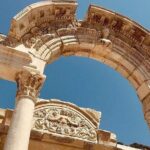
- You’ll see Hadrian Gate, a famous gateway that gives you a quick sense of the city’s scale and status.
- You’ll walk Marble Street and Harbour Street, which is the kind of route where the guide’s explanation makes the ruins feel less like random leftovers.
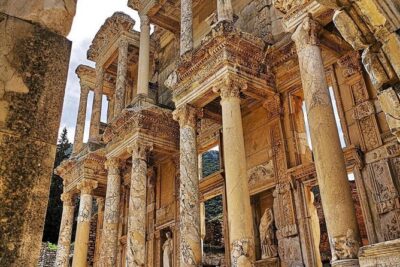
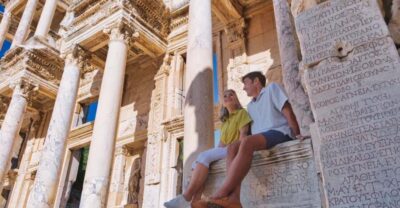
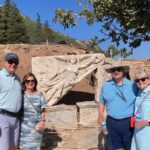
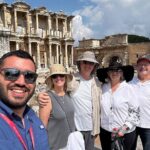
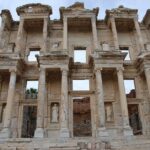
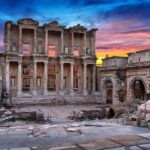
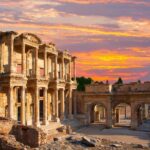
- You’ll visit the Library of Celsus, described as the third largest library—big enough that even in ruins you can still understand the ambition.
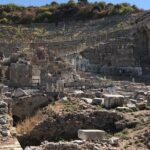
- You’ll get views of the amphitheater area, noted here as having over 25,000 seats in the ancient world. When you stand near these kinds of structures, you start to picture crowds and performances, not just architecture.
- You’ll also spot features tied to worship and city identity, including Goddess Nike and local pharmacy points, plus the Harbour Street angle that reinforces Ephesus as a working city, not only a ceremonial one.
Two things make this work especially well as a guided half-day: first, Ephesus has a lot of “major” stops packed into one place, so you’d easily miss the connections if you wander solo. Second, your guide can help you read what you’re seeing fast—why this gate matters, what a library symbolized, and how a harbor city shaped daily life.
Potential downside: you do have limited time. Two and a half hours inside Ephesus means you’ll see major highlights, not every corner. If you love deep archaeological detail and want to linger, you might feel the pace. But if you want the essentials with smart context, this is a strong match.
Temple of Artemis: One of the Seven Wonders in a Quick Stop
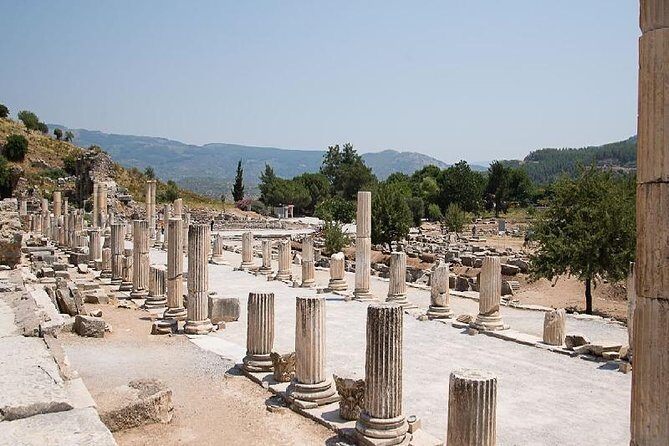
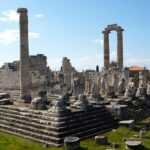
After Ephesus, you’ll head to the Temple of Artemis, also called Artemision and linked with Diana. It’s one of the seven wonders of the world in the broader cultural story, and the timing here is short—around 30 minutes.
This stop is worth it even if you know little going in. Artemis is tied to the identity of the region, and the temple’s legend gives your earlier Ephesus sights more context. Instead of seeing worship as isolated statues and pillars, you start to recognize how religion, politics, and public life were intertwined.
Admission for this stop is listed as free on the route, which helps keep the day from turning into a pile of extra ticket lines. The guide’s narration is what really makes the place click: why Artemis mattered, what the temple symbolized, and how the legend still shapes how people talk about Ephesus today.
Prytaneion, Baths of Varius, and the Pollio Fountain: The Quiet Stops With Meaning
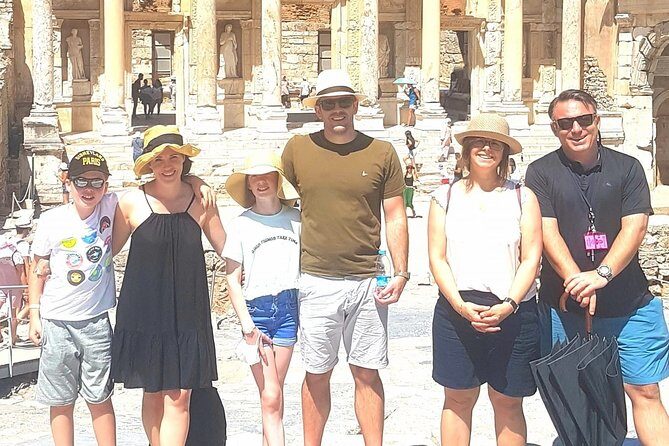
The later part of the walk shifts from headline monuments to “you’ll be glad you stopped” ruins.
Other Kusadasi-departing tours we've reviewed in Kusadasi

Prytaneion: the sacred flame story
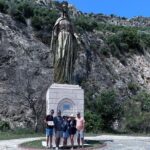
The Prytaneion sits behind the basilica area and connects to religious ceremonies, official receptions, and banquets. The key detail is the sacred flame kept constantly alight in the Prytaneion. The construction dates to the 3rd century BC under Lysimachos, while the ruins of the complex date to the Augustan age. Even if you only get about 10 minutes here, the guide can turn that short visit into something memorable: you’ll understand that fire wasn’t a random decorative element. It was a living symbol of the city’s heart.
Baths of Varius: Roman comfort, mosaics, and cold-hot-hot
Next are the Baths of Varius, dating to the Roman period (construction noted here as 2nd century AD). The mosaics in a 40-meter-long corridor are dated to the 5th century, which is a neat reminder that even ancient places kept evolving long after the first build.
This section is described as having three areas: frigidarium (cold water), tepidarium (warm water), and caldarium (hot water). The excavations aren’t fully completed, so you might see parts that feel like they’re mid-story—helpful if you like the process of archaeology. Admission is listed as free for this stop.
Fountain of Pollio: where the water system becomes the attraction
Finally, there’s the Fountain of Pollio. It was built in 97 AD by C.S. Pollio and his family, and it’s described as being south of the State Agora, across from the Odeon. The interesting part is how Ephesus handled water: water was brought through aqueducts from multiple sources, then distributed through branching clay pipes. It also notes that the water was free in public fountains, providing refreshment in hot summer days.
This stop is only about 5 minutes, so don’t expect a long lecture. But if you listen, you’ll get a practical sense of how a city works. Ancient monuments are impressive, but water systems explain why people could live there in the first place.
Timing, Pace, and What to Bring for a Smooth 4–5 Hour Day
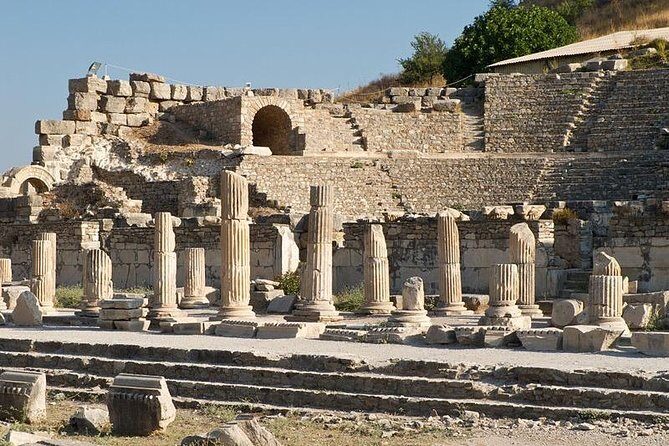
Plan for a half-day that feels full. The major Ephesus block is about 2.5 hours, followed by shorter visits: the Temple of Artemis (about 30 minutes), then quick stops at the Prytaneion (about 10), Baths of Varius (about 15), and the Pollio Fountain (about 5). Travel time fills the gaps, bringing the whole experience to roughly 4 to 5 hours.
What makes this pace work is that it’s designed for highlights. You’ll still see a lot—gates, streets, library, amphitheater area, and the religious and daily-life ruins around the edges. But you won’t have time to “wander forever,” so keep your expectations realistic.
What I’d bring:
- Comfortable walking shoes for stone paths
- Water and a small snack, since meals and beverages aren’t included
- Sun protection (shade is limited in many open areas)
Also, this is a group tour. You’ll want to stay close to the group when the guide is explaining something. The stops are timed, and the whole point is finishing with the kind of coverage that still returns you on schedule.
Should You Book This Ephesus Half-Day Tour From Kusadası or Selçuk?
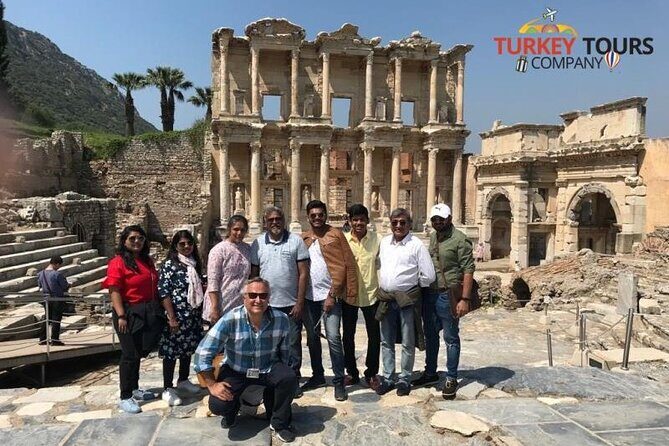
If you want the main Ephesus highlights without spending your vacation on transportation math, I think this tour is a strong choice. The value is in the combination: licensed guide, pickup/drop-off, air-conditioned comfort, and a tight route that covers both the big-city monuments and a few “meaning stops” like the Prytaneion’s sacred flame story and the Pollio Fountain’s water system.
Book it if:
- You’re short on time, especially if you’re on a cruise
- You want a guide to help you understand what you’re seeing fast
- You prefer small groups (max 14) over large bus crowds
Consider another option if:
- You want a very slow, archaeological-style experience where you can linger at every point
- You hate paying extra on the ground; the 40€ Ephesus entrance fee is the key add-on
FAQ
How long is the Ephesus half-day tour?
The duration is listed as about 4 to 5 hours.
Do I get hotel or cruise port pickup?
Yes. Pickup and drop-off are included, and the tour is offered from Kusadası hotels, Selçuk hotels, and cruise ship port areas.
Is the group size small?
It has a maximum of 14 travelers.
What’s included in the tour price?
Included items are a professional licensed tour guide, pickup and drop-off, insurance, and a fully air-conditioned vehicle.
What entrance fees should I expect?
The entrance fee for the Ancient City of Ephesus is listed as 40€ and is not included. The other stops on this route (Temple of Artemis, Prytaneion, Baths of Varius, and Fountain of Pollio) are listed as free on the schedule provided.
Can I pay for skip-the-line tickets?
The info says you can pay to the guide for skip-the-line tickets.
Are meals included?
No. Meals and beverages are not included.
Are tips included?
No. Driver and guide tips are not included.
What if I’m on a cruise and need to be back on time?
The tour states a guaranteed return on time to the cruise.
Can I cancel for a full refund?
Yes, free cancellation is available up to 24 hours in advance for a full refund.