REVIEW · KUSADASI
Ephesus: Half-Day Tour from Kusadasi
Book on GetYourGuide →Operated by OKEANOS TRAVEL · Bookable on GetYourGuide
Ephesus in a few hours can feel impossible, but this half-day tour keeps it focused and fun. You get a guided sweep through the most famous ruins, plus the little details that make the stones feel human. It’s a smart choice when you want the big hits without turning your whole day into a transit slog.
I especially like the mix of iconic stops and on-the-ground stories: the Library of Celsus is breathtaking in person, and the Great Theatre helps you picture what the crowd noise must have been like. You also move in a small group (10 people max), which usually means fewer long waits and more time to ask questions.
One thing to consider: the tour experience can include time at shops, and not every purchase story ends well. If you want to shop, go in with a plan—compare quality carefully and don’t feel pressured to buy on the spot.
In This Review
- Key Highlights You’ll Actually Care About
- A Fast, Focused Hit of Ephesus in Half a Day
- Getting There: Kusadasi or Izmir Pickup Without the Headache
- Skip the Ticket Line and Walk the Marble Streets
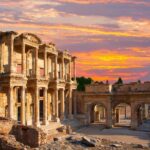
- Library of Celsus: The Facade You’ll Want to Study Up Close
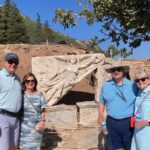
- Hadrian’s Temple, Artemis, and the Medusa Carving
- The Great Theatre: 24,000 Seats and a Very Different Kind of Quiet
- The World’s First Advertisement Hidden in Plain Sight
- Scholastica Baths Toilets and Other Tiny Details That Feel Personal
- Shopping Stops: How to Avoid Leather-Lottery Purchases
- Time, Shoes, and Sun: What to Pack for 3.5–4.5 Hours
- Price and Value: Is $135 Worth It for Ephesus?
- Language Options: Getting a Guide You Can Actually Follow
- Who This Tour Fits Best (and Who Should Skip It)
- Should You Book This Ephesus Half-Day Tour?
- FAQ
- How long is the Ephesus half-day tour?
- Where does pickup and drop-off happen?
- What’s included in the price?
- Is there a small group size?
- Are ticket lines skipped?
- What languages are available for the guide?
- What should I bring for the tour?
- Is the tour suitable for wheelchair users or mobility impairments?
Key Highlights You’ll Actually Care About
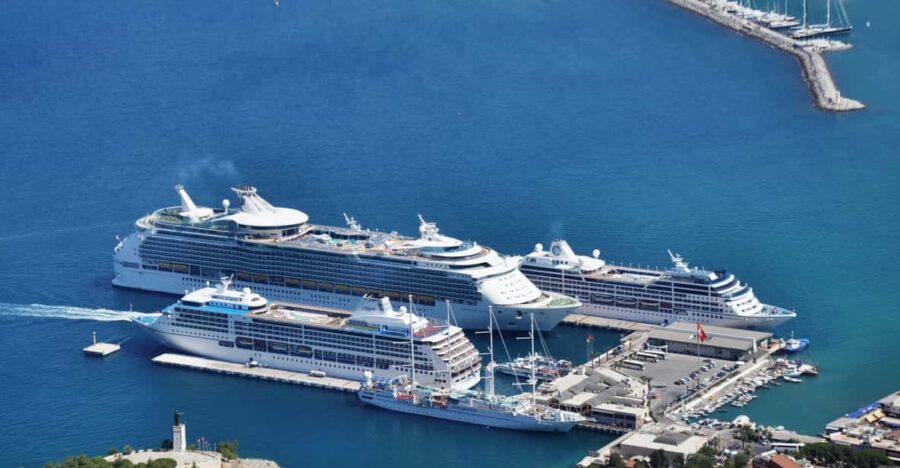
- World-famous Library of Celsus facade: the photo moment, and it also served as a tomb for a Roman senator
- Great Theatre with 24,000-seat scale: look up, then imagine the noise for gladiators
- Hadrian’s Temple details: including a carved head tied to Medusa
- The world’s oldest advertisement: a footprint, heart, and woman’s head carving on the marble street
- Small group (10 max) plus air-conditioned vehicle for a short, efficient day
- On-time cruise return promise so you don’t play tug-of-war with the ship schedule
A Fast, Focused Hit of Ephesus in Half a Day
Ephesus is one of those places where the ruins don’t just look old—they feel loud with imagination. The problem is time. Many people show up for a single morning or afternoon and realize they can’t do everything.
This tour solves that with a tight time box of about 3.5 to 4.5 hours, designed to hit the best stops and give you context while you walk. You’re not wandering on your own through a sprawling site; you’re following a guide who keeps the story moving so you’re not just decoding stone.
I like that the emphasis is on what you can see and understand quickly: the Library facade, the theatre, and the temple areas that people talk about for a reason. It’s also built for convenience—pickup, drop-off, and entrance fees are handled—so you spend your energy on the ruins, not paperwork.
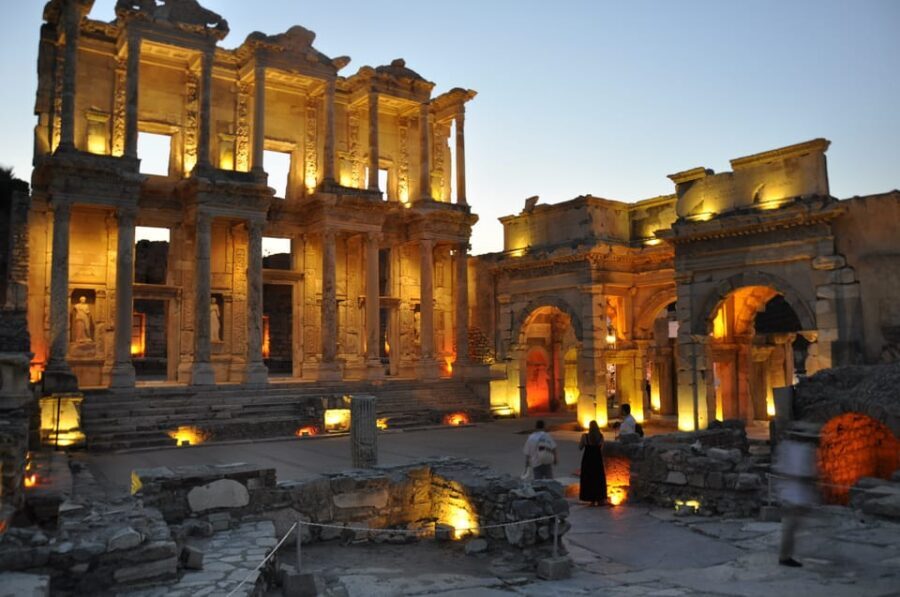
And if you’re cruising, the tour advertises a guaranteed on-time return to the port, which matters more than most people want to admit until they’re stressing by the gangway.
Other Kusadasi-departing tours we've reviewed in Kusadasi


Getting There: Kusadasi or Izmir Pickup Without the Headache
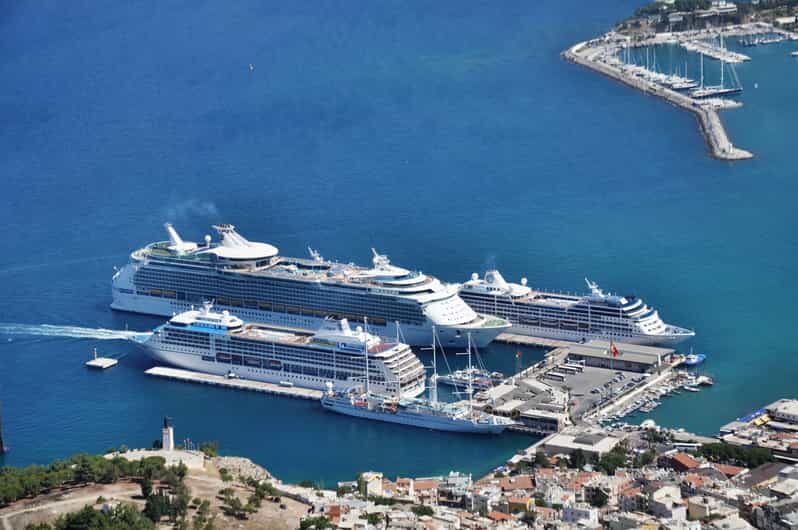
You can start from either Kusadasi or Izmir, with pickup from your hotel or even the port/airport. That’s one of the practical upsides of a short tour: you don’t waste precious hours assembling transport plans.
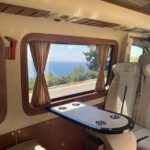
You’ll ride in an air-conditioned vehicle with a professional driver. For Ephesus, that’s not luxury—it’s relief. Even when the day starts pleasant, you can feel the sun once you’re walking between monuments.
Small-group format helps too. With a limit of 10 participants, the van doesn’t turn into a moving waiting room. Your guide can also adjust pacing if your group is slower, stopping for shade or giving you a minute to catch up.
Skip the Ticket Line and Walk the Marble Streets
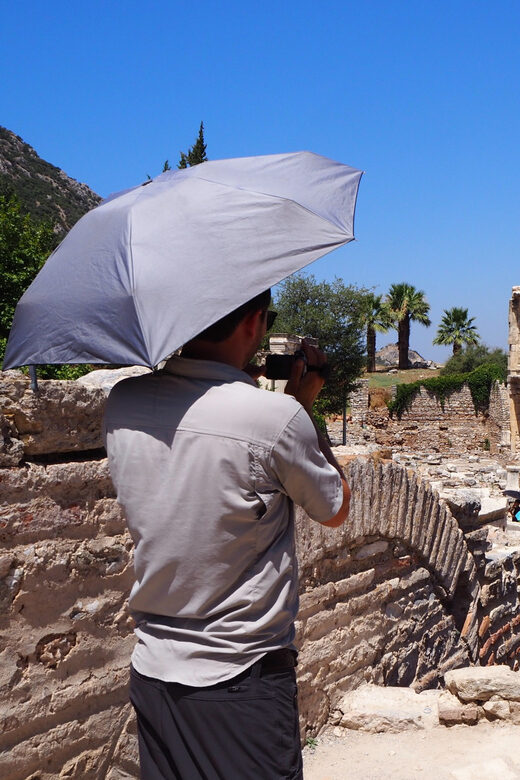
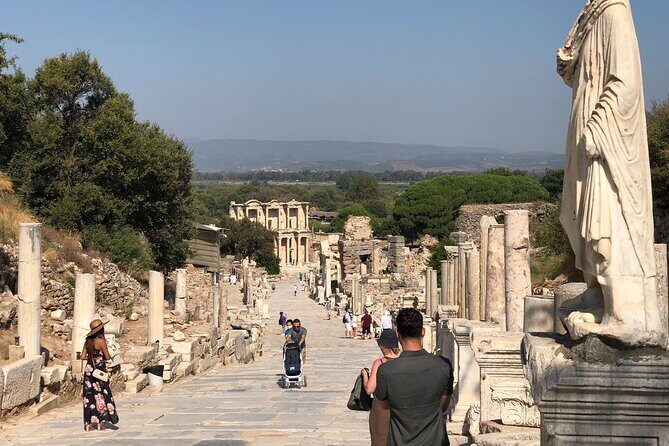
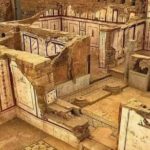
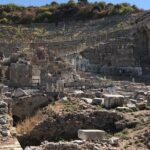
The heart of Ephesus is walking. You’ll stroll along 2,000-year-old marble streets, where the city layout starts to make sense in your head. This matters because Ephesus is not just one monument—it’s a whole urban stage.
The tour also includes skip-the-ticket-line, which is huge if you’re working against cruise timing. In a site with crowds and security lines, shaving off even 20 minutes can be the difference between seeing the theatre and only hearing about it.
What to watch for while you walk:
- How the street curves and funnels you toward major buildings
- How the marble surfaces show wear patterns (it’s a clue to where foot traffic concentrated)
- How your guide points out small carvings and layout choices you’d likely miss alone
This is where a good guide earns their wage. Even when the walls look similar, the details tell you what kind of place you’re standing in: religious, civic, entertainment, or daily life.
Library of Celsus: The Facade You’ll Want to Study Up Close
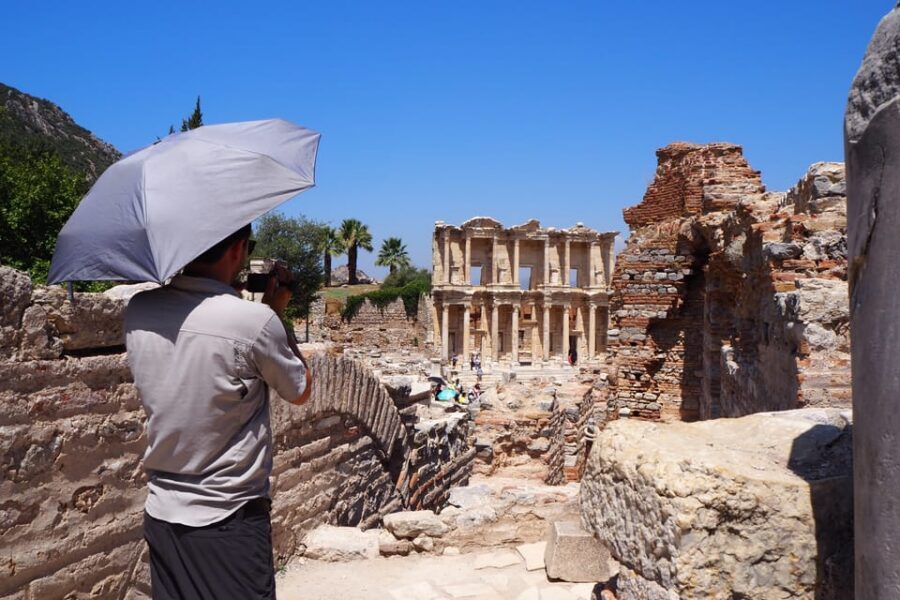
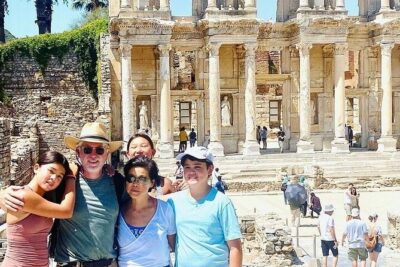
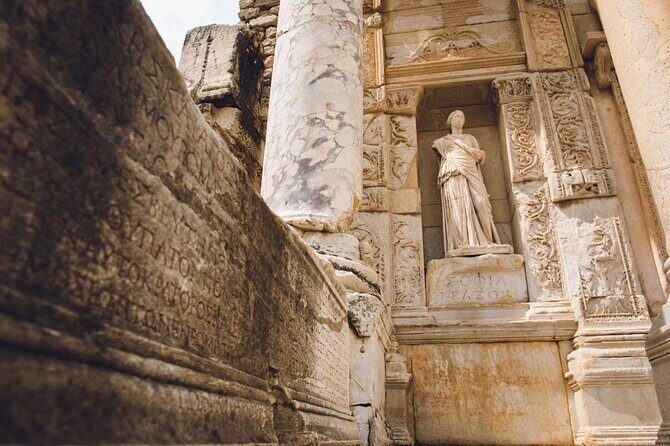
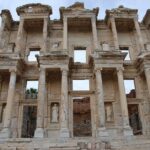
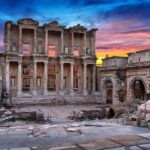
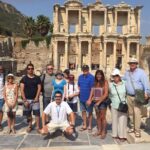
The Library of Celsus is the kind of ruin that makes you stop without being told to. The recognizable two-story facade is famous for a reason: it has the visual punch of a major public building, not a crumbly backdrop.
This library wasn’t simply a place for books. It also functioned as a tomb for a Roman senator. That single fact changes how you interpret the architecture. You start noticing it as a statement of civic power and personal legacy, not just an educational site.
Practical tip: don’t treat Celsus as a quick picture stop. If you take a few minutes to look at the structure from different angles, you’ll see why the facade survives so well visually. Your guide can also help you understand what you’re looking at, and why that facade became the symbol people instantly recognize.
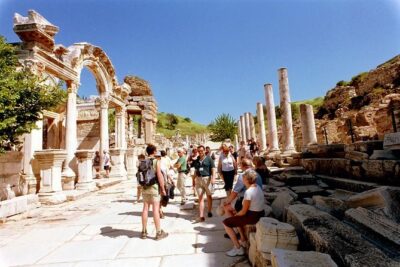
Hadrian’s Temple, Artemis, and the Medusa Carving
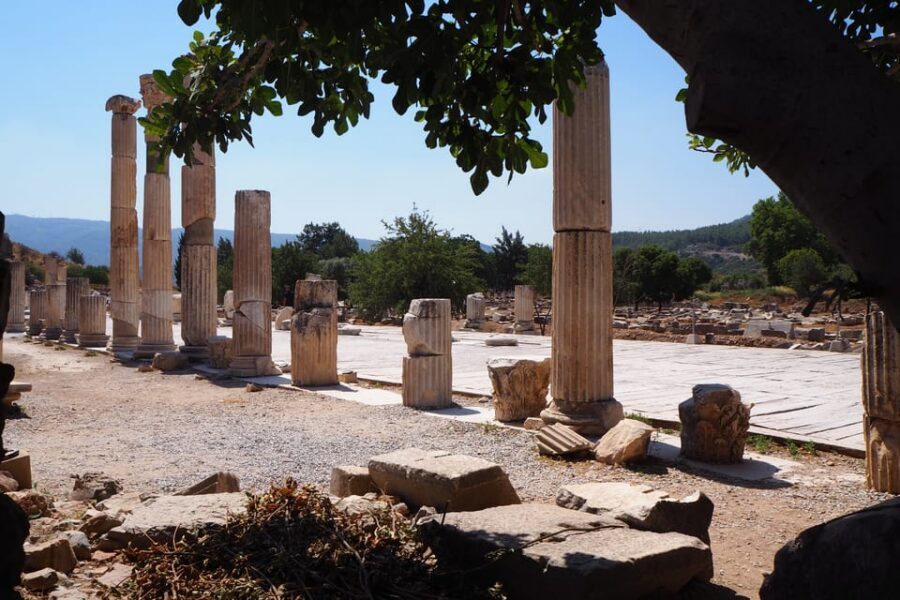
Ephesus isn’t only about one famous building. You’ll also move through the temple areas, including the Temple of Hadrian and sights tied to Artemis.
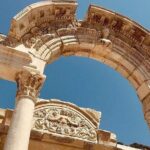
One of the most memorable details is the carved head of Medusa connected to the Temple of Hadrian. It’s the kind of myth reference that makes the site feel less like a museum and more like a place that people lived with—images and stories woven into everyday architecture.
Artemis is trickier to experience because what remains today can feel more fragmentary than the Library facade. Still, it’s valuable to be there because it gives you scale for how big the spiritual identity of this city was. Your guide should help you connect the dots between what you see now and what the site was known for.
If you’re short on time, this temple chunk is worth it because it balances the “big wow” moments with the idea that Ephesus was a sacred city too.

The Great Theatre: 24,000 Seats and a Very Different Kind of Quiet
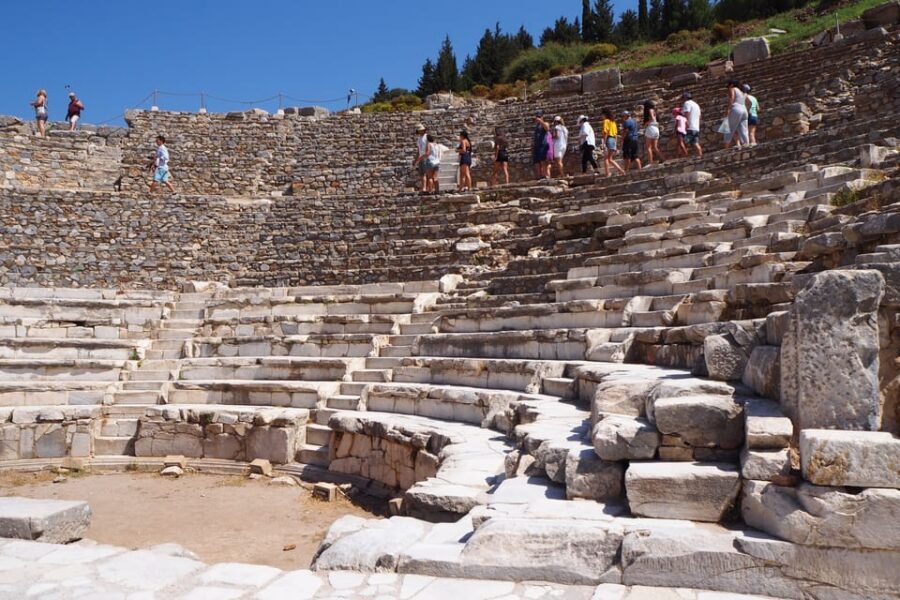
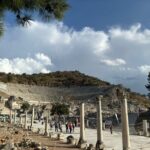
If you want one stop that instantly teaches you how large Ephesus was, it’s the Great Theatre. The theatre is tied to an impressive claim: a capacity around 24,000 spectators.
Your guide will likely ask you to look up and imagine the noise. Do that. Stand back, then let your mind do the work of filling the space with people. Gladiator-era crowds would have felt like a shockwave in the air.
The theatre is also said to be connected to St. Paul, with preaching to the Ephesians often linked to this space. Even if you treat that as a tradition rather than a guaranteed document, the connection adds another layer to why this city mattered far beyond entertainment.
This stop is also a good reminder that Ephesus wasn’t a silent archaeological site. It was a full-life town with public gatherings, performance, speeches, and crowded energy.
The World’s First Advertisement Hidden in Plain Sight
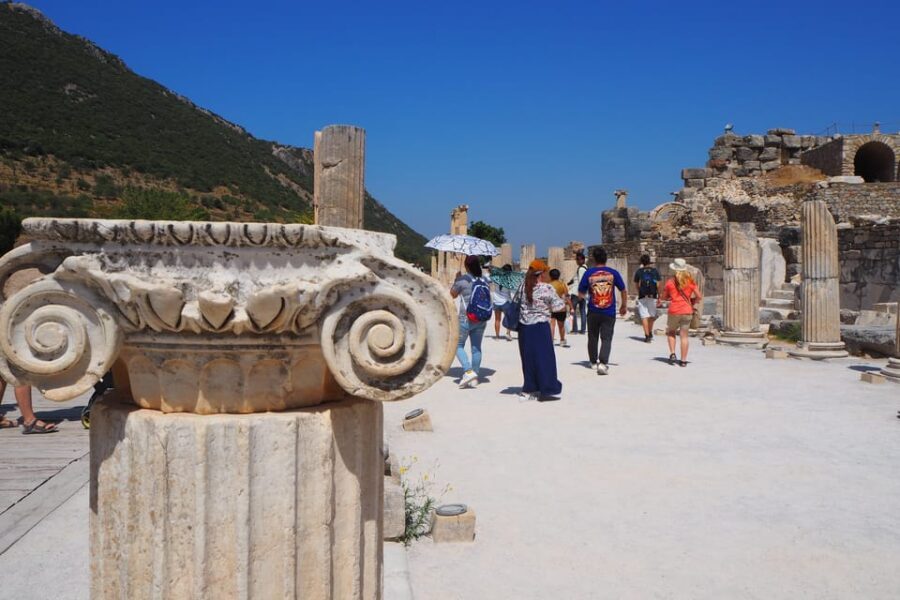
This is the kind of detail that makes a tour feel playful instead of just educational. On the marble street, you can find what’s described as the world’s oldest advertisement: a carving featuring a footprint, a heart, and a woman’s head.
The story attached to it points toward the ancient brothel world—a reminder that cities have always had commerce mixed with desire, and marketing mixed with mythology. It’s also a great example of why you need a guide here. If you’re simply scanning ruins for the big names, you might walk right past this without realizing it’s the point.
My advice: slow down when your guide mentions this and find the exact carving. The fun is in spotting it yourself in the real place, not in hearing a vague description.
Scholastica Baths Toilets and Other Tiny Details That Feel Personal
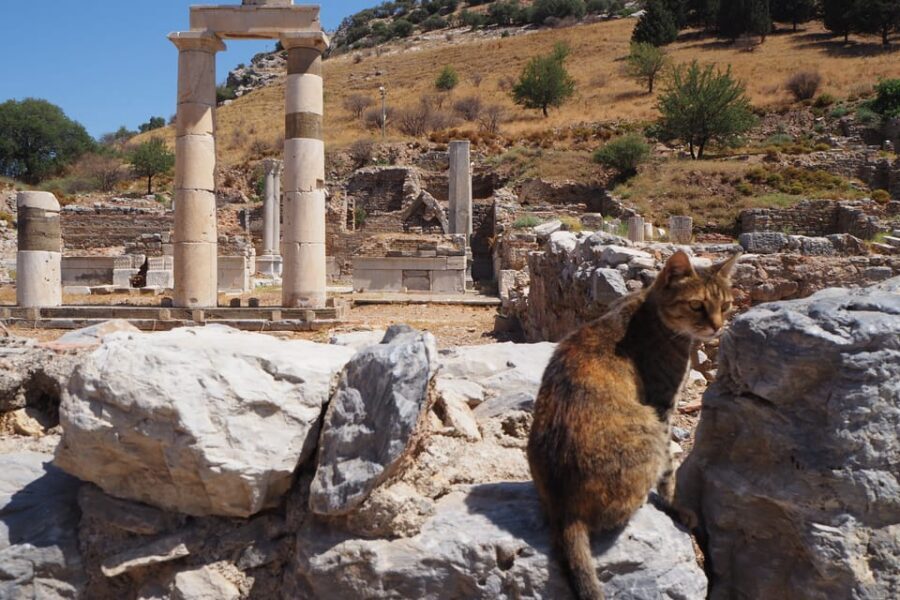
Not every highlight is a building you can photograph perfectly. Some of the best moments come from “small” stops that turn into real story anchors.
One highlight your guide may point out: the Scholastica Baths and even the ancient public toilets. Yes, that’s exactly as intriguing as it sounds, and no, it’s not gross. It’s practical daily-life archaeology. It helps you understand hygiene, social routines, and the kind of civic investment this city made for ordinary people.
Your guide should also surface hidden stories around the broader monument areas—things like how decoration, utility, and myth references all show up together. These are the bits that stick in your head later when you’re trying to explain Ephesus to someone who only saw one famous wall.
Shopping Stops: How to Avoid Leather-Lottery Purchases
Here’s the balanced part. One booking experience described a pattern of being taken to multiple shops and buying an expensive leather jacket that did not hold up well (glued pocket, poor sewing, fur falling off, missing a material tag). The buyer then had trouble getting a refund.
To be clear: this doesn’t mean shopping is guaranteed, and it doesn’t mean every shop is shady. But it does mean you should treat any “shop time” as a test, not a convenience.
If your tour includes shop stops:
- Keep your wallet closed until you inspect items carefully
- Ask about materials and checking tags before purchasing
- Don’t assume you’ll love it the second you get back to your hotel
A short tour is already packed. If you want to keep your day pleasant, build your own rule: if you’re not comfortable inspecting details, skip the purchase.
Time, Shoes, and Sun: What to Pack for 3.5–4.5 Hours
This is a walking tour, and it’s not about tiny steps. You’ll want to plan like you’re going to be outside for most of the day segment.
Bring:
- Passport or ID card
- Comfortable shoes (you’ll appreciate tread on uneven stone)
- Sun hat and sunscreen
- Sunglasses
Also note what’s not allowed: luggage or large bags, and video recording. That means you should travel light. Think small daypack only.
One more practical tip: bring a camera, even if you think you won’t. The Library facade and the theatre angles beg for more than one shot.
If you’re prone to heat fatigue, consider this your nudge to hydrate before you start and pace yourself inside the site, not just at the lunch break you’re not having on this tour.
Price and Value: Is $135 Worth It for Ephesus?
At $135 per person, the real question isn’t whether it feels cheap. It’s whether you’re paying for convenience and guided understanding.
This package includes:
- A licensed professional guide
- Air-conditioned vehicle with driver
- Pickup and drop-off
- Entrance fees to sites in the route
- Skip the ticket line
- A small group (10 max)
For a short half-day, that’s meaningful value. If you had to piece everything together—guide, transport, tickets, and timing—you’d likely lose time and pay more in stress, if not in dollars.
Where the price feels less friendly is if you’re the kind of visitor who wants to spend long hours lingering in one area, or if you hate guided storytelling. But if your goal is to cover the key monuments and leave with a clear sense of what you saw, this format fits the budget.
And if you’re cruising, the on-time port return promise is basically insurance. Even if you don’t think about it now, it’s priceless later.
Language Options: Getting a Guide You Can Actually Follow
This tour offers guide service in multiple languages, including English, German, French, Dutch, Italian, Spanish, and Japanese, and it also lists other options such as Russian, Portuguese, Turkish, Greek, plus Turkish and Greek among the live-guide language possibilities.
In practice, language matters. Ephesus is easier when someone can explain what you’re looking at—why a carving exists, what a facade indicates, and what’s being referenced in myth or civic life.
You may even encounter specific guides such as Fortunato or Tamer for Italian-speaking groups, or Serpil for Dutch-speaking groups, depending on the day and availability. The takeaway for you: if language is important, double-check the listed option at booking so you get comfortable explanations.
Who This Tour Fits Best (and Who Should Skip It)
This is a good fit if you:
- Have only a few hours (especially cruise mornings/afternoons)
- Want the main Ephesus sights without planning logistics
- Like stories that connect ruins to real life and public culture
It’s not suitable for people with mobility impairments or wheelchair users. The site involves uneven terrain and significant walking.
If you’re coming with limited stamina, consider whether a half-day still feels doable. It’s short, but it’s still real walking.
Should You Book This Ephesus Half-Day Tour?
I’d book it if you want a compact, guided Ephesus with transportation handled, tickets managed, and the biggest monuments included. The Library of Celsus, Great Theatre scale, and the playful “world’s first advertisement” detail make the time feel worth it.
I’d be cautious if you know you dislike shopping add-ons. If the tour day includes shop stops, set a personal buying limit and inspect everything like you’re the quality-control manager.
If you’re tight on schedule or you’re a cruise passenger, this is one of the formats that makes the most sense—especially with the on-time return promise and skip-the-line advantage.
If you want, tell me your travel month and whether you’re starting from Kusadasi or Izmir. I can suggest a smart time-of-day strategy for heat and crowd levels based on typical conditions.
FAQ
How long is the Ephesus half-day tour?
The duration is about 3.5 to 4.5 hours.
Where does pickup and drop-off happen?
Pickup and drop-off are available from your hotel in Kusadasi or Izmir, and also from the port or airport if that’s your starting point.
What’s included in the price?
The price includes a licensed professional guide, an air-conditioned vehicle with a driver, pickup/drop-off, and entrance fees for the sites on the itinerary.
Is there a small group size?
Yes. The tour is limited to 10 participants.
Are ticket lines skipped?
Yes, the tour includes skip-the-ticket-line.
What languages are available for the guide?
Guides are listed in multiple languages including Spanish, English, Italian, Dutch, Japanese, Russian, Portuguese, Turkish, Greek, and German (and French is also listed among the licensed guide languages).
What should I bring for the tour?
Bring a passport or ID card, comfortable walking shoes, sunglasses, a sun hat, and sunscreen.
Is the tour suitable for wheelchair users or mobility impairments?
No. It’s not suitable for people with mobility impairments or wheelchair users.