REVIEW · KUSADASI
Private Ephesus Shore Excursion
Book on Viator →Operated by Guide of Ephesus · Bookable on Viator
Cruise ports can feel like a sprint. This private Ephesus shore excursion turns that sprint into a focused route through ancient and Christian landmarks, with a professional licensed local guide and air-conditioned private transfers. I especially like how it builds in breathing room for a real lunch and photos, not just a rush through stones. The main thing to plan for is cost creep: most site entrance fees are not included, so budget for tickets and any drinks with lunch.
You get a true private group experience, plus an operator that stresses on-time return to Kusadasi Cruise Port. I also like the smart add-ons around the edges of Ephesus, like Kuşadası Castle and the Öküz Mehmet Paşa Caravanserai—because they help you understand the modern town sitting beside the ruins. One possible drawback is timing sensitivity: if your ship schedule forces a tighter window, you may need to be flexible about how much time you spend at each stop.
If you’re arriving by cruise and want the big Ephesus hits without the stress of ticket lines and navigation, this is a practical way to do it. It’s also a good fit if you like history with a human story—there’s a clear thread from St. John’s legacy to Mary’s House, then straight into the Greco-Roman city.
In This Review
- Key points worth knowing before you go
- Private Ephesus With Cruise-Ready Timing
- Kusadası Castle and the Caravanserai Stop That Sets the Stage
- Saint John Kilisesi and the Basilica of St. John Connection
- Meryemana (Virgin Mary’s House): Quiet Pilgrimage Time
- Ancient City of Ephesus: Theater, Agora, Marble Street, Celsus
- Lunch in the Countryside and Local Handicraft Advice
- Price and What You’re Really Paying For
- Who Should Book This Ephesus Private Shore Excursion?
- Should You Book This Ephesus Private Shore Excursion?
- FAQ
- How long is the private Ephesus shore excursion?
- Where do I meet the guide in Kusadası?
- Is pickup from the cruise port included?
- Is lunch included, and what about drinks?
- Are entrance fees included for Ephesus and the sites?
- Is this really a private tour?
- Is free cancellation available?
Key points worth knowing before you go
- Private, licensed guide: you’re not guessing your way around the ruins
- On-time cruise return: the day is designed around ship departure risk
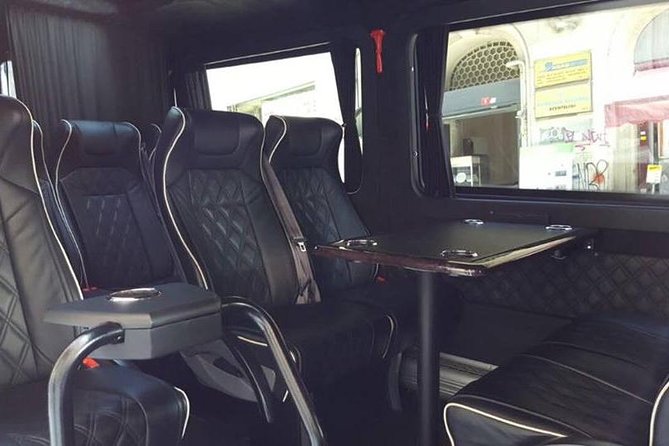
- Air-conditioned van: long walks with a cool reset between stops
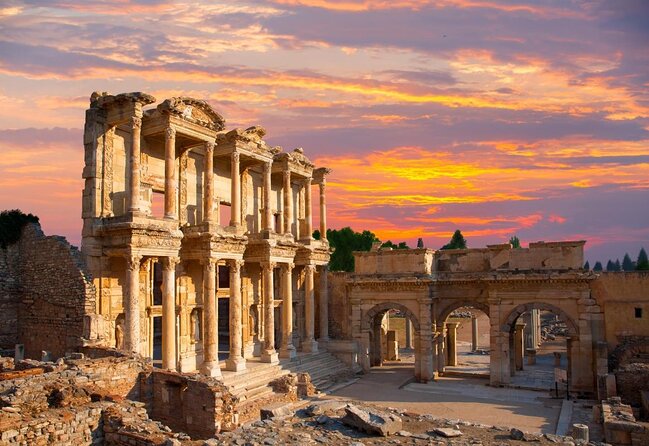
- Classic Ephesus route: Theater, Agora, Marble Street, and the Celsus Library area
- Lunch in the countryside: included, served away from the port grind
Private Ephesus With Cruise-Ready Timing
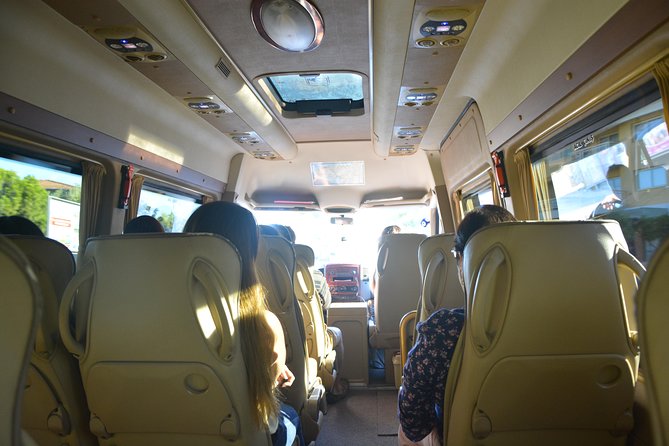
This is built for cruise passengers who have limited hours and zero patience for last-minute chaos. The experience runs about 5 to 6 hours, with transport and stops planned so you can actually see Ephesus highlights and still get back before departure.
The logistics are part of the value. You’re met at the port at a specific meeting area, and your guide and driver coordinate the return time based on the cruise schedule at the port. That matters in Kusadası, where multiple ships can be docking and leaving at different times. The operator explicitly aims for a guaranteed on-time return, so you’re not bargaining with a van driver or doing quick math under pressure.
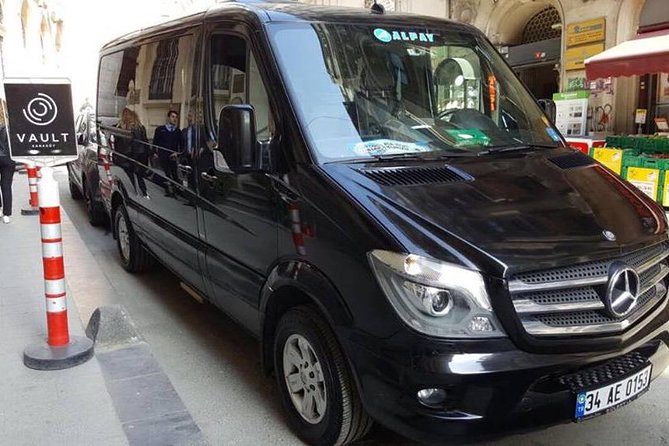
Price-wise, it’s $51.20 per person, which can look low for a private, guided, transportation-heavy half-day—especially because the essentials are covered. You get private transportation in an air-conditioned, non-smoking van, parking fees are included, and lunch is included. The tradeoff is that you still need to handle entrance fees directly, since those aren’t included in the tour price.
If you’re the type who gets cranky when a day plan collapses, you’ll appreciate how this one is structured around the realities of shore time. You also get the option to ask the guide to help with skipping ticket lines by arranging tickets, with the ticket fee paid in cash to the guide.
If you're still narrowing it down, here are other tours in Kusadasi we've reviewed.

Kusadası Castle and the Caravanserai Stop That Sets the Stage
Before Ephesus, you get a short introduction to Kuşadası’s own history. Two quick stops help you connect the modern coastline with the eras that shaped it.
First, you pass by Kuşadası Castle on Pigeon Island. It’s an Ottoman-era fortress that once protected the coastline against pirates and invaders. Even if you only get a pass-by viewing, it does something useful: it gives context for why this coast mattered. When you later see the scale of Ephesus, it’s easier to understand that empires weren’t just building cities—they were controlling routes, harbors, and safety.
Next comes the Öküz Mehmet Paşa Caravanserai, built in 1618. A caravanserai is basically a fortified stopover for merchants and travelers. This one functioned as a trading hub connecting the East and West, with secure lodging and protection for goods. The design details matter here. You’ll see the grand arched entrance and heavy stonework that reflect its job: protect people and merchandise, even during risky travel.
Why I like this part of the day: it slows you down for a moment. Instead of going straight from the port into crowded ticket lines, you get a couple of culturally grounded stops that make Ephesus feel less like a random site and more like part of a living region.
Saint John Kilisesi and the Basilica of St. John Connection
From Kuşadası into the Ephesus area, the tour shifts from maritime Ottoman history to early Christian history. The stop is centered on St. John Kilisesi and the story of St. John the Evangelist.
The guide-led explanation focuses on a timeline you can actually visualize. St. John lived in Ephesus in the early centuries A.D., then after exile on Patmos—where he authored the Book of Revelation—he died near Ephesus and was buried on Ayasoluk Hill.
In the 6th century, Emperor Justinian commissioned the Basilica of St. John, described as one of the largest and most impressive basilicas in Christendom. The idea that you’re walking near a major pilgrimage destination lands differently when you know it was built over the tomb. You’re not just looking at an old church site—you’re seeing part of how faith and community memory shaped architecture across centuries.
The time here is about 30 minutes, and that’s realistic. Even if you’re not deeply religious, the architecture-and-story combo is compelling. Just know entrance fees aren’t included for this stop, so you’ll want to have your budget ready.
Practical tip: bring a light layer and comfortable walking shoes. Even when your time is limited, you can end up standing and looking for longer than you planned—especially when the history is explained clearly.
Meryemana (Virgin Mary’s House): Quiet Pilgrimage Time
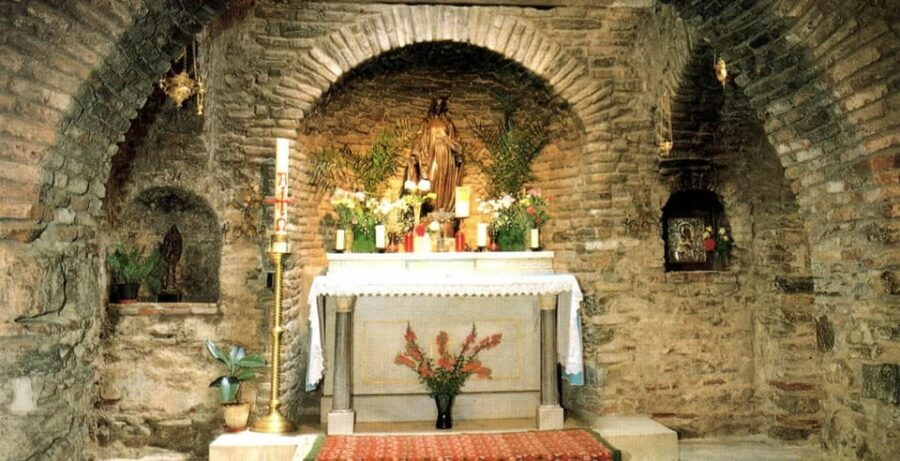
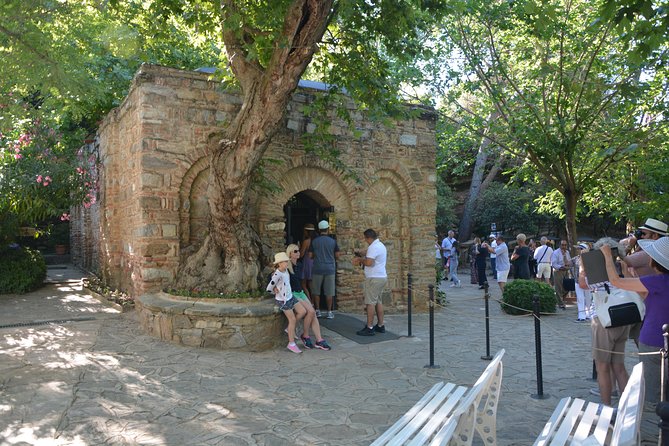
Then you step into a different mood with Meryemana, the tradition-linked House of the Virgin Mary. This is described as a sacred pilgrimage site near Ephesus, believed to be where Mary spent her final days and where she was assumed into heaven.
What makes this stop meaningful is that the tour doesn’t treat it like a quick checkbox. It frames the tradition: after Christ’s resurrection, Apostle John brought Mary to Ephesus as a safe haven, especially after the martyrdom of James and other apostles. That story gives you a reason to slow down here.
The tour also mentions authentication by visits from three popes: Pope Paul VI in 1967, Pope John Paul II in 1979, and Pope Benedict XVI in 2006. Their gifts to the shrine are displayed today, and that detail turns the site into something more personal than just a location on a map.
You’ll have about 45 minutes at this stop, and that’s enough time to see it, absorb it, and take photos without feeling rushed. Entrance fees aren’t included here either, so again, plan for ticket costs.
The downside is mainly atmospheric: this stop can feel calmer than the rest of the day, so if you’re trying to sprint through everything, you might feel you’re moving slower than the ruins. But for most people, that’s the point. It gives you a human pace between the Roman city scale.
Ancient City of Ephesus: Theater, Agora, Marble Street, Celsus
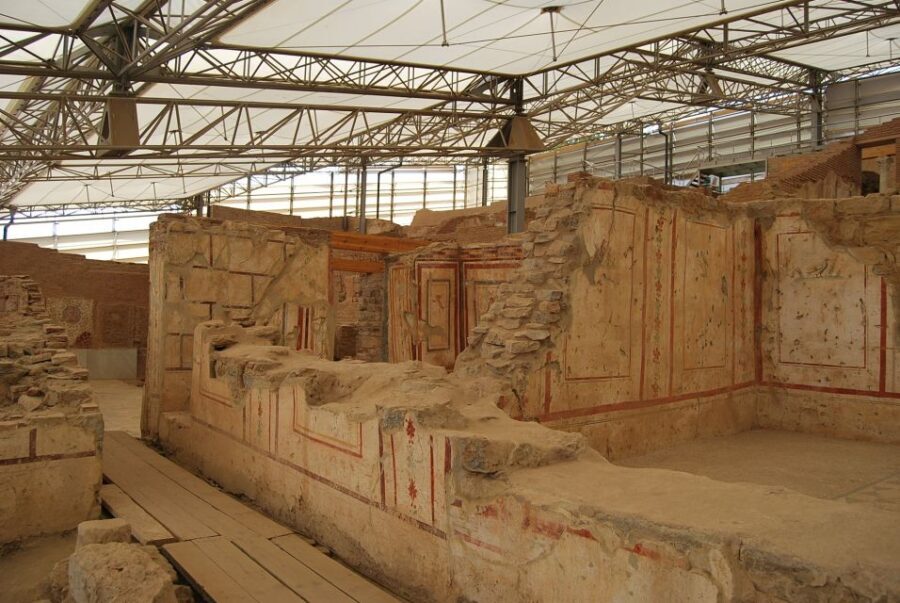
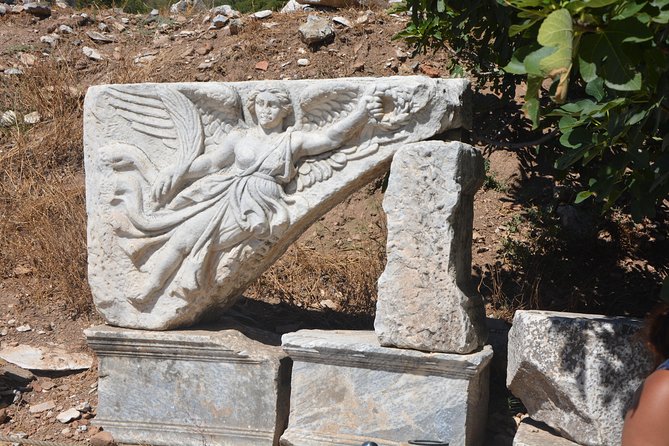
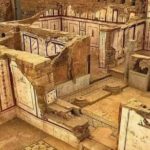
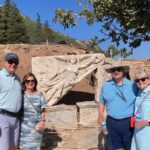
Now for the main event: the Ancient City of Ephesus, known as one of the best-preserved Greco-Roman cities. You’ll get around about 2 hours here, which is a lot for a half-day if you’re smart about priorities.
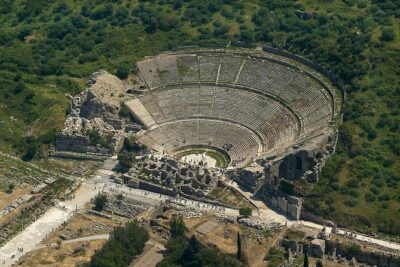
You start with big-city icons that make the scale click. The Great Theater sits as a colossal venue seating over 20,000. It’s tied to gladiatorial battles and huge crowds. Even if you’re standing in modern daylight, it’s easy to imagine what it meant to gather that many people in one place.
Next is the Public Agora, described as a bustling hub where St. Paul preached and where Anatolian handicrafts were traded. That combination is key. It helps you see Ephesus as more than temples and monuments—it was also a marketplace where ideas and commerce mixed.
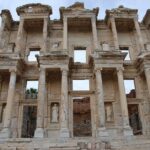
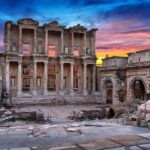
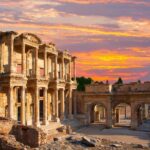
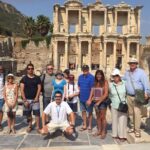
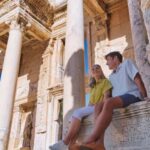
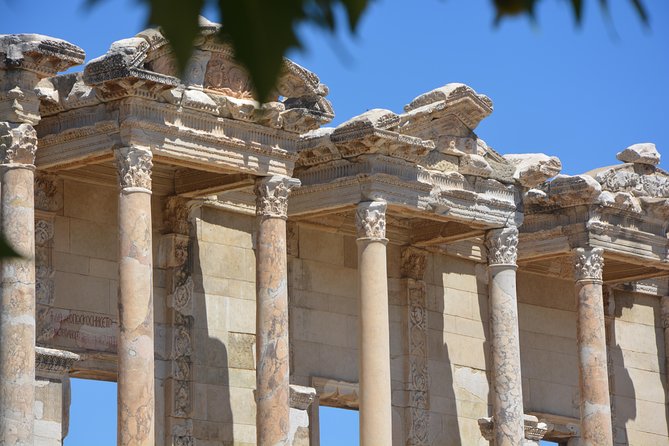
Then you walk along Marble Street to the Celsus Library, including its restored façade. The library is noted as the third-largest library of the ancient world. For photography lovers, this is one of those spots where the building face gives you strong lines and a clear focal point.
Other sites you may encounter include the Temple of Hadrian, Trajan Fountain, and the Domitian Temple area. The itinerary highlights these as part of the broader walk, which is useful if you like seeing a spread of monumental architecture rather than only one or two stand-alone stops.
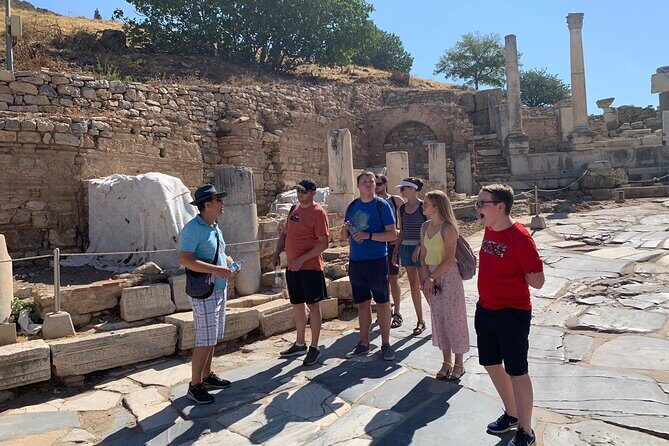
A real consideration: Ephesus can feel crowded when you’re close to other tour groups, and the ground can be uneven. The tour being private helps you avoid some of the worst congestion, but you should still expect a busy site in high season. Your guide helps a lot here by directing your pace and explaining what you’re looking at, so you don’t just stare at stones wondering what matters.
Also, entrance fees are not included for this stop. If you want the simplest day possible, you’ll either pre-plan your budget or ask your guide to help with ticket handling so you’re not scrambling on the ground.

Lunch in the Countryside and Local Handicraft Advice
One of the strongest value points here is that lunch is included, and it’s described as in the countryside. That means you’re not eating in a cramped port strip or paying cruise-center prices. You get a traditional meal in a quieter setting, and that matters when your day includes multiple long walking segments.
You should know what’s not covered: beverages during lunch are not included. So if you like water, tea, or anything else beyond the meal itself, budget a bit extra.
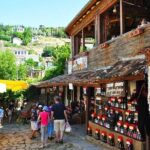
There’s also a short stop described as handicrafts and local insights from your guide. This isn’t just shopping talk. The guide is set up to give expert tips on must-see attractions, advice about top-quality traditional handicrafts, safety guidance, and insider recommendations. In a place like this, that guidance can save you money and protect you from low-quality souvenirs.
If you care about bringing home something that reflects the region, you’ll likely enjoy this part. If you’re not into shopping, treat it as a chance to ask questions and get a final bit of context before you head back.
Price and What You’re Really Paying For
At $51.20 per person, this tour has the right ingredients for value if you want a guided, cruise-timed Ephesus day.
Here’s what’s covered:
- Private tour (your group only)
- Professional licensed local guide
- Private transportation in an air-conditioned, non-smoking van
- Lunch in the countryside
- Parking fees
- Cruise port pickup and drop-off
- Guaranteed on-time return
- Optional help to skip ticket lines by arranging tickets (ticket fees handled separately)
What’s not included:
- Entrance fees to museums and sites
- Gratuities for guide and driver
- Personal expenses
- Beverages during lunch
So is it cheap? In cruise terms, it’s fairly competitive for a private, guided route that includes lunch and transportation. The part to watch is the add-on layer of site tickets. If you’re traveling as a smaller group, you may still feel the entrance fees depending on how many stops you choose and what you pay for. But overall, you’re buying convenience: correct timing, less confusion, and a guide who helps you turn ruins into stories.
Who Should Book This Ephesus Private Shore Excursion?
This tour fits best if:
- You’re on a cruise and want a plan designed to avoid the departure-day panic
- You prefer guided context over reading plaques for hours
- You want major Ephesus highlights without trying to manage transport, tickets, and timing alone
- You like a mix of classical ruins and Christian sites in one day
It may be less ideal if:
- You hate paying entrance fees separately and want a single all-in price
- You only have energy for one or two sites and want a slower pace
- You’re traveling with someone who won’t appreciate the St. John and Meryemana stops (since they’re part of the route)
One more note: the experience indicates good weather is required. So on days when weather gets rough, your plans may shift.
Should You Book This Ephesus Private Shore Excursion?
If your priority is a smooth, guided half-day that hits the big Ephesus moments and still leaves time for lunch, I think this is a strong choice. The private format, the licensed local guide, and the focus on on-time return make it feel more controlled than DIY. And the route balances Roman/Greek highlights with Christian pilgrimage sites, so it’s more varied than a straight ruins day.
I’d book it if you:
- want a structured route with a knowledgeable guide
- appreciate transport comfort after walking
- plan ahead for entrance fees
I’d reconsider if you want everything bundled into one price, or if you’d rather spend a full day inside Ephesus at your own pace. But for cruise timing, this is the kind of practical, thoughtfully built day that lets you enjoy the site instead of managing it.
FAQ
How long is the private Ephesus shore excursion?
It runs about 5 to 6 hours.
Where do I meet the guide in Kusadası?
You meet at the Kusadasi cruise port taxi tours area near Ephesus Cab Taxi, at Güvercin ada girişi kale taksi durağı, Camikebir, 09400 Kuşadası/Aydın, Türkiye.
Is pickup from the cruise port included?
Yes. Cruise port pickup and drop-off are included as described in the itinerary.
Is lunch included, and what about drinks?
Lunch in the countryside is included. Beverages during lunch are not included.
Are entrance fees included for Ephesus and the sites?
No. Entrance fees for museums and sites are not included.
Is this really a private tour?
Yes. It’s a private tour/activity, and only your group participates.
Is free cancellation available?
Yes. You can cancel for a full refund up to 24 hours in advance. The tour requires good weather, and if it’s canceled due to poor weather, you’ll be offered a different date or a full refund.