REVIEW · KUSADASI
Biblical Jewels of Ephesus
Book on Viator →Operated by HERACLES TRAVEL · Bookable on Viator
Ephesus in one long, well-paced day. This tour strings together the big name ruins of Ephesus with the pilgrimage stops tied to Mary and Saint John, so you get the ancient city and the biblical tradition in the same outing. I like the fact that you’re not left to figure anything out on your own—your guide leads the way from the port straight into the sites. I also love the included authentic à la carte lunch, because it keeps your energy steady for the afternoon walking.
One thing to know before you go: while the day feels all-in, entrance fees are listed as not included for the main stops, so you should plan for those costs at Ephesus, Meryemana, and Saint John’s Basilica.
In This Review
- Key things that make this tour worth your time
- Cruise-port pickup in Kusadasi: start simple, save stress
- The stop that sets the stage: Kusadasi to Selçuk
- Ancient City of Ephesus: the guided route through the big hitters
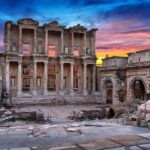
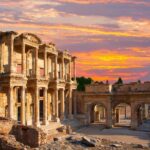
- Temple of Hadrian and the Library of Celsus: why these are more than photos
- Meryemana (House of the Virgin Mary): papal footsteps in Bulbul Mountain tradition
- Saint John Kilisesi (Basilica of St John): finishing the biblical thread
- Lunch that keeps the day moving: included, à la carte, and actually useful
- Price and value: $69.60 for the core experience (with a key caveat)
- Who this tour suits best (and who might want a different plan)
- Booking call: should you reserve Biblical Jewels of Ephesus?
- FAQ
- How long is the tour?
- Where does the tour start and end?
- What time does the tour depart?
- Is lunch included?
- Are entrance fees included?
- Is this a private tour?
- Is the tour suitable for most travelers?
- What is the cancellation policy?
Key things that make this tour worth your time
- Cruise-port pickup with a name sign, so you can re-group fast after docking
- Ephesus in a guided walk through major landmarks like the Library of Celsus and the Grand Theatre
- Meryemana (Virgin Mary’s House) with the papal connection made explicit through Pope Paul VI’s visit
- Saint John’s Basilica as a fitting close to the biblical arc of the day
- Lunch included to keep you from hunting for food between sites
Cruise-port pickup in Kusadasi: start simple, save stress
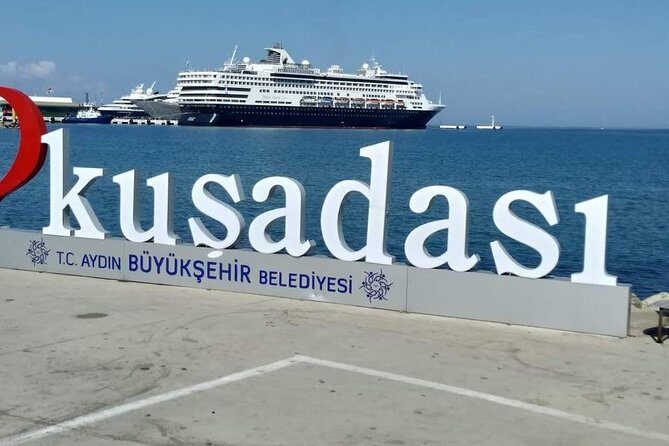
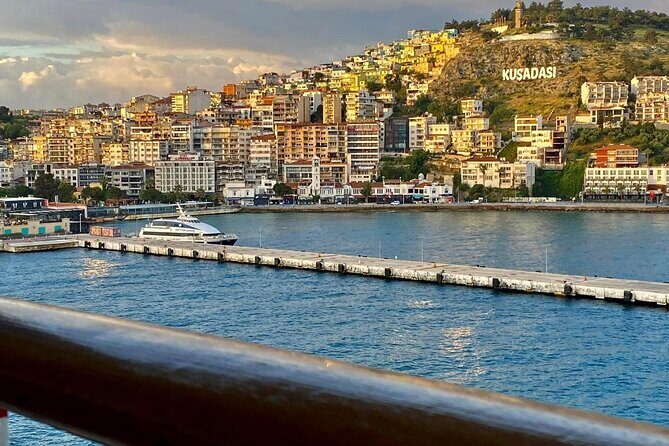
This is built for cruise days in Kusadasi. When your ship docks, a professional local guide is waiting at the arrival gate with a board showing your name. That detail matters more than people think. In a port area where everyone is trying to move at once, finding your group is half the battle.
From there, you join your guide and head to the van. The ride is short enough to feel like a warm-up, not a full day lost to transfer time. The tour also starts at 8:00 am, and it runs with flexible morning departures, which can help you match the day to your ship schedule.
The other practical win is the pacing. This isn’t a lightning-bolt “see everything from a bus window” style tour. It’s a guided route where you get time at each stop—especially the core Ephesus ruins—so you actually absorb what you’re looking at rather than just passing through.
One more good sign: it’s a private tour/activity for your group. That tends to keep the experience from feeling chaotic, even in busy places like Ephesus.
Other biblical & Bible study tours we've reviewed in Kusadasi
The stop that sets the stage: Kusadasi to Selçuk
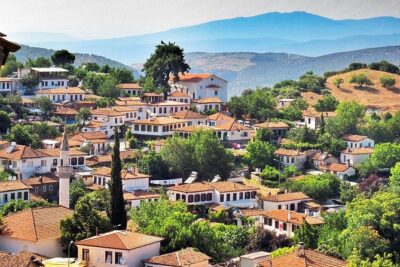
You’ll spend about 30 minutes in transit before you reach Selçuk, the town used as the jump-off point for Ephesus ruins. This is the typical geography of the region: modern Selçuk sits near the remains of one of the ancient world’s most important cities.
That short drive does two things for you. First, it gets you into the right area before the hottest part of the day. Second, it gives the guide a chance to give you context before you hit the stones. When you arrive already knowing what you’re about to see, the ruins start to make sense fast.
There’s also a small “buffer” built into the day. The first stop at Kusadasi is quick, and then you roll into Ephesus with real time on site. It’s the kind of structure that works well when you’re on a cruise timetable and you still want a meaningful experience.
Ancient City of Ephesus: the guided route through the big hitters
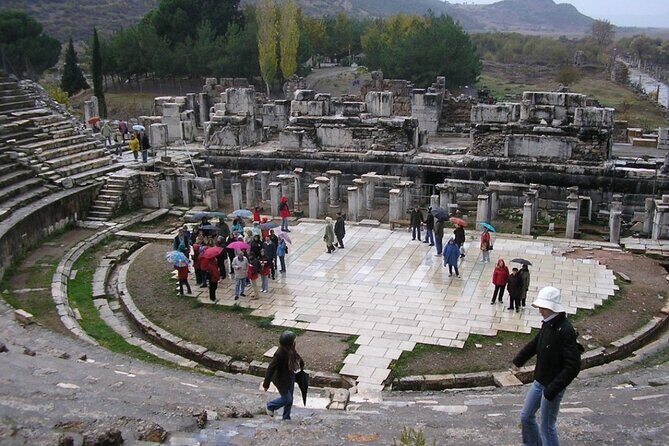
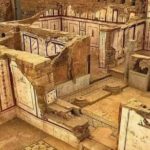
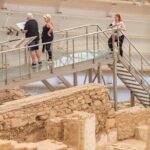
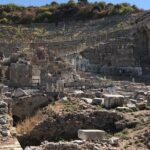
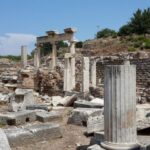
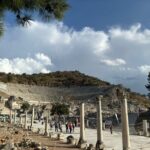
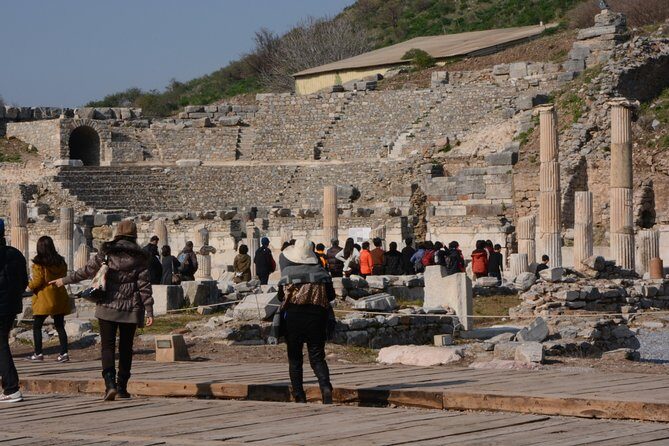
Ephesus is the headliner, and the tour gives it proper focus. You get around two hours to explore the ancient city ruins in a guided format. The guide’s job here is important: Ephesus is huge, and if you wander on your own you’ll miss how the landmarks connect.
Here are the named places you’ll be looking for during your visit:
- Odeon
- State Agora
- Temples of Dea Roma
- Prytaneion
- Domitian Square
- Hercules Gate
- Curetes Street
- Fountain of Trajan
- Baths of Scholastica
- Temple of Hadrian
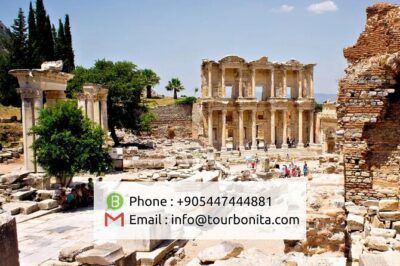
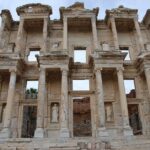
- Library of Celsus
- Gymnasium
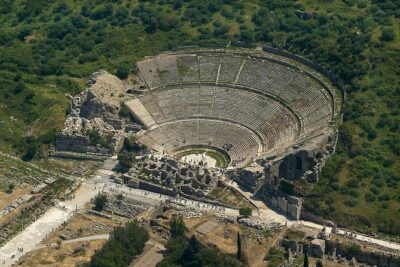
- Grand Theatre
These aren’t random stops. They trace what Ephesus was built to do: commerce and civic life, then later a major religious center tied to early Christianity. That shift helps you understand why you’re seeing both grand public architecture and religiously significant spaces in one city footprint.
A quick practical thought: this is a ruin day, so expect walking on uneven ground. Wear comfortable shoes and plan to take breaks if you need them. The tour includes guide time at each stop, so you won’t just be dropped into the largest area and sent off alone.
Also, check what you want from Ephesus. If you love classical architecture and city planning, you’ll enjoy the way the route moves from gates and streets to theaters and libraries. If you’re more interested in the biblical angle, you’ll still get the “why” behind the pilgrimage stops that come later, because Ephesus was part of the story early on.
Temple of Hadrian and the Library of Celsus: why these are more than photos
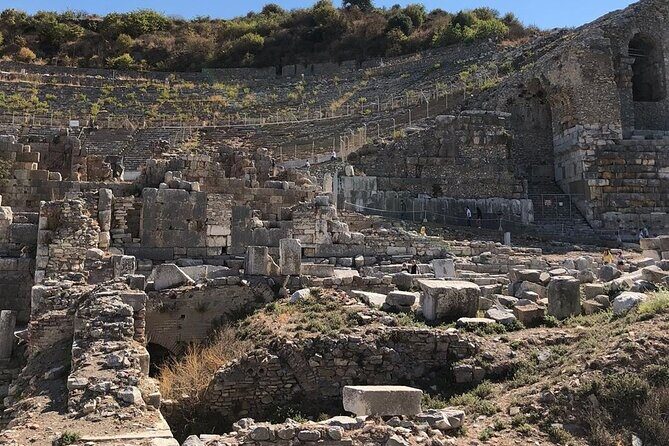
Two of the easiest places to spot—and to photograph—are also two of the most useful for understanding the city.
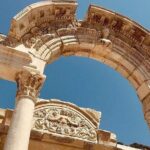
The Temple of Hadrian is a reminder that Ephesus was deeply tied to the Roman world. You’re not just seeing walls; you’re looking at how power and public worship were built into everyday city life.
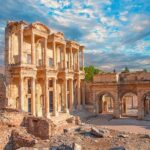
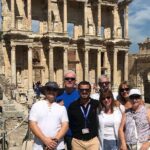
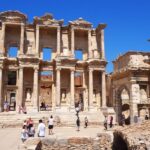
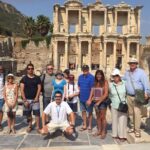
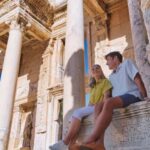
Then comes the Library of Celsus, one of the most iconic visuals in Ephesus. Even if you’ve seen pictures before, being there changes it. The setting helps you imagine why this mattered: knowledge wasn’t separate from civic identity. It was part of what a city showed off.
If you’re wondering what to pay attention to while you’re there, use this simple approach: look for the “public face” of each landmark. The theater isn’t just a theater; it’s where crowds gathered. The streets aren’t just passageways; they’re part of how the city flowed and staged daily life.
This tour’s value is that the guide helps connect those dots. You spend time in a route where the landmarks are explained as part of a single city story, not as isolated photo stops.
Meryemana (House of the Virgin Mary): papal footsteps in Bulbul Mountain tradition
After the ancient city, you head to Meryemana (The Virgin Mary’s House). You’ll have about 45 minutes here. This stop is different from Ephesus ruins because it’s less about architecture “as a system” and more about pilgrimage tradition.
The tour explains the belief that after the death of Jesus Christ, Saint John brought Mary to Ephesus, and that a small house was built for her on Bulbul Mountain. Whether you approach it as faith, cultural tradition, or history study, this stop is powerful because it’s tied to a living story people still visit today.
There’s also a specific papal marker you’ll hear: on July 26, 1967, Pope Paul VI visited Meryemana and declared it a pilgrimage center. That’s a concrete historical detail that helps the stop feel anchored, not vague.
Practical tip for your visit: this is a place where you’ll likely want a slower pace than in the ruins. The time here is shorter than Ephesus, but it’s enough to absorb the setting and take in the meaning of the site. If you’re traveling with family or you’re mixing faith interest with sightseeing interest, this is the stop that usually lands best because it’s personal and reflective compared with the large-scale city ruins.
Saint John Kilisesi (Basilica of St John): finishing the biblical thread
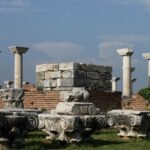
Your final major sightseeing stop is Saint John’s Basilica (Saint John Kilisesi), also around 45 minutes. This is described as the place where Saint John was most probably buried, which is why it fits neatly as the close of the day’s biblical route.
By this point, the whole experience has a shape. You start with Ephesus as a major city that later became a religious center. Then you move to the Virgin Mary’s House. Finally, you end with Saint John’s Basilica. That arc makes the day feel coherent rather than random site-chasing.
You’ll be transferred back to the port after this stop, and the tour ends back at the meeting point. That last part matters on a cruise day—you want a wrap-up that’s organized and predictable.
If you’re the type who likes to leave with a sense of completion, this ending works well. You’re not just tired from walking; you also have a clear sense of what the day was trying to do.
Lunch that keeps the day moving: included, à la carte, and actually useful
A big quality-of-life factor here is that lunch is included. Not just a snack. You get an authentic à la carte lunch during the tour, built in to keep you energized through the sightseeing.
When you’re doing Ephesus and two pilgrimage sites, the temptation is to under-eat early and then feel it later. This is the opposite approach. The lunch is timed so you can keep up your pace without turning the afternoon into a scramble.
What I like about an à la carte meal (as opposed to one-size-fits-all group plates) is the flexibility. Even if the menu details vary, you’re usually more able to choose something that fits your taste and appetite. And that matters when your day includes ancient ruins, then a calmer faith site, then another church.
One note to plan for: if you have dietary restrictions, it’s worth communicating those ahead of time when you book, since the tour data doesn’t list specific meal options.
Price and value: $69.60 for the core experience (with a key caveat)
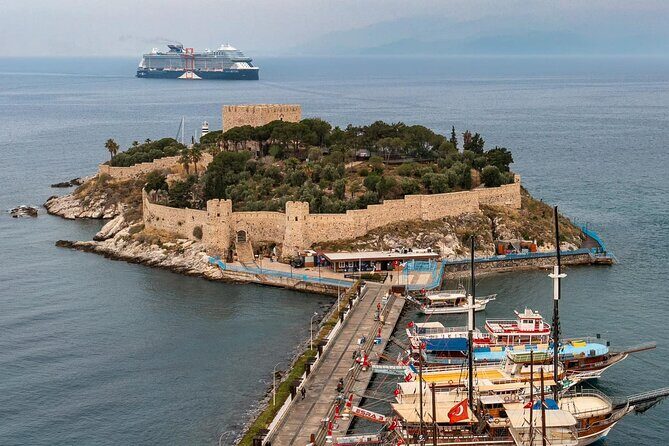
At $69.60 per person, this tour is priced to feel like good value for a cruise day: you’re getting air-conditioned minivan transport, a professional local tour guide, and lunch included.
The main caveat is the one you should treat seriously: entrance fees are listed as not included for the stops that matter most. The start stop is labeled free, but Ephesus ruins, Meryemana, and Saint John’s Basilica are marked as admission not included. So your final total cost depends on those on-site fees.
Here’s how I’d think about it as value. If entrance fees are roughly what you’d pay anyway for a DIY visit, then you’re buying convenience and guidance. If you end up paying more than expected, you’ll feel the difference fast. Either way, the tour’s pricing makes sense because your guide is doing the heavy lifting—connecting landmarks and keeping your day organized.
If you’re traveling short on time and you want the route to make sense, the guide + transport + lunch bundle is the part that justifies the cost.
Who this tour suits best (and who might want a different plan)
This works best for:
- Cruise passengers who want a guided, structured day from Kusadasi
- People who want both Ephesus ruins and the Virgin Mary / Saint John sites without switching tours
- Travelers who enjoy learning the story behind landmarks, not just ticking boxes
It might feel less ideal for:
- Anyone who hates walking on uneven ground in ruins (you’ll likely do some walking at Ephesus)
- People trying to minimize cash expenses on the day (entrance fees aren’t included for the main sites)
Because the tour is private for your group, it can also be a nice pick for couples, friends, or small family groups who want a calmer pace than a large coach day.
Booking call: should you reserve Biblical Jewels of Ephesus?
I’d book this if you want one organized cruise-day plan that covers the essentials: Ephesus landmarks, Meryemana, and Saint John’s Basilica, with lunch included and a guide to tie it all together. The route has a clear narrative shape, and the time allocation (about two hours at Ephesus, then shorter stops for the religious sites) is the right balance for a 7-hour day.
I would hesitate only if entrance fees are a major concern for your budget. In that case, you can still go, but you should confirm what you’ll pay at Ephesus and the two religious sites so you’re not surprised at checkout.
If you’re aiming for value plus meaning—ruins in the morning, faith sites after, then back to the port on time—this is a solid choice.
FAQ
How long is the tour?
The total duration is about 7 hours.
Where does the tour start and end?
It starts at Kusadasi, Turkish Aegean Coast and ends back at the meeting point.
What time does the tour depart?
The start time is 8:00 am, with morning departures.
Is lunch included?
Yes. Lunch is included as part of the tour.
Are entrance fees included?
No. Entrance fees are not included for the main sightseeing stops.
Is this a private tour?
Yes. It’s listed as private, with only your group participating.
Is the tour suitable for most travelers?
Yes. The tour notes that most travelers can participate.
What is the cancellation policy?
You can cancel for a full refund up to 24 hours before the experience starts.