REVIEW · SELCUK
Ephesus: Local Tour Guide
Book on GetYourGuide →Operated by APS TRAVEL AGENCY · Bookable on GetYourGuide
Ephesus feels bigger when a real person talks you through it. This private, English-guided walk takes you from the upper gate down through the main ruins at a human pace, with standout stops like the Terrace Houses. I especially like how the guide pacing stays calm even when crowds thicken, and how the tour connects Roman civic life to early Christian threads without turning it into a lecture. One thing to consider: entrance fees aren’t included, so you’ll want to budget for tickets on top of the tour price.
In this 3-hour outing, you’ll cover about 2 hours on the marble streets of the ancient city, plus time for the Terrace Houses. You’ll start uphill at the upper gate, which matters because the site is slightly downhill, and starting wrong can turn a pleasant walk into an awkward shuffle. Guides linked to the experience include Nizam and Yildmaz, and their past impressions were all about strong site knowledge and not rushing people.
If you like archaeology that feels lived-in, not just photographed, this works well. If you’re the type who wants total freedom to wander with zero structure, you might find the fixed route a little limiting.
In This Review
- Quick highlights
- Upper Gate Start: your easiest walk into Ephesus
- The Core Walk: Odeon to Celsus Library and the Great Theater
- Curetes Street and Hadrian Temple: where the city feels like a route
- Terrace Houses on Curetes Street: mosaics, fountains, and central heating
- Celsus Library and the Marble Road: the photo stops that still teach
- Great Theater and Arcadian (Harbour Road): finishing with the city’s audience
- Price and what $165 covers (and what it doesn’t)
- Pacing, crowds, and how the guide changes the feel
- Who this tour suits best (and who should rethink it)
- Should you book this Ephesus Local Tour Guide?
- FAQ
- Is this tour private?
- How long is the Ephesus tour?
- Where do we meet the guide?
- What language is the tour guide?
- Does the tour include the Terrace Houses?
- Are entrance fees included in the price?
- Is transportation included?
- What is the cancellation policy?
Quick highlights
- Private group up to 15 people means the guide can actually adjust to your questions
- Upper Gate start helps you avoid fighting the slope from the start
- Skip the ticket line so you lose less time to queues
- Exclusive Terrace Houses visit with mosaic floors, fountains, and central heating
- A named circuit of major landmarks from Celsus Library to the Great Theater
Upper Gate Start: your easiest walk into Ephesus
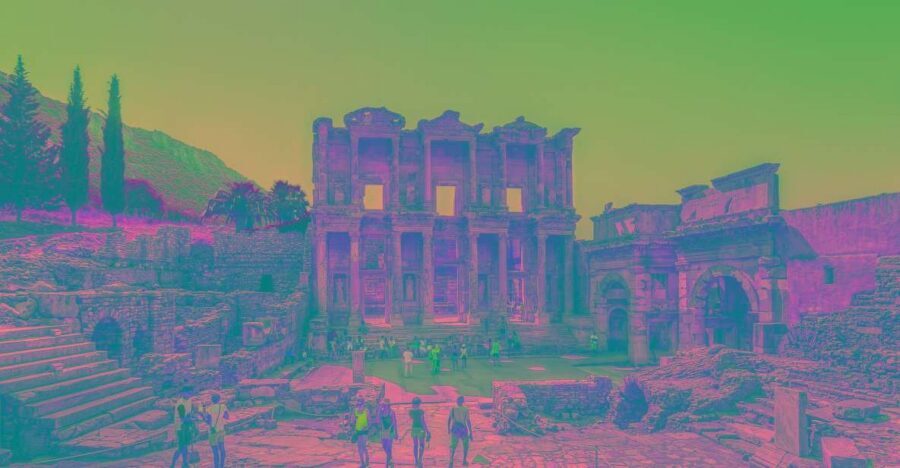
The tour begins at the Ephesus Archaeological Site, meeting your guide at the upper gate. That choice is practical. The ruins sit on a slope, so beginning uphill helps you keep your stride comfortable as you move through the city.
I like that the guide frames the visit around how the place functioned across eras. Ephesus is described as an important testimony to the Hellenistic, Roman Imperial, and early Christian periods. You’ll hear why it matters for Christianity too, including that Ephesus was one of the seven churches of Revelation.
And yes, you’ll be walking. The good news is the route is planned as a steady descent, not a back-and-forth scramble. Wear shoes you trust on stone and uneven ground, because the marble streets can still be slippery or worn in spots.
Other guided tours in Selcuk

The Core Walk: Odeon to Celsus Library and the Great Theater
You’ll spend roughly 2 hours exploring the ancient city on foot with an English-speaking guide. The advantage of having a guide here is simple: you don’t just see big ruins, you learn what they likely meant to the people living in Ephesus.
Your route kicks off with the Odeon. This is one of those structures that helps you picture entertainment and public gatherings beyond shopping and temples. From there, you move into the city’s public nerve center with stops like the State Agora and the Prytaneion.
The State Agora is where civic energy would have been on display, and the Prytaneion helps you understand the city’s “admin and ritual” vibe. Next up is the Memmius Monument and then the Domitian Temple. Together, they reinforce how Roman authority was visually stamped into the urban layout—through monuments and buildings meant to project power.
Then you pass through Hercules Gate, a dramatic way to shift into the next stretch of streets. Gates in Ephesus aren’t just entrances; they’re storytelling devices in stone—signposts for where the walk becomes more about processions and everyday movement.
Curetes Street and Hadrian Temple: where the city feels like a route
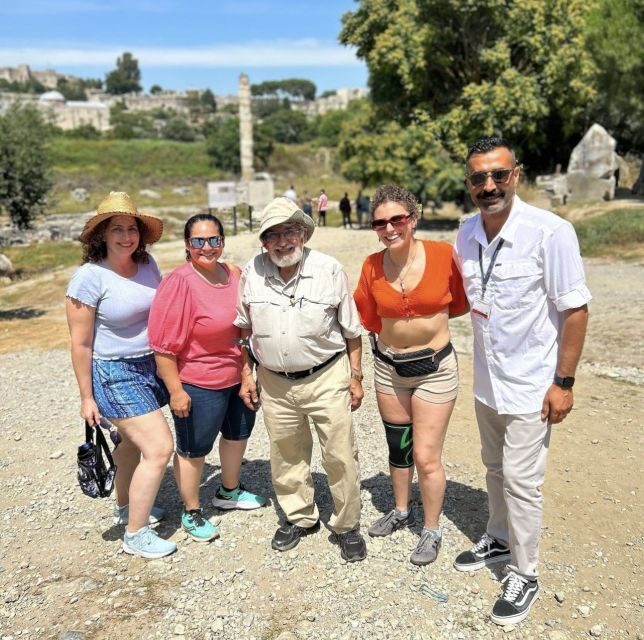
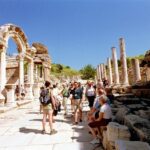
The big pedestrian spine of this tour is Curetes Street. This is the kind of place where the layout matters: it’s not random rubble, it’s a corridor showing how people likely moved through the city’s ceremonial and daily life.
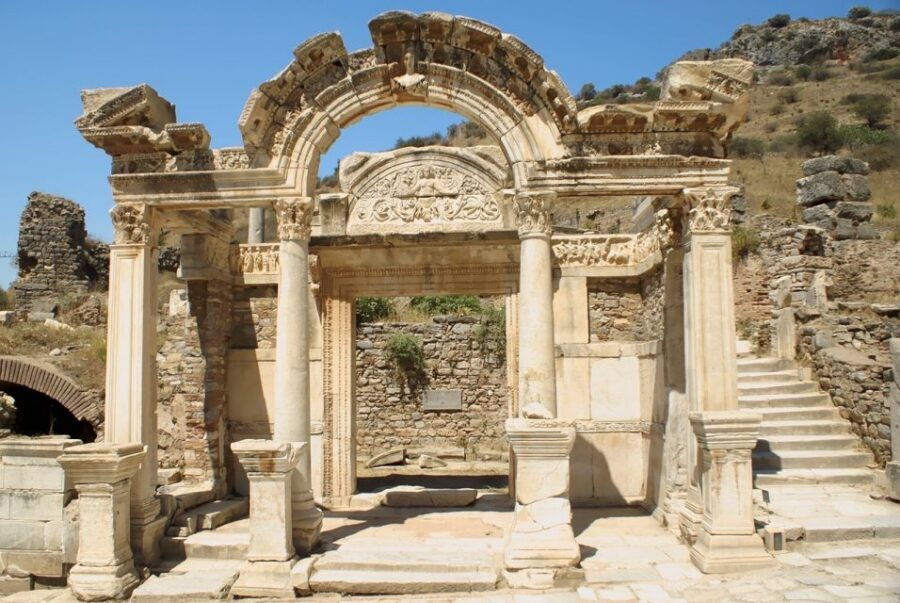
As you head along, you’ll see the Hadrian Temple. That stop gives context for how emperors and civic identity were tied together. Even if you don’t read every inscription up close, your guide can help you connect the building to the broader Roman Imperial layer of Ephesus.
Then comes the Latriens. This is one of the stops that makes you go, oh right, people lived real lives here. Public facilities like latrines and related areas remind you this wasn’t only a postcard ruin—it was a working urban system.
And after the Latriens, the tour’s highlight moment arrives: the Terrace Houses.
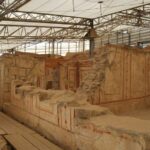
Terrace Houses on Curetes Street: mosaics, fountains, and central heating
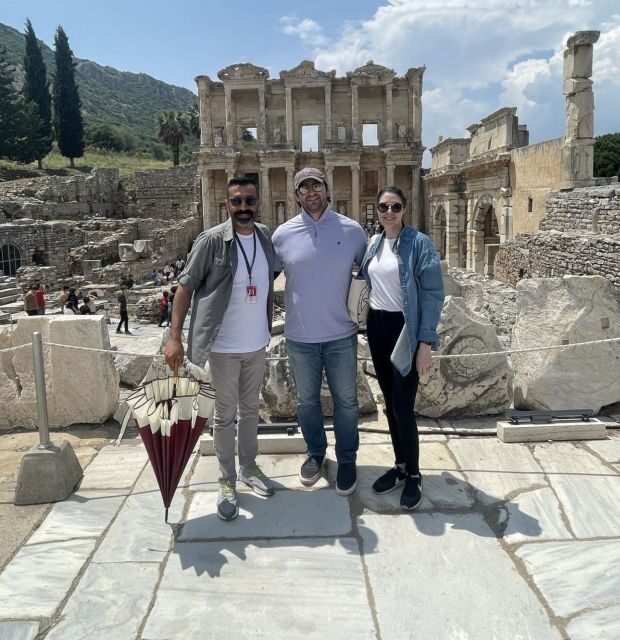
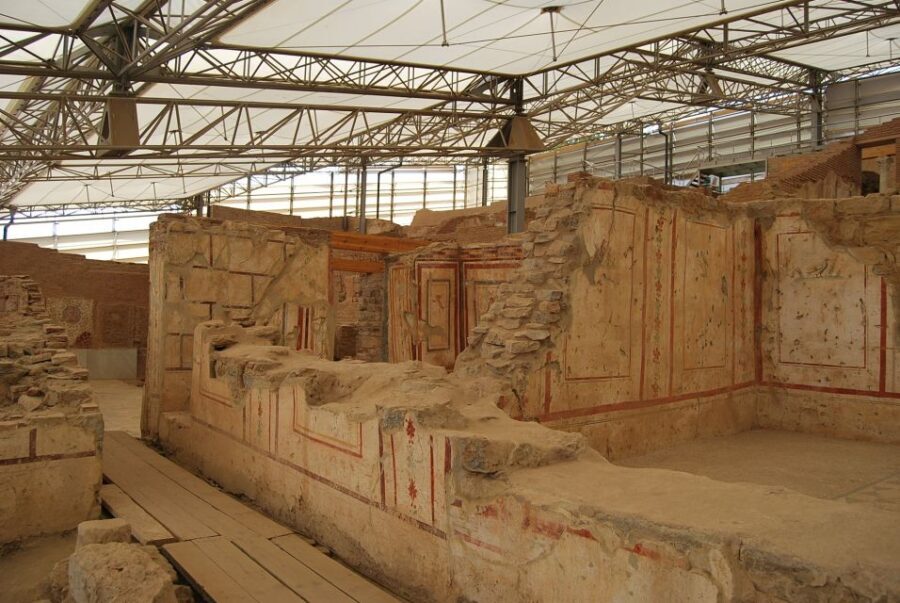
Here’s why this part is so often the reason people pick the tour: the Terrace Houses weren’t just ordinary homes. They belonged to prominent people and give you a close-up view of what upper-class domestic life looked like in Ephesus.
The Terrace Houses sit along Curetes Street and are dated back to the 1st century AD, with some homes inhabited up to the 7th century AD. That long use period matters. It means you’re not only looking at a “moment in time”—you’re seeing how a high-status residential area stayed relevant for centuries.
Inside, the tour highlights features you can actually visualize:
- Mosaic floors
- Fountains
- Central heating
Those details change how you interpret the rest of the ruins. Once you’ve seen what wealthy households had, the public buildings start to feel more connected—like you’re understanding both the stage (agoras, theaters, temples) and the backstage (private rooms with comfort tech).
This is also where I think the guide’s value shows most. The Terrace Houses can feel like a puzzle without context. A good guide helps you connect what you’re seeing to social status, daily routine, and the way the city’s wealth sat close to its main streets.
Celsus Library and the Marble Road: the photo stops that still teach
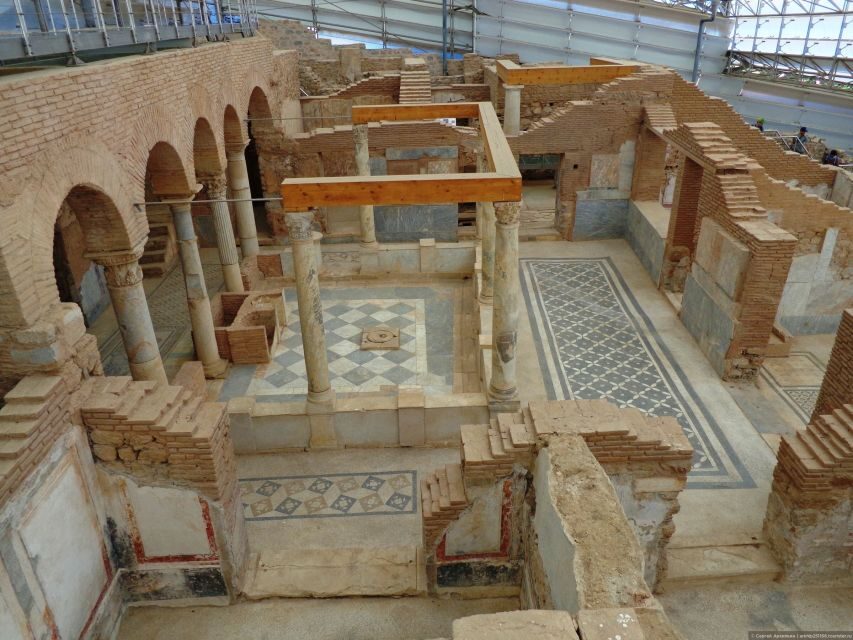
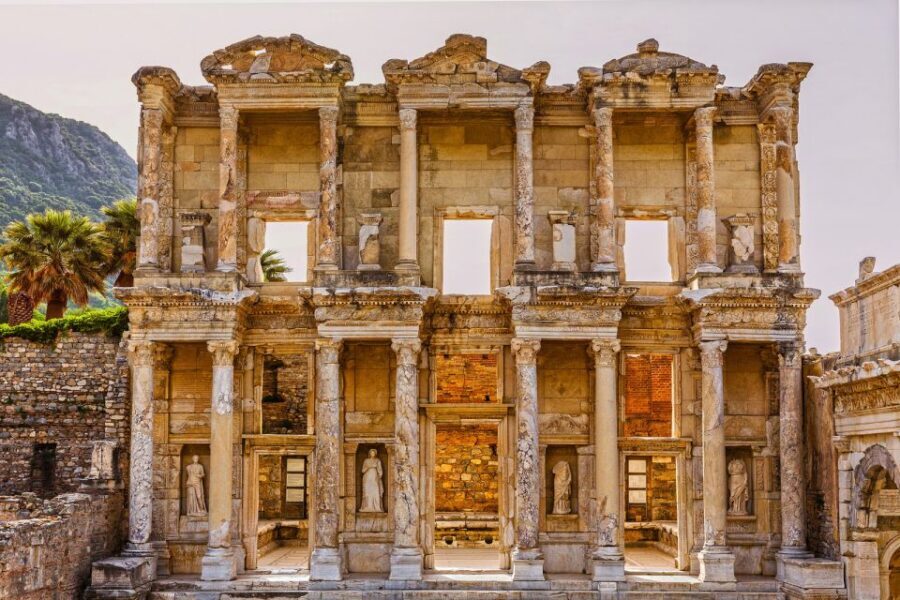
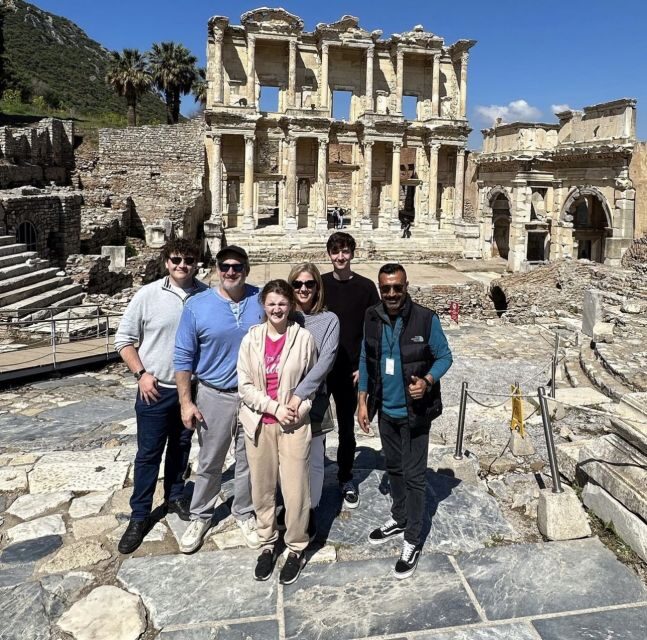
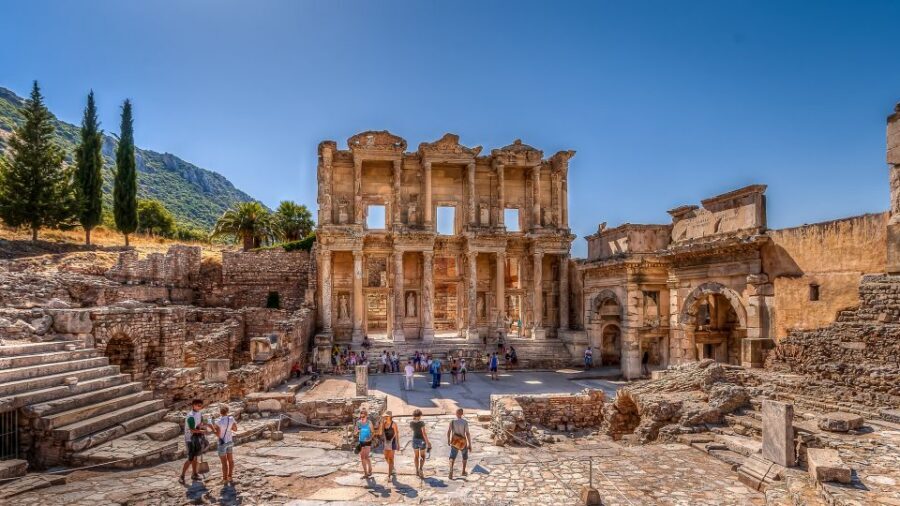
After the Terrace Houses, the tour brings you back into the “main attraction” zone with the Celsus Library. This is one of those ruins that looks instantly recognizable, even if you’ve only seen it on a screen. What makes it worthwhile on a guided walk is the explanation of why it’s so important in a city like Ephesus.
Next is the Marble Road. Even if you’re not an architecture nerd, walking on a known monumental roadway helps you grasp scale. You get a better sense of how Ephesus moved people—literally, along paved routes that prioritized movement and visibility.
Then you’ll hit the Commercial Agora. Markets tell a different story than temples. Here, the city’s everyday economy comes into focus: trade, business activity, and the constant churn of daily life.
If you’re short on time, this segment is the backbone of the tour. You’ll feel like you covered the big pillars of Ephesus without having to plan a route yourself.



Great Theater and Arcadian (Harbour Road): finishing with the city’s audience
The tour ends the main circuit at the Great Theater, a major landmark that makes Ephesus feel like a place where announcements, performances, and crowd events mattered. The theater is a good reality check too. When you’ve been walking among civic buildings, the theater reminds you how public life came together in a single space.
From there, you shift to Arcadian (Harbour Road). This is your connection point toward the water side of the city, tying the inland monuments back to how people and goods likely moved.
It’s also a smart ending because it helps your brain put the ruins into order. Instead of stopping suddenly at one dramatic building, you finish with a sense of the city’s flow—toward the harbor, toward movement, toward a broader world beyond these stone walls.
Price and what $165 covers (and what it doesn’t)
The price is $165 per group, for up to 15 people, for a 3-hour experience. Because it’s private, that cost works out best when you’re traveling in a small group that wants a guide instead of a crowd-style tour.
The tour includes an English local tour guide and also includes skipping the ticket line. That skip can be the difference between enjoying the first hour and spending it queued up with everyone else.
What’s not included is important: entrance fees, lunch and drinks, and transportation. So when you compare value, treat the $165 as the guide and tour service fee, then add the site entrance costs separately.
In plain terms: you’re paying for organization, pacing, and guided interpretation—plus the Terrace Houses experience. If you would otherwise rush through independently, this can feel like good value.
Pacing, crowds, and how the guide changes the feel
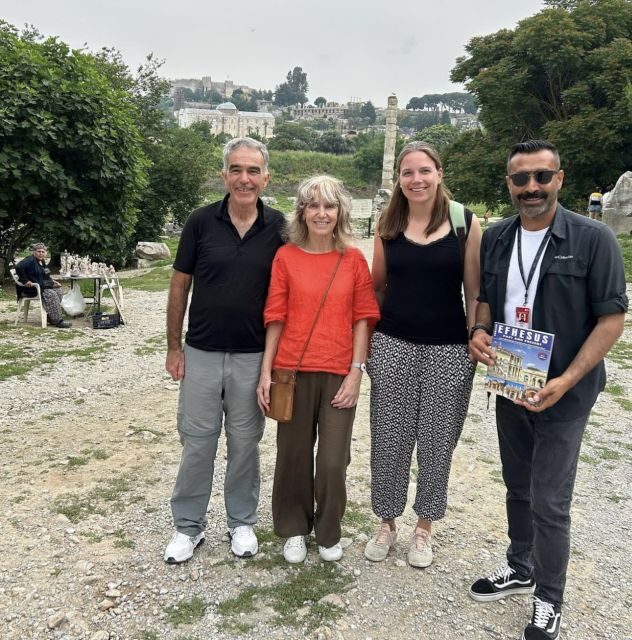
One of the strongest signals from past experiences is that the guide doesn’t rush you. That matters at Ephesus because crowds can make even famous ruins feel like a conveyor belt. A calmer pace lets you actually look. You notice details like the layout between structures and how the streets connect.
I also like that the walk isn’t designed around a sprint. It’s built around a route of key landmarks—Odeon, agoras, gates, Curetes Street, Terrace Houses, Celsus Library, Commercial Agora, the Great Theater, and Arcadian (Harbour Road)—so you won’t end up missing the core highlights while still having time to ask questions.
This is where private groups win. Even with the same sights, having a guide to slow the moment down can be the difference between seeing stones and understanding how the city worked.
Who this tour suits best (and who should rethink it)
This experience is ideal if you:
- Want a guided route through major Ephesus sites without planning every turn
- Care about context, like why the city is tied to Roman civic life and early Christianity
- Really want the Terrace Houses experience, including details like mosaics, fountains, and central heating
- Prefer not to get swept along through crowds
You might want to rethink it if you:
- Plan to spend most of your time wandering on your own and don’t like set routes
- Expect the entrance fees to be included in the tour price
- Want transportation handled end-to-end (transportation isn’t included)
Should you book this Ephesus Local Tour Guide?
I think it’s a strong pick when your goal is understanding, not just checking off landmarks. The route hits the major stops you’d want anyway, but what makes the tour feel worth it is the combination of private pacing and the Terrace Houses focus.
Book it if you appreciate a guide who can explain how different parts of Ephesus connect—from public agoras to private life. Skip it only if you’re determined to do everything solo and don’t want a structured walk.
If your budget allows entrance fees on top, this is exactly the kind of small-group guide-led visit that makes Ephesus feel like a real city, not a list of names.
FAQ
Is this tour private?
Yes. It’s described as a private group, for up to 15 people.
How long is the Ephesus tour?
The duration is 3 hours.
Where do we meet the guide?
You meet at the Ephesus Archaeological Site, at the upper gate.
What language is the tour guide?
The tour guide provides an English-language tour.
Does the tour include the Terrace Houses?
Yes. The highlights include an exclusive visit to the Terrace Houses.
Are entrance fees included in the price?
No. Entrance fees are not included.
Is transportation included?
No. Transportation is not included.
What is the cancellation policy?
You can cancel up to 24 hours in advance for a full refund.