REVIEW · SELCUK
Pamukkale Day Tour from Selcuk
Book on Viator →Operated by Alaturca Ephesus · Bookable on Viator
Cotton-white terraces meet Roman ruins on one day. This is a long outing, but it’s built for real wow-factor: Pamukkale’s travertines and Hierapolis side by side, plus time for photos.
I especially like the hotel pickup and drop-off, which makes this far easier than trying to piece together buses and taxis on your own. I also like that lunch and all entrance fees are included, so the day feels “paid for” up front instead of turning into a surprise bill at the gates.
One possible drawback: it’s an about 11-hour day with an early start, and pickup timing can shift a bit based on your exact hotel and other stops. Also, depending on conditions at Pamukkale, some pools may not match the most dramatic photos you’ve seen.
In This Review
- Key highlights to know before you go
- A Full Day of Pamukkale and Hierapolis: Why This Combo Works
- Pickup, Timing, and the Real-Life Logistics From Selçuk
- The Early Feel of Pamukkale: Cotton Castle Meets a 200-Meter Terrace
- Hierapolis Theatre: Hadrian-Era Engineering in a Still-Standing Shell
- Apollo Temple on the Main Street: 40 by 60 Feet of Meaning
- Thermal Pools and Free Time: How to Use Your 2 Hours Wisely
- Hierapolis Beyond the Stops: Temples, Baths, and the City That Changed Its Beliefs
- Lunch and the Drinks Reality Check
- Is the $150.60 Price a Good Deal From Selçuk?
- Who This Tour Fits Best (and Who Might Want a Different Plan)
- Should You Book This Pamukkale Day Tour?
- FAQ
- What time does the tour start?
- Where are hotel pickups offered?
- Do I need to confirm my exact pickup time?
- How long is the tour?
- Is lunch included?
- Are entrance fees included?
- Is the tour guided in English?
- How big is the group?
- Is free cancellation available?
- Are drinks included?
Key highlights to know before you go
- Small group size (max 15): more personal pacing than big-bus days
- All entrance fees covered: you’re not hunting ticket lines all afternoon
- Longer Pamukkale time (about 2 hours): enough for walking and a proper photo run
- Hierapolis major sights in one visit: theatre, sacred spaces, and major ruins packed together
- Lunch included: you can budget your energy without scrambling for food
- English guided tour: the drive and site stops come with context, not just drop-off and go
A Full Day of Pamukkale and Hierapolis: Why This Combo Works
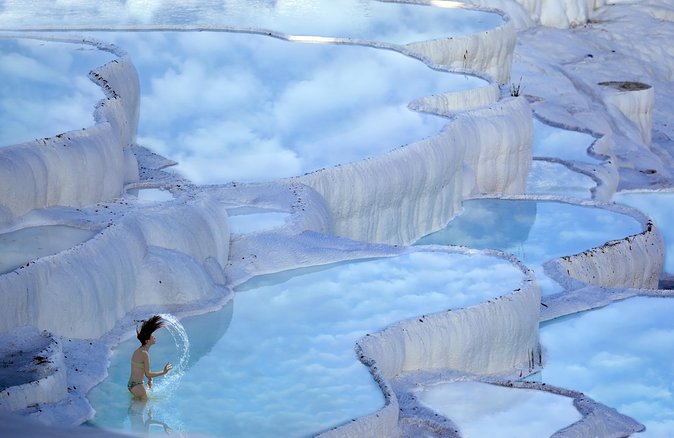
Pamukkale and Hierapolis aren’t two separate stops. They’re one story told on two levels—natural wonder above, ancient city below, all tied to thermal water and mineral deposits. The terraces are the star, but the ruins give those white pools a second meaning: this place has been visited for centuries for its healing-water reputation.
What I like about this tour format is that it doesn’t treat the sites like a checklist. You start with Pamukkale’s setting, then connect it to Hierapolis as the ancient spa city on a limestone terrace about 200 meters above the area you see today. Hierapolis was founded as a thermal spa around 190 BC by Eumenes II, and that backstory helps you understand why people cared so much about mineral water.
This is also where small-group time matters. With a group capped at 15, you’re more likely to get steady guide attention during the walk and at the key viewpoints, instead of being left to figure things out while everyone else streams ahead.
If you're still narrowing it down, here are other tours in Selcuk we've reviewed.
Pickup, Timing, and the Real-Life Logistics From Selçuk
The tour starts around 7:30 AM, with hotel pickups usually running from 7:15 AM to 7:45 AM in Selçuk (and also Kusadasi area hotels). Pickup time can shift based on where you’re staying and how many other additional people and pickup points are on that day. The practical move: confirm your final pickup time with the operator the day before using the provided call/WhatsApp/SMS contact.
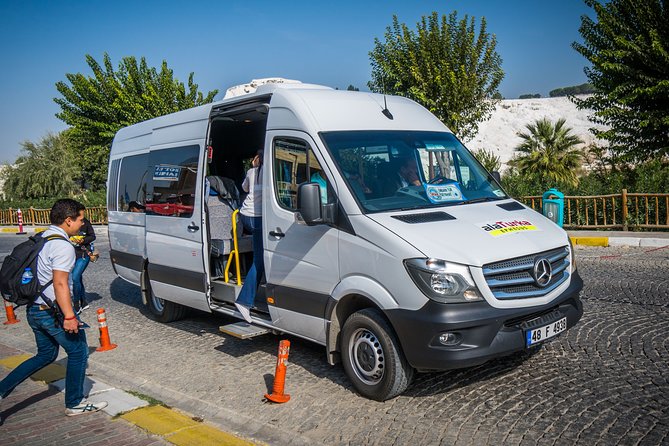
You’ll travel in an air-conditioned minibus. That’s not just comfort—it’s a sanity-saver, because Pamukkale is a full-day commitment. Expect a long drive, plus walking at sites with uneven ground typical of ruins and travertine areas.
You’ll also have a mobile ticket, and the tour is offered in English. Lunch is included, but drinks aren’t (and alcohol is only available to purchase).
If you’re staying in Selçuk, the big win here is not having to coordinate multiple transport steps. If you’re staying farther away, you’ll still get pickup and drop-off, but you may spend more of the day in transit.
The Early Feel of Pamukkale: Cotton Castle Meets a 200-Meter Terrace
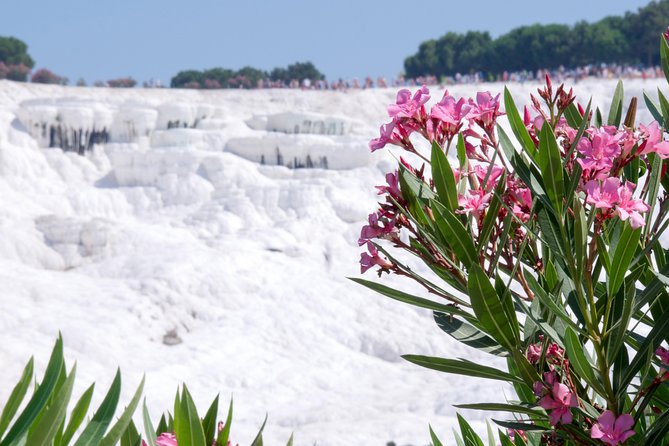
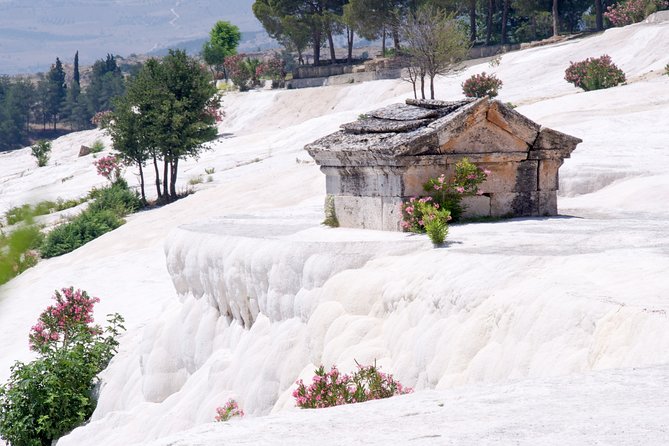
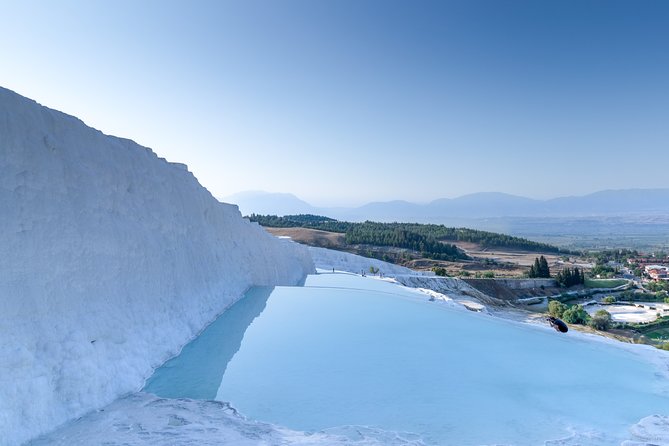
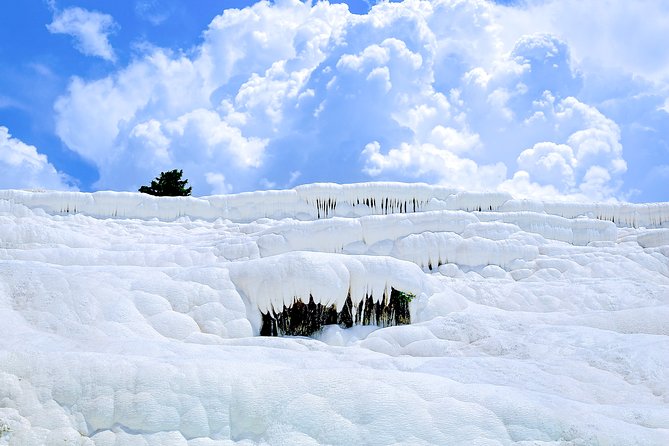
Pamukkale (the area connected to Hierapolis) sits on a dramatic limestone-carved setting. The terraces look like frozen waterfalls because the mineral deposits build up over time in a way that resembles cascades. The name “Cotton Castle” fits—though it’s worth remembering that the most perfect-looking photos don’t always reflect what the pools look like on every day.
From the start, you’re given the core context: why mineral-rich water mattered to ancient visitors, and how Hierapolis became known as a thermal spa. There’s also a useful timeline element: Hierapolis was formed as a thermal spa in 190 BC, and it’s essentially the ancient layer of what you’re seeing today.
Your guided time here is about 1 hour in the first stop. That’s enough to understand the layout, get oriented for the later free time, and avoid the common mistake of spending the best viewing moments confused about where to stand. After that orientation, you’ll return to Pamukkale thermal pools again with more time to walk and photograph.
Practical tip for your photos: plan to shoot in short bursts. The best views are spread out, and the terraces change your perspective fast as you move along the edges and viewpoints.
Hierapolis Theatre: Hadrian-Era Engineering in a Still-Standing Shell
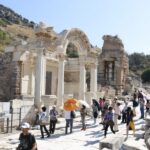
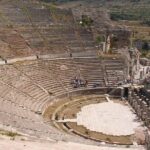
One of the strongest reasons to do this as a guided day trip is how the ruins connect to specific Roman moments. The Pamukkale Theatre sits in the middle of Hierapolis and is described as very well preserved.
This theatre was built during the reign of Emperor Hadrian in the 2nd century AD. Later, Emperor Severus restored parts of the cavea (seating area) and stage using remains of an older theatre that sat north of the city.
Here’s what makes it more than a pretty ruin: the theatre design tells you how the Romans organized crowds. It had an estimated capacity of 8,500–10,000 spectators, and seating was divided by a diazoma—a structural aisle or division that separates upper and lower sections.
The stop here is short—about 20 minutes—but that’s realistic. The point is to see it, understand what you’re looking at, and then move on while you still have energy. If you’re hoping for a slow, in-depth theatre study, you won’t get that level of time on this specific schedule.
Apollo Temple on the Main Street: 40 by 60 Feet of Meaning
Next up is the Hierapolis Apollon Temple, set on the main street between the theatre and a sacred pool area. The temple itself is described as roughly 40 by 60 feet (about 12 by 18 meters), dedicated to Apollo, associated with light.
The temple’s entrance faced west, approached by a broad staircase. That detail matters because it affects how you view the building’s layout and why it feels positioned the way it does within the ruin complex.
This stop is about 15 minutes. It’s the kind of time window that works well when you’re visiting multiple sites in one day: brief, focused, and enough to recognize the temple’s role in the city’s sacred geography.
If you enjoy architecture and street-level Roman planning, you’ll probably appreciate that this isn’t just “ruins scattered around.” The tour connects the dots between major sacred landmarks.

Thermal Pools and Free Time: How to Use Your 2 Hours Wisely
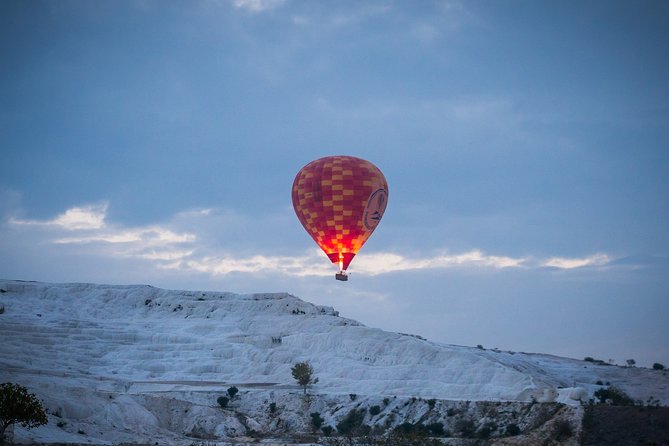
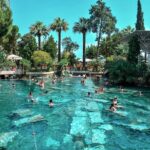
Your biggest blocks of time come here. The Pamukkale Thermal Pools stop is about 2 hours, and this is where the experience earns its reputation.
The tour highlights the travertine terraces—those brilliant white mineral formations—and the warm, clear pools. It’s also where you can experience the vibe of the place people call Cotton Castle: a surreal frozen-cascade look, with mineral deposits shaping what almost seems like a waterfall that stopped mid-motion.
You’ll also get time for free exploration after the guided walking. That’s important, because Pamukkale is visual. You need room to find your angles, take your time, and decide when you want the widest views versus close-up texture shots on the mineral surfaces.
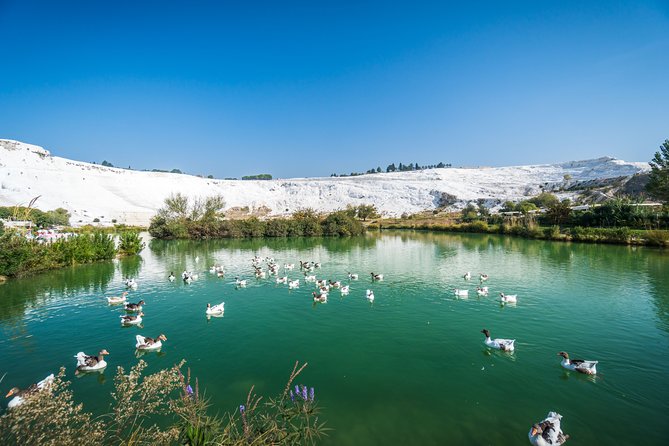
A balanced note: some pools may have less water than the most famous images. If you’re expecting every photo-perfect scene, calibrate your expectations. The site still makes an impression, even on less saturated days.
Photo and comfort priorities:
- plan for heat and sun (you’ll be outdoors for long stretches)
- wear footwear that handles uneven ground
- use your free time for your must-have angles first, then linger
Hierapolis Beyond the Stops: Temples, Baths, and the City That Changed Its Beliefs
Even though the schedule breaks the day into specific timed stops, the tour is clearly built around a wider story: Hierapolis as a ruined spa city where older pagan structures later made way for Christian sites.
In the walkthrough, you’ll be shown ancient landmarks such as ruined temples and spa-like baths, a towering arch, necropolis areas, and the theatre you’ll already have seen. The tour also mentions how inhabitants paid respects to local nymphs in the nymphaeum, then how religious life shifted over time into churches and St. Philip’s martyrium.
Why this matters for you: it changes how you read the ruins. Instead of seeing isolated piles of stone, you start seeing a city that adapted—what was sacred in one era became a backdrop or successor in the next. That’s also why Hierapolis pairs so well with Pamukkale: mineral water and spiritual attention are intertwined here, just in different periods.
If you like guided context, you’ll likely enjoy this. If you prefer total self-direction, the structured timing may feel a bit tight—but you still get free time at the pools.
Lunch and the Drinks Reality Check

Lunch is included, and that’s a big deal on a long day trip. It keeps you fueled for the walking time and reduces the chance you’ll end up spending your day hunting a meal instead of seeing the sites.
Alcoholic drinks are not included, but you can purchase them. Drinks are listed as not included too, which is the part to take seriously in hot weather.
Some people have shared that water availability didn’t feel proactive during their stop breaks. So don’t gamble on getting what you need for free. Even if you don’t need much, having a plan for water helps you stay comfortable in the heat.
Is the $150.60 Price a Good Deal From Selçuk?
At $150.60 per person for about 11 hours, the value depends on what you care about.
Here’s why it can feel like a good deal:
- Hotel pickup/drop-off removes the hardest part of day-trip logistics
- All entrance fees included means you avoid separate ticket costs at multiple ruins and Pamukkale
- Lunch included helps you keep the day on budget
- Small group cap of 15 is part of the cost, and it can make the experience less hectic
Where the price can feel less “all-in”:
- drinks aren’t included, so you may spend extra if you’re thirsty in warm weather
- any optional add-ons at the sites are not included (if you decide you want a specific paid activity)
Also, a quick reality check: this is one of those tours that rewards you if you’re ready to spend a full day moving. If you have limited mobility or you hate long drives, it may not feel worth it.
Who This Tour Fits Best (and Who Might Want a Different Plan)
This works well if you:
- want a first-time visit to Pamukkale and Hierapolis without doing logistics math
- like a guided day with enough time to still explore
- appreciate a small group size
It might not be your best match if you:
- need a very flexible schedule or long pauses at each site
- hate early starts and long transit days
- expect drinks to be fully handled for you without paying
There’s also a detail that matters for families: child pricing applies only when sharing with two paying adults.
Overall, the tour is built for most travelers, but comfort with a long day is key.
Should You Book This Pamukkale Day Tour?
I’d book it if you want a clean, guided way to see Pamukkale and Hierapolis with pickup, lunch, and entrance fees already handled, and with a small group that keeps the day feeling personal.
I wouldn’t book it if you’re the type who gets stressed by heat, long drives, and tight stop timing. This isn’t a slow, museum-style day. It’s a “see the big things and get smart on the rest” format.
If you do book, go in with a simple plan: confirm your pickup time the day before, bring what you’ll need for staying hydrated, and treat your free time at the pools as your real chance to slow down.
FAQ
What time does the tour start?
The tour starts around 7:30 AM.
Where are hotel pickups offered?
Pickups are offered from Selçuk or Kusadasi hotels, usually between 7:15 AM and 7:45 AM.
Do I need to confirm my exact pickup time?
Yes. Pickup times can vary, so you’re instructed to contact the pick-up operator to find out your final pickup time.
How long is the tour?
It’s approximately 11 hours.
Is lunch included?
Yes, lunch is included.
Are entrance fees included?
Yes. All entrance fees are included.
Is the tour guided in English?
Yes, it’s offered in English.
How big is the group?
The maximum group size is 15 travelers.
Is free cancellation available?
Yes. You can cancel for a full refund up to 24 hours before the experience start time.
Are drinks included?
Drinks are not included. Alcoholic drinks are available to purchase.