REVIEW · KUSADASI
Skip The Line – Ephesus and Virgin Mary Tour
Book on Viator →Operated by Emtura Travel · Bookable on Viator
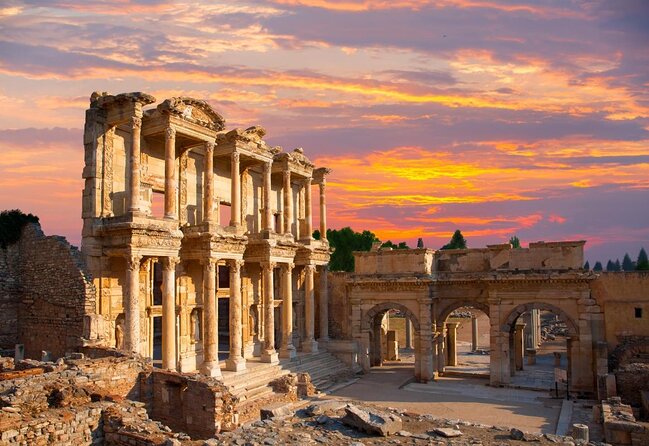
A Roman city and a holy house in one trip. That mix is the magic here: Ephesus’ big ruins plus a visit to Meryemana (Mary’s House), all organized into a manageable 4–5 hour plan. I like how the tour front-loads the highlights with a clear route and a guide who explains what you’re actually looking at, not just dates.
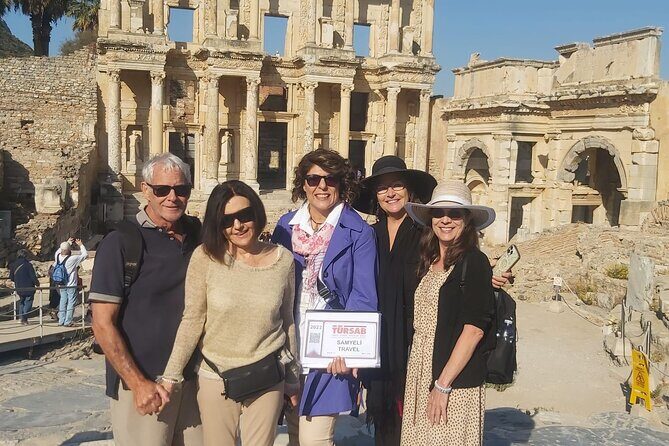
Two things I really appreciate: the hotel/port pickup plus air-conditioned luxury minibus transport, and the way the guide connects the sites as you move through town. In the reviews, guides like Sam (also named Goksel in one account) are singled out for being calm, thoughtful, and very good at photos—handy when you’re trying to frame Ephesus on a phone.
One consideration: the headline sites that require their own admission (Ancient City of Ephesus and Meryemana) cost extra. Also, Ephesus draws aggressive souvenir sellers; keep valuables secured and stay aware near shop zones so you can focus on the ruins.
In This Review
- Quick Highlights You’ll Feel Immediately
- Entering The Seven-Wonder Story: Temple of Artemis Foundations
- The Main Walk Through Roman Ephesus: Magnesia Gate to Big Theater Views
- Meryemana (Virgin Mary’s House): A Different Kind of Calm
- Domitian Terrace Temple: The Emperor-Era Detail Stop
- Baths of Varius and State Agora: When Ephesus Feels Like Daily Life
- Baths of Varius
- State Agora
- Price and Ticket Reality: What the $43 Really Covers
- Guides, Comfort, and the One-Day Pace
- Who Should Book This Tour (and Who Might Want a Different Plan)
- Should You Book This Skip-the-Line Ephesus and Meryemana Tour?
- FAQ
- How long is the Ephesus and Meryemana tour?
- Is pickup and drop-off included?
- What language is the tour offered in?
- Are tickets included for all stops?
- Is lunch included?
- Do I need extra tickets or fees for Meryemana and Ancient Ephesus?
- What happens if the weather is bad?
- What if I cancel last minute?
Quick Highlights You’ll Feel Immediately
- Pickup + luxury minibus: hotel/port collection and drop-off in Kusadasi area, no stress on meeting a minivan you can’t find
- Meaningful stop order: Artemis foundations first, then a guided downhill walk into Roman Ephesus, then Meryemana
- Included admissions at several stops: Domitian Temple, Baths of Varius, and State Agora are covered in the tour price
- Good guide track record: reviews call out Sam/Goksel for clear explanations and considerate pacing
- Skip-the-line style entry support: mobile ticket and guided entry handling, but some extra-ticket sites still require paying on the day
- Weather matters: the experience runs only with good conditions, with rebooking or a refund if poor weather cancels it
Entering The Seven-Wonder Story: Temple of Artemis Foundations
The Temple of Artemis is one of those ancient names that sounds famous no matter what you know about history. What you’ll see today isn’t the full temple—it’s mostly foundations and surviving fragments—but the scale is still the point, especially once your guide puts it into context.
I like starting here because it sets expectations. Artemis in Ephesus was monumental, built in a marble-heavy style with sculpted elements, and over centuries the area shifted—turning parts of the site into swampy ground. Even in ruins, it helps you understand why people talked about it like a true world landmark. Your visit is timed and short (about 30 minutes), with admission included, so you don’t waste the morning waiting around.
If you’re hoping for a dramatic standing structure, manage expectations. This stop is about recognizing what’s left and why those remains matter—then you move on while the day still feels energetic.
If you're still narrowing it down, here are other tours in Kusadasi we've reviewed.

The Main Walk Through Roman Ephesus: Magnesia Gate to Big Theater Views
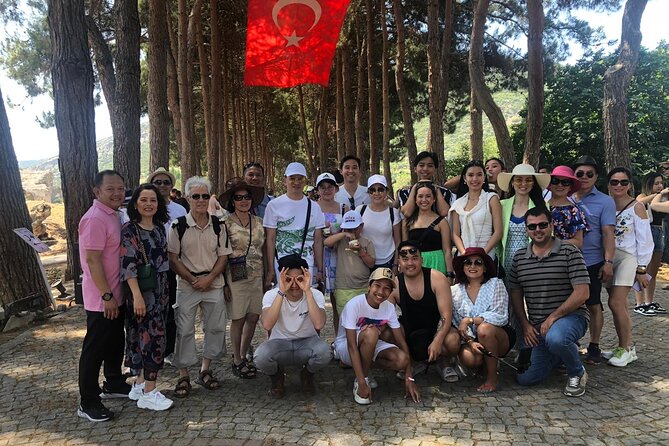
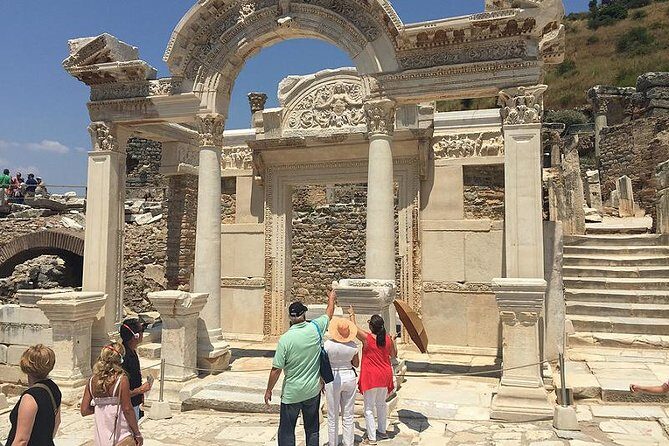
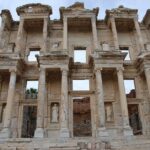
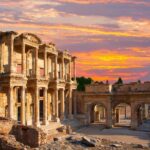
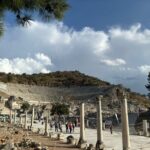
Then you hit the part most people came for: Ephesus itself. You’ll enter through the Magnesia Gate, and the walk starts with a slow downhill descent with your guide leading the route.
This is where good shoes matter. A long, sloped walk isn’t hard if you’re steady and take your time, but it is still walking through a working archaeological footprint—uneven ground, stairs, and open sun. I’d plan water and sunscreen as if you were doing a half-day hike, because you’ll be exposed between buildings and colonnades.
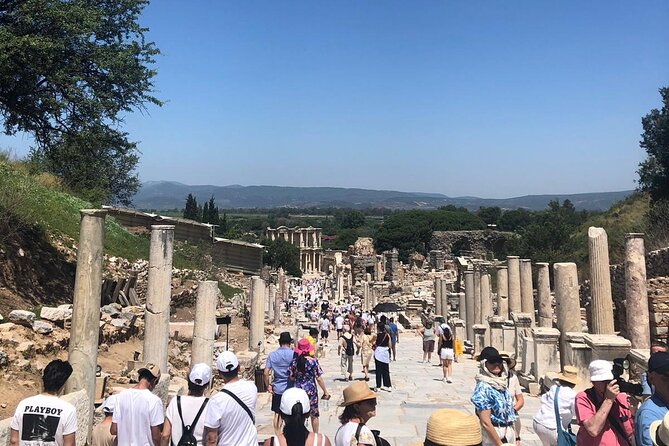
The route is built around major landmarks you can actually picture:
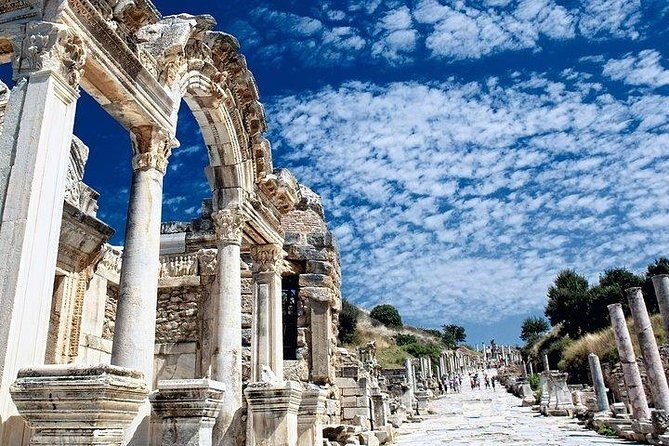
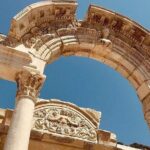
- the Temple of Hadrian
- the Fountain of Trajan
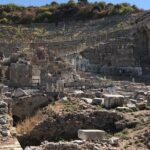
- the Great Theatre
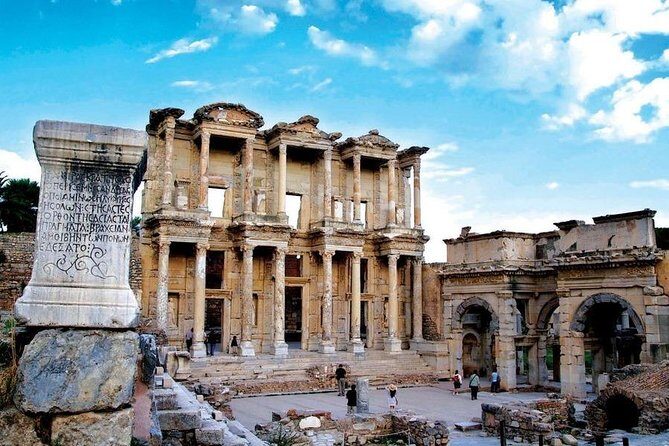
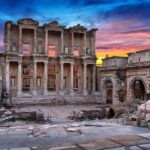
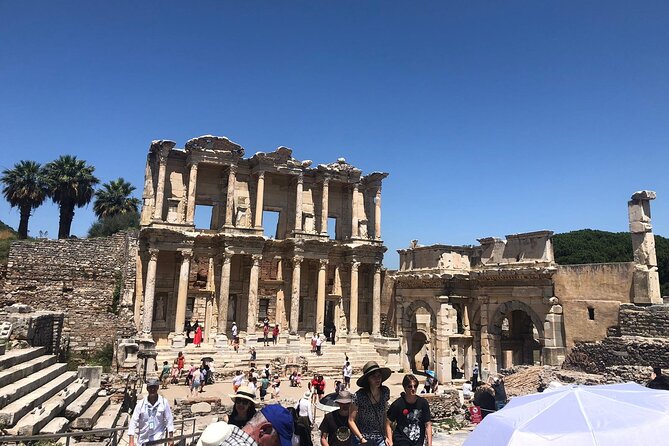
- the area associated with the Celsus Library
Here’s the practical catch: the entrance ticket for the Ancient City of Ephesus is not included in the $43 price. It’s listed as $55 per person, so you’ll want to budget for it immediately rather than assume it’s covered. That said, this is also the stop where a guided route is worth its weight in comfortable legs—without guidance, it’s easy to wander and miss what you’re supposed to be seeing.
One more thing: Ephesus also attracts souvenir pressure. It’s not just annoying; it can get distracting fast. Keep your phone secure, don’t leave bags unattended near vans, and stick close to the group when you’re near shop fronts.
Meryemana (Virgin Mary’s House): A Different Kind of Calm
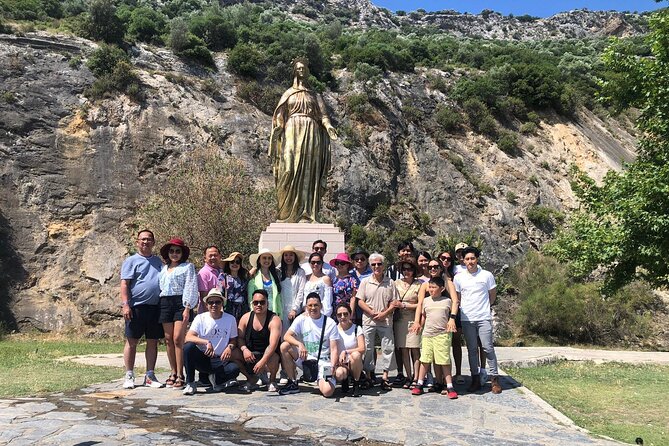
After the Roman streets, the mood shifts. Meryemana (Mary’s House) is approached through Christian tradition: Mary is said to have lived her final days in Ephesus, with the house later marked by a church built on the original foundation. Your guide will explain the tradition, and the visit is about 45 minutes—enough time to take it in without feeling rushed.
This stop is also one of the biggest budget surprises if you’re not ready. Meryemana admission is not included, listed as $17 per person. Plan to pay that on the day, and bring a little cash or ensure your payment method works.
I like this timing. Coming from crowded ruins, a quieter spiritual site can feel like a reset. It’s a different kind of sightseeing—less about architectural details and more about atmosphere, reflections, and the plain fact that millions of people have visited this spot for generations. If you want quiet moments, be ready to step back a bit from the group flow and just breathe for a minute.
Domitian Terrace Temple: The Emperor-Era Detail Stop
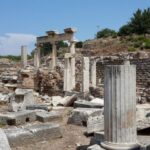
Next is the Temple of Domitian, located along the southern end of Domitian Street. This is the kind of stop that often gets skipped when people chase only the most famous structures—but it’s included here, and that’s smart.
Why? Because it teaches you how emperor worship shows up in everyday urban space. The temple sits on a high terrace built over vaulted foundations, with stairs still visible. Your visit here is short (about 20 minutes), and admission is included.
Even in limited time, you can learn how Ephesus wasn’t just a pretty city—it was a political machine. When you see the emperor-dedicated architecture, it clicks faster why the city functioned like a hub for power and public life.
Baths of Varius and State Agora: When Ephesus Feels Like Daily Life
After the terrace temple, you’ll move into spaces that show daily routines—washing, resting, meeting, and governing.

Baths of Varius
The Baths of Varius are fascinating because they reveal how complex Roman leisure could be. Built in the first century and later restored in the fourth century, the site includes areas you can map in your mind:
- a dressing room (apodyterium)
- a cold room (frigidarium) with a pool
- a warm room (tepidarium)
- a hot room (caldarium) with heating systems
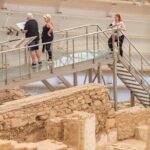
Admission for this stop is included, and your visit is about 15 minutes—so don’t expect a slow museum experience. Instead, use it as a guided “spot the parts” lesson. Once you identify the rooms, the whole place feels less like ruins and more like a functioning building.
State Agora
Then you head to the State Agora, described as a governmental market area used not for commerce but for business and public discussions. Your guide frames this as an important meeting place for governmental actions. Admission is included here too, and the stop is about 15 minutes.
I like the pairing of Baths + Agora because it shifts you from personal comfort to civic life. One minute you’re thinking about heat and recovery; the next you’re imagining public decisions taking place in a shared space. That contrast helps the day feel coherent instead of like six disconnected photo stops.
Price and Ticket Reality: What the $43 Really Covers

Let’s talk value without sugarcoating it.
The tour price is $43 per person, and it includes hotel/port pickup and drop-off, transportation by luxury minibus, a professional guide, and parking fees and taxes. It also includes admission at several specific stops:
- Temple of Artemis foundations (30 minutes)
- Temple of Domitian (20 minutes)
- Baths of Varius (15 minutes)
- State Agora (15 minutes)
What costs extra:
- Ancient City of Ephesus admission: $55 per person
- Meryemana admission: $17 per person
- Lunch is not included (listed as $8 per person)
If you take the full experience as planned, your ticket math looks like this:
- $43 base + $55 (Ephesus city) + $17 (Meryemana) = about $115 per person, before lunch.
Is that still good value? Usually, yes—because your guide is doing the heavy lifting for routing, timing, and interpretation, and you’re not arranging transport or admission logistics yourself. But if you’re the type who likes to wander independently and already know you’ll pay separate tickets anyway, you may want to compare against a self-guided plan.
Also remember: the name “skip the line” suggests efficiency, but it doesn’t mean you’ll never queue for any ticketed entry anywhere. The practical reality is that extra-ticket sites still require paying and entering—your guide helps make it run smoothly, but you should budget time the way you would for any major archaeological site.
Guides, Comfort, and the One-Day Pace
This is a short, dense outing. You’re moving through multiple zones with limited time per stop, so your guide’s pacing matters.
The strongest theme in the reviews is guide quality. People specifically praise Sam (also referenced as Goksel in one account) for being very knowledgeable and considerate, with detailed explanations that tie political context to what you see on the ground. One review also highlights that the guide consistently takes good photos—meaning you get usable pictures without having to interrupt the flow every two minutes.
Transport seems to be another win. The van is described as new, large, and air-conditioned, which makes a difference in the Turkish sun when you’re switching from stop to stop.
For you, the “comfort plan” is simple:
- bring water
- wear shoes with grip
- keep a light layer for shade changes
- keep your phone secure near entrances and marketplaces
That way you stay in sightseeing mode instead of dealing with little stress moments.
Who Should Book This Tour (and Who Might Want a Different Plan)

This tour fits best if you want a guided, well-structured introduction to Ephesus without spending extra time figuring out the route yourself.
It’s also a good match if you appreciate organization:
- multiple key sights in a single half-day span
- a guide to point out what matters
- included admission at several stops to reduce hassle
You might rethink it if you:
- dislike paying add-on entry fees the day-of (Ephesus city and Meryemana are extra)
- need a slower pace than a short-run itinerary can offer
- are very sensitive to crowd pressure near souvenir zones (you can manage it, but it’s real)
Should You Book This Skip-the-Line Ephesus and Meryemana Tour?
If you want a “great hits” day—Ephesus plus Meryemana with a guide who handles timing and meaning—this is a solid choice. The included admissions at Domitian, Baths of Varius, and State Agora help the base price feel less like a marketing number. And the guide track record in English, with Sam/Goksel being repeatedly praised, suggests you’ll get more than just walking directions.
My decision rule for you: book it if you’re willing to add the two major ticket costs on top and you’re okay with a compact walking schedule. If you only want Ephesus and would skip Meryemana, you might get better value elsewhere—or ask the guide if time adjustments are possible once you arrive (one review describes a swap like that, but it’s not guaranteed).
FAQ
How long is the Ephesus and Meryemana tour?
It runs about 4 to 5 hours.
Is pickup and drop-off included?
Yes. Hotel/port pickup and drop-off are included, and staff meet you at the gate with a sign showing your name.
What language is the tour offered in?
The tour is offered in English.
Are tickets included for all stops?
No. Admission is included for Temple of Artemis foundations, Temple of Domitian, Baths of Varius, and State Agora. Ancient City of Ephesus ($55) and Meryemana (Virgin Mary House, $17) are not included.
Is lunch included?
No. Lunch is not included (listed at $8 per person).
Do I need extra tickets or fees for Meryemana and Ancient Ephesus?
Yes. You’ll need to pay Ancient City of Ephesus admission ($55 per person) and Meryemana admission ($17 per person).
What happens if the weather is bad?
The experience requires good weather. If it’s canceled due to poor weather, you’ll be offered a different date or a full refund.
What if I cancel last minute?
You can cancel for free up to 24 hours before the experience’s start time. If you cancel less than 24 hours before, the amount paid won’t be refunded.
If you tell me what time you’ll be in Kusadasi (and whether you’re staying near the port or downtown), I can help you plan the day so you don’t feel rushed between tickets and walking.