REVIEW · KUSADASI
NEW: Private The Most Detailed Ephesus Shore Excursion / with Lunch
Book on Viator →Operated by OTTI Travel · Bookable on Viator
Ephesus, but with real breathing room. This private tour from Kusadasi strings together the big names—and a few stops most groups rush past, like the State Agora and the Odeion—so you actually understand how the city worked. I like the private, custom pace (your guide can adjust), and I also like the included lunch at a local spot. The main catch: entrance fees are not bundled (you’ll pay several of them separately), so check totals before you book.
What makes this experience feel worth it is the structure. You get round-trip transport in an air-conditioned Mercedes van, an English-speaking licensed guide, and a promise to skip the long lines. That matters on a cruise day when you don’t want to burn time standing still. You’ll also get plenty of “how-to-see-it” context at major monuments—plus the kind of guide-led storytelling that people associate with names like Selin, Nesli, Mehmet, Ahmet, Tas, Asli, Mary, Özgür, and Devon.
In This Review
- Key reasons this private Ephesus tour is a smart pick
- Private Ephesus from Kusadasi: why the day runs smoother
- Meryemana (Virgin Mary House): a calm start before the roar of ruins
- Ancient City of Ephesus: what you see in 2 hours (and why it matters)
- State Agora: not just a square, but a meeting engine
- Odeion: senate meetings and concerts in one small theatre
- Temple of Domitian, Temple of Hadrian, and Hercules Gate: emperor power in stone
- Temple of Domitian
- Temple of Hadrian
- Hercules Gate
- Terrace Houses: Roman family life, mosaics, and lots of stairs
- Library of Celsus and the Great Theatre: the wow factor with context
- Library of Celsus
- Ephesus Great Theatre
- Temple of Artemis and Basilica of St. John: wonder and faith, in ruins
- Temple of Artemis
- Basilica of St. John
- Lunch in Kusadasi: Turkish food that keeps you going
- Price and value: what $79.20 covers, and what to budget next
- Who this private Ephesus shore excursion suits best
- Final verdict: should you book this Ephesus private tour?
- FAQ
- How long is the private Ephesus shore excursion?
- Is pickup and drop-off included?
- Is lunch included in the price?
- Are entrance fees to the sites included?
- What language is the tour guide?
- Is this a private tour?
- Where do cruise passengers meet for pickup?
- Can I get a full refund if I cancel?
Key reasons this private Ephesus tour is a smart pick
- Private group means a flexible pace, not the usual herd-them-through rhythm
- Skip-the-line setup helps you spend more time inside the ruins
- Lunch is included, and it’s described as filling and plentiful
- Emperor-focused stops like Domitian and Hadrian add fresh angles beyond the usual photos
- Terrace Houses are worth it if you like mosaics, Roman daily life, and stairs
- Multiple interior-style sites (Agora, Odeion) explain how Ephesus ran, not just what it looked like
Private Ephesus from Kusadasi: why the day runs smoother
From the moment you’re picked up, the goal is simple: keep you moving without feeling rushed. This is a private tour, so it’s only your group, and you’re riding in a Mercedes van with air-conditioning. For a port stop in Kusadasi, that’s a practical advantage because timing is everything.
You’ll also appreciate the “skip the lines” approach. Ancient Ephesus can be a long, slow slog if you land at the wrong time and get stuck at ticket points. Here, the tour is set up to reduce that waiting, so you can get your bearings fast and head straight into the sites.
Other cruise-port tours we've reviewed in Kusadasi

Meryemana (Virgin Mary House): a calm start before the roar of ruins
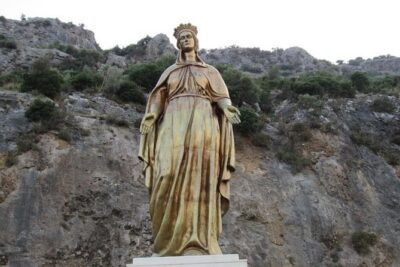
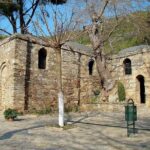
The day opens at Meryemana, the House of the Virgin Mary, with about a half hour allocated on site. Even if you’re not focused on religious pilgrimage, it’s a useful first stop because it slows everything down. The context is different from Roman marble: you’re stepping into a place that people visit for devotion, reflection, and meaning.
The tradeoff is straightforward. Admission for Meryemana is not included, so you should budget for that extra ticket. Still, I’d treat this as more than a checkbox. It’s a well-chosen warm-up that makes the rest of the ancient city feel less like a theme park and more like a place with layers.
Ancient City of Ephesus: what you see in 2 hours (and why it matters)
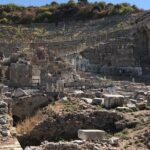
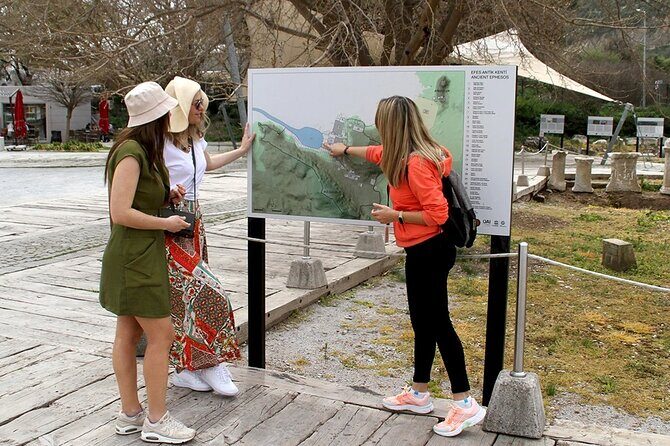
Next comes the main sweep through Ancient City of Ephesus, with around 2 hours at a packed list of highlights. Most tours hit the “greatest hits” and move on. This one keeps threading through the city’s spine: Harbour Street, Marble Street, and major public and ceremonial spaces like the Celsus area and gates.
A few of the listed stops are especially valuable because they show how Ephesus functioned:
- Markets and civic areas (like the Commercial Agora and the latrina) tell you daily life wasn’t separate from politics.
- Temples and fountains explain how public power was displayed.
- Streets like Curetes Street help you connect the different monuments into one walkable story.
The drawback to expect is normal for Ephesus: even with a guide, you’re in a big outdoor site. Stopping often helps, but you’ll still cover ground.
State Agora: not just a square, but a meeting engine
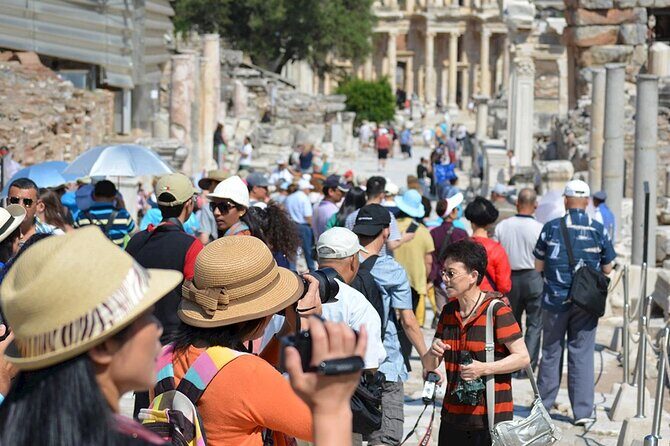
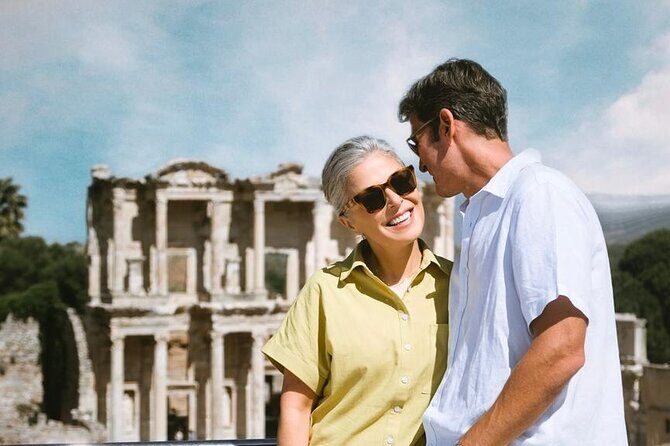
The State Agora is short on time (about 15 minutes), but it’s one of those stops that changes how you picture the city. The Agora here wasn’t mainly about commerce. It was used for governmental business and discussions—more meeting place than marketplace.
I like this stop because it adds a layer most tours skip: during excavation, archaeologists found older graves (7th–6th century B.C.) and a stone-paved road, plus an archaic terra cotta sarcophagus. That means the space wasn’t just Roman-era architecture; it kept evolving. The presence of a water reservoir corner also gives you a concrete sense of infrastructure, not just monuments. Water was brought in through what’s called the Pollio Aqueduct (you can see remains about 5 kilometers away).
Admission isn’t included for this stop either, so you’ll likely pay as you go. But the payoff is real: it helps you understand that Ephesus was a working city, not only a postcard collection.
Odeion: senate meetings and concerts in one small theatre
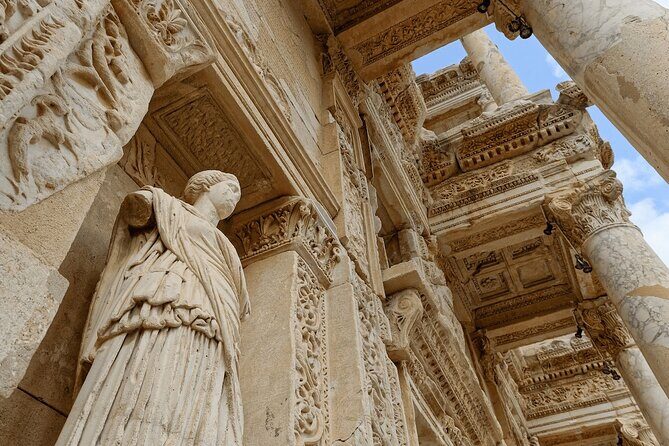
You’ll also stop at the Odeion, a smaller theatre-like building designed for two kinds of gatherings. First, it served as a Bouleuterion—meetings for the Boules or Senate. Second, it acted as an Odeum, essentially a concert hall for performances. It’s built in the 2nd century A.D, ordered by Publius Vedius Antonius and his wife Flavia Paiana.
This stop is a great example of why a guided tour helps. When you know a building’s second purpose, you start noticing details: the stage structure, the entrances, and how people would move in and out for events.
It’s only about 15 minutes. Still, it’s enough time to get the layout in your head, and that makes the larger theatre later on feel even more dramatic.
Other tours with lunch tours we've reviewed in Kusadasi


Temple of Domitian, Temple of Hadrian, and Hercules Gate: emperor power in stone
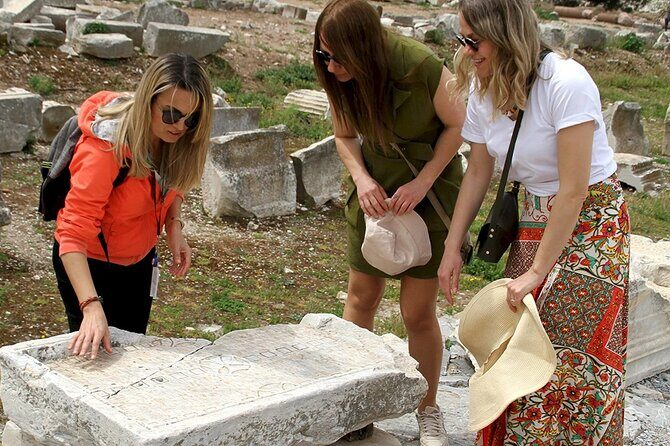
Three stops—Temple of Domitian, Temple of Hadrian, and Hercules Gate—make this day feel less repetitive than the standard route.
Temple of Domitian
The Temple of Domitian is described as the first structure in Ephesus dedicated to an emperor. It sits on a large terrace with vaulted foundations and visible stairs. The temple layout is pro-style, with eight columns on the short side and thirteen along the long side.
If you like the behind-the-scenes detail, this one has it: the u-shaped altar element is now in the Izmir Museum. Knowing that helps you understand what’s missing here on site, and why museums matter.
Temple of Hadrian
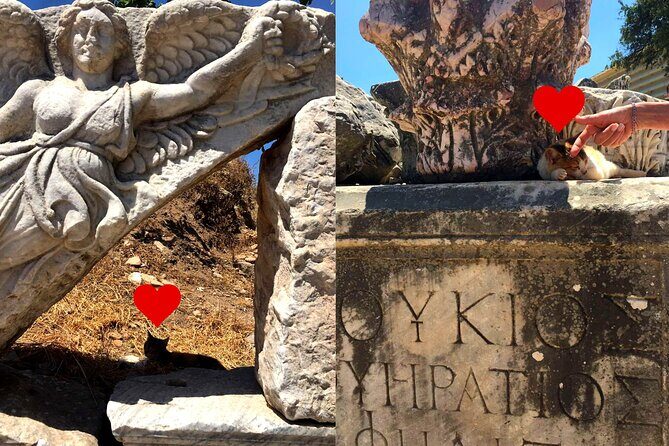
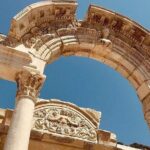
Next is Temple of Hadrian, one of the best-preserved structures on Curetes Street. The facade has four Corinthian columns supporting a curved arch, with a relief of Tyche in the center. The pedestal inscriptions relate to later emperor statues (Diocletian, Maximian, Constantius I, Galerius), even if the original statues aren’t found.
This is one of those photo-friendly moments that also rewards attention. Don’t just snap and move—look at the arch and the way the facade frames authority.
Hercules Gate
Finally, Hercules Gate sits near the end of Curetes Street. It’s named for the relief of Hercules. The interesting part is that the gate’s location today came from another place in the 4th century A.D, while the relief itself dates to the 2nd century A.D. Archaeology gets messy fast in a way that’s not always obvious from the monuments.
The gate’s design also tells you something about urban life: it narrowed the street access and discouraged vehicle passage, turning parts of the street into a pedestrian area by the 4th century. That’s the kind of small insight that makes Ephesus feel alive.
Terrace Houses: Roman family life, mosaics, and lots of stairs
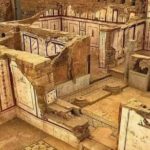
If your legs are okay with it, don’t skip Ephesus Terrace Houses. This is where you get out of the public-spectacle zone and into daily life. These homes belonged to wealthy Romans, built on terraces following the Hippodamian plan with roads at right angles.
The site covers multiple residential units on three terraces, and it spans centuries of use—from the 1st century B.C. through the 7th century A.D. What you’ll notice right away is that protective roofing helps preserve floors with mosaics and consolidated frescos. Two houses are open to the public as a museum.
This stop is about 30 minutes, and yes, there are stairs. It’s also ticketed separately, so budget time and money. But if you enjoy seeing how people lived—food, decor, privacy, routine—this is one of the most satisfying stops of the whole day.
Library of Celsus and the Great Theatre: the wow factor with context
Library of Celsus
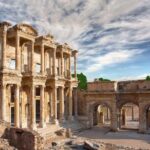
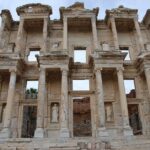
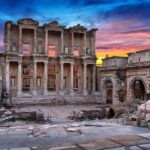
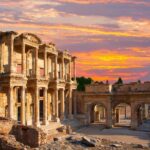
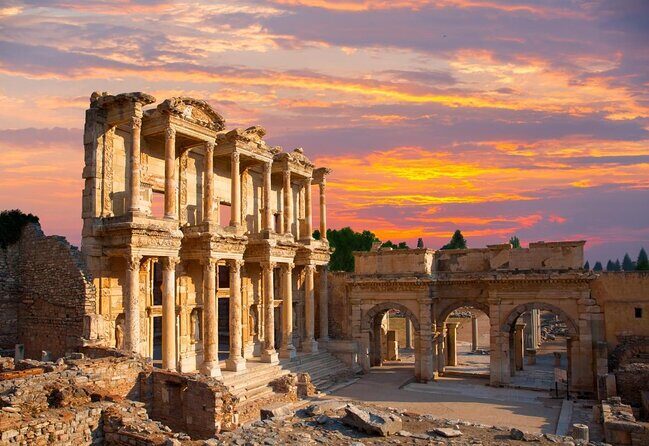
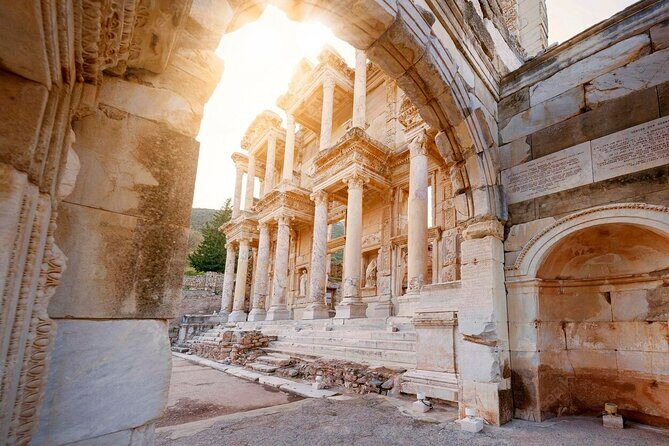
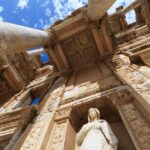
The Library of Celsus is one of the most beautiful structures in Ephesus, and it works best when you understand what it actually was. It was built in 117 A.D as a monumental tomb for Gaius Julius Celsus Polemaeanus, with his grave beneath the ground floor and a statue of Athena above it, tied to the theme of wisdom.
The library also had practical features. Scrolls were stored in niches, and behind the bookcases there were double walls to protect against extreme temperature and humidity. The library held more than 12,000 scrolls—so this wasn’t just symbolic. It was a real storage and learning system.
You’ll likely spend about 30 minutes here. If you go too fast, you miss the layout cues. If you slow down, the building starts telling you how the Romans managed information.
Ephesus Great Theatre
Then comes the big one: the Ephesus Ancient Greek Theatre, the largest theatre in Anatolia, with about 25,000 seats. It began in the Hellenistic Period (3rd century B.C.) and was enlarged in Roman times into the style you see today.
This stop is also marked as admission included for the theatre portion, which is a nice detail in a day of separate tickets. The theatre wasn’t only for plays and concerts. It also hosted religious and political discussions and philosophical debates, plus gladiator and animal fights.
You can spot structural features like the cavea’s rows and how the seating sections are divided by walkways. The Emperor’s Box and restored marble pieces add to the sense that this theatre was built for status as much as performance.
Temple of Artemis and Basilica of St. John: wonder and faith, in ruins
Two final stops help you see Ephesus as more than civic Rome.
Temple of Artemis
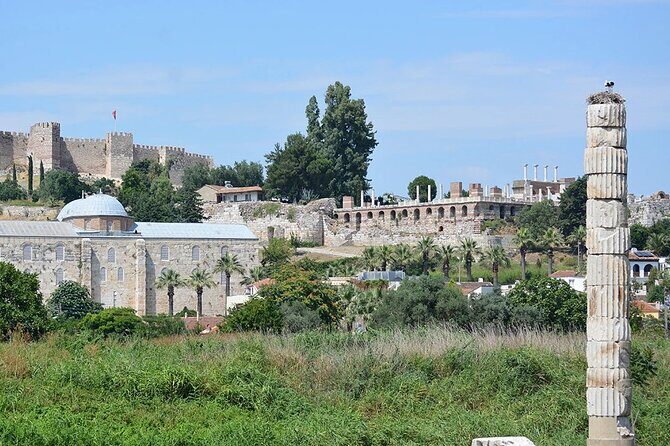
The Temple of Artemis is famous as one of the Seven Wonders of the ancient world. Today you mostly see ruins of foundations because the site turned into swamp over time. The remaining marble elements are important enough that major pieces ended up far from Ephesus, including in the British Museum.
Expect about 40 minutes here. The trick is managing expectations: you’re not going to stroll through standing columns here. You’re seeing a footprint of scale, and it’s still impressive once your guide frames what it used to be.
Basilica of St. John
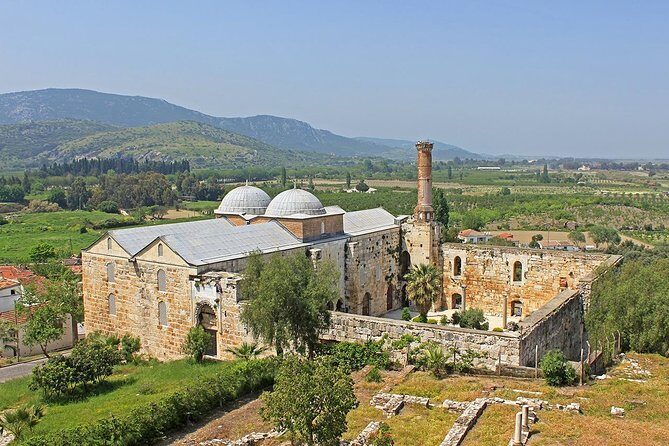
Next is the Basilica of St. John on the southern slope of Ayosolug Hill. Tradition says the evangelist John spent his last years here and was buried in the area. A small chapel was built in the 4th century over his grave, then later transformed into a basilica under Emperor Justinian (527–565 AD).
The tour time is about 40 minutes, and admission isn’t included. This is also where you’ll hear the early Christian context—persecution in the region, the spread of the message, and the connection between John’s writings and the region.
If you like seeing how different eras built on top of each other, this stop is a good way to land the day.
Lunch in Kusadasi: Turkish food that keeps you going
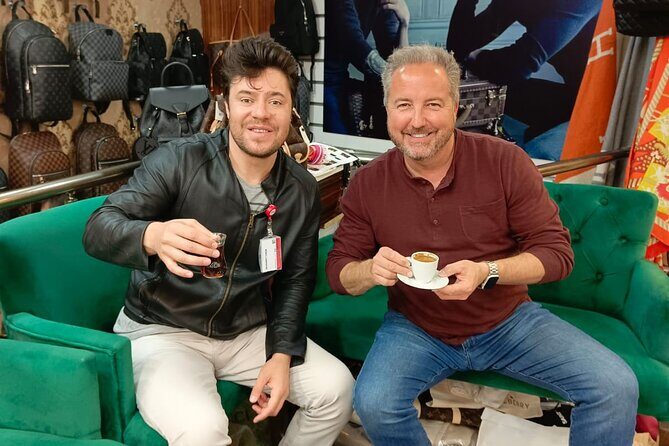
The best part of many Ephesus days is also the simplest: you get lunch included. That alone helps you avoid the usual scramble to find food near the ruins. And this lunch is described as good and plentiful in multiple experiences.
You should also plan for drinks being separate—drinks at lunch are not included. A couple of the details that stick with people: fresh local fruit like figs, pomegranate juice, and even a note about an olive oil and pomegranate juice salad dressing. If you’re the type who remembers meals as much as monuments, you’ll probably enjoy the break.
Logistically, this is important too. With a long day of walking, a real sit-down meal beats grabbing something on the move.
Price and value: what $79.20 covers, and what to budget next
At $79.20 per person, the tour price is only part of your total. The tour includes:
- English speaking licensed guide
- Pickup and drop-off
- Air-conditioned Mercedes van and parking fees
- Guaranteed to skip long lines
- Lunch
What’s not included is entrance money for several major stops:
- Ephesus Ancient City: €40.00 per person
- Virgin Mary House: €18.00 per person
- Terrace Houses: €15.00 per person
- St John Basilica: €6.00 per person
Also, lunch drinks are extra.
So here’s my practical take on value: you’re paying for time saved and guide-led organization. If you can’t handle ticket logistics or you want a smoother day on a port schedule, this price makes more sense. If you’re the type who enjoys spending time figuring out tickets on your own and you’re super independent, you might compare costs—but the “skip long lines” and private setup are doing real work here.
Who this private Ephesus shore excursion suits best
This tour fits best if you want structure and context, not just a checklist. It’s especially good for:
- Cruise passengers with limited time who want dependable pickup and less waiting
- Families or groups who don’t want to split up
- Anyone who enjoys learning how each part of the city worked—government, culture, domestic life—not only the loudest monuments
Keep in mind the tour asks for a moderate physical fitness level. The ancient sites involve walking and some stairs, especially at the Terrace Houses.
Final verdict: should you book this Ephesus private tour?
I’d book this if you want Ephesus with a guide who can explain why the buildings mattered, plus a lunch that isn’t an afterthought. The private setup, air-conditioned transport, and line-skipping plan are exactly what you want on a day where time is tight.
I wouldn’t book it if entrance fees would stress your budget or if you’re hoping everything is included. You’ll pay several ticket costs on top of the tour price, and drinks at lunch are extra.
If you’re comfortable with that, this is a strong way to turn a port day into something that feels planned, not chaotic.
FAQ
How long is the private Ephesus shore excursion?
The tour lasts about 5 to 7 hours (approx.).
Is pickup and drop-off included?
Yes. Pickup and drop-off are included, and pickup is arranged either at the cruise port exit gate, your hotel reception, or the airport domestic terminal exit gate.
Is lunch included in the price?
Yes. Lunch is included, but drinks at lunch are not included.
Are entrance fees to the sites included?
No. The tour lists separate admission fees for Ephesus Ancient City, the Virgin Mary House, the Terrace Houses, and the St John Basilica.
What language is the tour guide?
The tour is offered in English.
Is this a private tour?
Yes. It’s a private tour/activity, and only your group participates.
Where do cruise passengers meet for pickup?
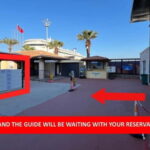
Cruise passengers meet at the exit gate of the immigration terminal of the cruise port with a board showing the OTTI Travel sign.
Can I get a full refund if I cancel?
Yes. You can cancel up to 24 hours in advance for a full refund.
If you want, tell me your cruise ship docking time and what kind of traveler you are (art/mosaics, architecture, religion, or daily life), and I’ll suggest how to use the time best inside Ephesus.