REVIEW · KUSADASI
Tailor-Made Private Ephesus Tour with Local Experiences
Book on Viator →Operated by OTTI Travel · Bookable on Viator
Ephesus gets less chaotic with a real guide. I like how this private day pairs a licensed English-speaking guide with skip-the-line tickets, so you spend more time looking at stones and less time waiting in lines. The route is also built for pacing: from the quiet mood of the Virgin Mary House up to the major Ephesus landmarks, you get enough time at each stop to take photos and actually absorb what you’re seeing.
One thing to plan for: entrance fees stack up fast, especially for Ephesus Ancient City, the Virgin Mary House, and the Terrace Houses. Add in a lot of walking (and some steep ground at the mountain-side sites), and you’ll want solid shoes and a sensible attitude toward a long day.
In This Review
- Key highlights to know before you go
- What makes this a strong private Ephesus day trip
- Price and the real cost: $75 plus entrance fees
- Cruise and hotel pickup: meeting points that reduce stress
- House of the Virgin Mary: Roman stones, mountain calm
- Ephesus Ancient City: the big stage for architecture and power
- State Agora and the Odeion: politics before commerce
- Curetes Street temples and Hercules Gate: the imperial walk
- Terrace Houses and Celsus Library: Roman home life meets a tomb-library
- Great Theatre and Basilica of St John: public life and Christian memory
- Temple of Artemis: the foundations of a Seven Wonder
- Ottoman stop and a free Kusadasi bazaar hour
- Lunch, carpet weaving, and the fine line between culture and sales
- Pace, crowd timing, and how the day avoids feeling rushed
- Who this tour fits best (and who should think twice)
- Should you book this private Ephesus tour?
- FAQ
- What’s included in the price?
- What entrance fees are not included?
- How long is the tour?
- Is this tour private?
- Do cruise passengers get pickup?
- Do hotel guests get pickup too?
- Is the tour offered in English?
- Is there an optional add-on?
- Can I cancel for a full refund?
Key highlights to know before you go
- Private and flexible: This is just your group, and your guide adjusts the pace so you don’t feel herded.
- Skip-the-line handled: You’re set up to avoid long ticket lines once you arrive at major sites.
- Aerial-view quiet at Bulbul Mountain: The Virgin Mary House experience is calmer than the main ruins loop.
- More than the big-name ruins: You also hit the State Agora, Odeion, and several temple and gate stops on Curetes Street.
- Lunch with a Turkish twist: The included meal is tied to a local setting connected to a carpet weaving school demonstration.
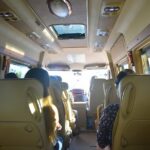
- Comfort-first transport: A brand new A/C Mercedes Vito with a private driver makes the commute between hills and sites much easier.
What makes this a strong private Ephesus day trip
If your goal is to see Ephesus without turning your vacation into a sprint, this tour matches that vibe. It runs about 6 to 8 hours and moves in a logical order: start with the Virgin Mary House up on Bulbul Mountain, then work your way through Ephesus, finish with Artemis, and end with Ottoman-era architecture and time in the Kusadasi Bazaar.
A big part of the value is the way the guide can steer the day. Across the guide names you might encounter through this operator (people like Gökçe, Tas, Nagi, Asli, Selin, Tailan, and others), the common thread is practical hosting: clear explanations, good timing, and a willingness to match your interests and energy level.
And yes, it’s still a lot of ruins. But the day doesn’t feel like a checkbox list. It feels like a guided walk with stops that matter.
Other private Ephesus tours we've reviewed in Kusadasi

Price and the real cost: $75 plus entrance fees
The headline price is $75 per person. On paper, that’s pretty reasonable for a full-day private outing because it includes a licensed English-speaking guide, pickup and drop-off (cruise guests included), a brand new A/C Mercedes Vito, and lunch.
Here’s the catch: most major entrances are not included. Based on the provided fees, you should budget roughly:
- Ephesus Ancient City: €40.00 per person
- Virgin Mary House: €18.00 per person
- Terrace Houses: €15.00 per person
- Basilica of St. John: €6.00 per person
- Temple of Artemis: free
- Okuz Mehmet Pasa KervansarayI: free
- Kusadasi Bazaar: free
So you’re paying more than $75 once you add site tickets. Still, the “value” part is that you’re not just buying access—you’re buying time saved, interpretation, and transport for a long route.
If you’re the type who likes to linger, take photos, and ask questions, you’ll feel like you got your money’s worth. If you’re going only for a couple of sights, the ticket math might hurt.
Cruise and hotel pickup: meeting points that reduce stress
This is where many tours fall apart. This one is more organized.
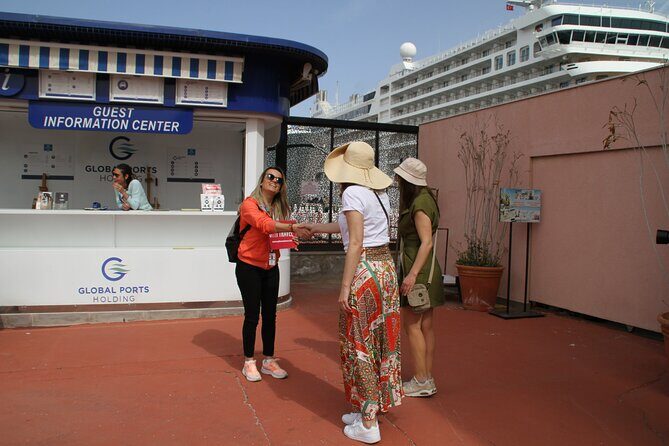
For cruise passengers, you meet at the exit gate of the Immigration Terminal of the Kusadasi cruise port, with a board showing OTTI Travel. For Kusadasi hotels, pickup is arranged via your hotel reception. For Izmir Airport (ADB), the meeting point is the exit gate of the Domestic Terminal with an OTTI Travel sign.
Also useful: you get mobile ticket details and a confirmation at booking. That reduces the usual day-of confusion, especially when multiple tour groups are floating around the port.
Transport is handled with a private driver in a brand new A/C Mercedes Vito, which is a practical win in a day spent climbing in and out of vehicles between hills.
House of the Virgin Mary: Roman stones, mountain calm
Your first big stop is the House of the Virgin Mary. It sits on the top of the Bulbul Mountain, about 9 km ahead of Ephesus. The setting is part of the experience: tucked into greenery, it feels removed from the hectic ancient-city circuit.
Plan for about 45 minutes here. The structure is described as a typical Roman-style stone building, later connected to a church built in the 4th century AD. Inside, the layout you’ll hear about includes spaces like:
- an anteroom area (the place associated with candles offered today)
- a praying room linked to the Christian church area
- a room with a fireplace, connected to a Muslim chapel concept
One practical consideration: the house is on hillside terrain. The tour is designed for visitors with moderate physical fitness, but you should expect uneven steps and some steep ground. If you have hip, knee, or mobility limits, build in extra time and tell your guide early. This operator’s guides have shown flexibility with mobility needs, including arranging easier movement options when required.
Ephesus Ancient City: the big stage for architecture and power
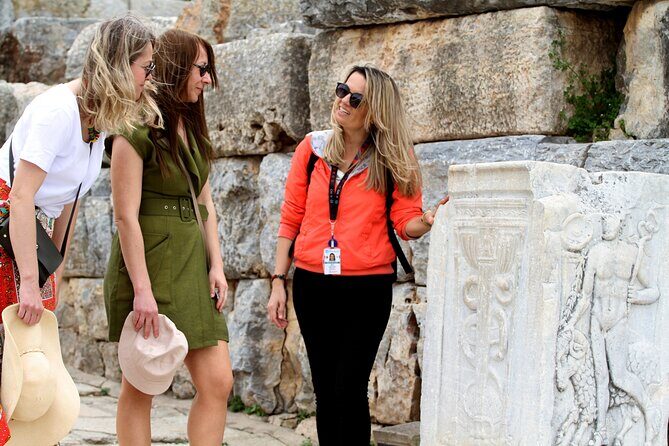
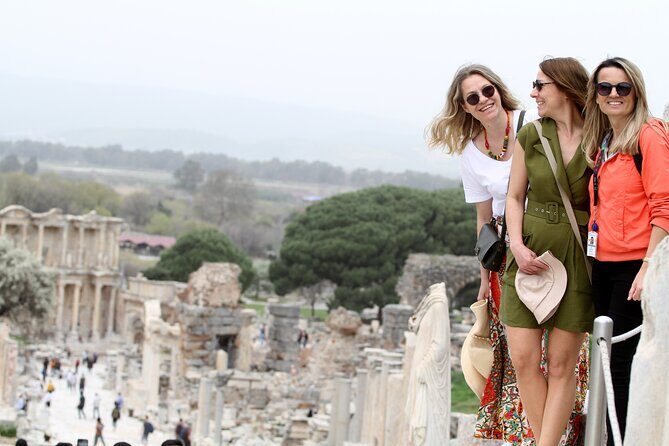
Then you step into the Ephesus Ancient City area itself, with about 1 hour 30 minutes allocated. This is the main reason most people book—so how you experience it matters.
Here’s what the day focuses on, in plain terms:
- major landmarks (like the Library of Celsus and the Great Theatre)
- the way Ephesus grew into one of the eastern Roman Empire’s largest cities
- how Greek and Roman eras overlap in the ruins you still see
This city’s origin story matters. The route references the Artemesium (temple of Artemis) dating to 356 BC, and later Ephesus becoming a major Roman-period power. The tour also frames what you’re looking at beyond “cool old buildings,” tying it to civic life.
Entrance costs are extra here (the €40.00 per person ticket), so it’s worth treating this segment as the heart of your day rather than a quick photo stop.
Other VIP & customised tours we've reviewed in Kusadasi
State Agora and the Odeion: politics before commerce
Inside the Ephesus circuit, you hit two stops that many standard tours race past.
State Agora takes about 15 minutes. This is described as an agora built in the Roman period (first century BC), but it wasn’t mainly for buying and selling. It served governmental and business discussions—more “civic meeting space” than market square.
You’ll also hear about what excavations uncovered nearby: graves from earlier periods (7th to 6th centuries BC) and the idea that this portion functioned as a necropolis in the archaic period. A water reservoir corner and the link to the Pollio Aqueduct also come up, including the idea that the aqueduct remains can be seen about 5 km away.
Next is the Odeion, again about 15 minutes. This compact venue had a dual role:
- as a Bouleuterion (senate-style meetings)
- as an Odeum for performances
It’s built in the 2nd century AD by Publius Vedius Antonius and Flavia Paiana, with a capacity noted at about 1500 spectators. The tour frames how civic life split across spaces—public parliament-like talk in the larger theatre, and specific council meetings here.
If you like the “how people actually lived” angle, these two stops are a payoff.
Curetes Street temples and Hercules Gate: the imperial walk
Ephesus has a “main drag” feel once you’re on Curetes Street, where you’ll see a string of emperor-era architecture.
The tour includes:
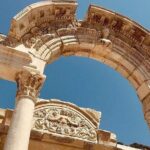
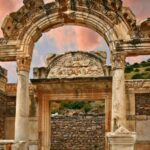
- Temple of Hadrian (~10 minutes): four Corinthian columns with a curved arch and a relief linked to Tyche. It also points out what’s known about the emperors’ statue bases from later periods.
- Temple of Domitian (~15 minutes): a pro-style emperor temple on a large terrace with vaulted foundations. The description includes the number of columns in the plan and the presence of a u-shaped altar later displayed in the Izmir Museum.
Then you reach Hercules Gate, positioned toward the end of Curetes Street. It’s called that because of reliefs tied to Hercules. The notes mention that only two sides of the columns remain today, and the gate’s placement helped narrow street access so vehicles couldn’t pass—an easy detail to picture when you hear how pedestrian space became more important by the 4th century.
This whole stretch works well if you like Roman symbolism. It’s also a good “rest from museum walls” moment since these are more open-air viewing areas.
Terrace Houses and Celsus Library: Roman home life meets a tomb-library
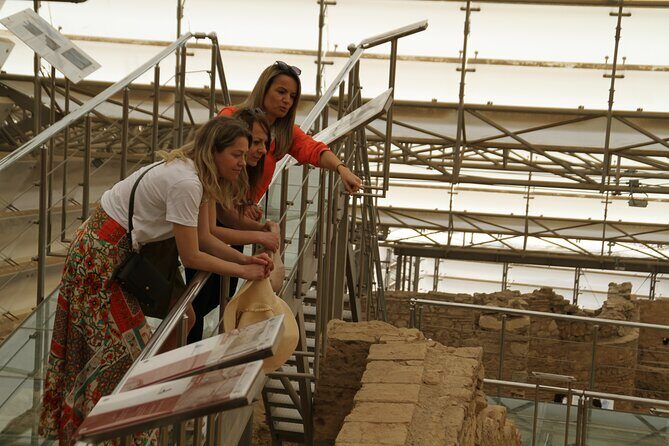
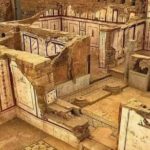
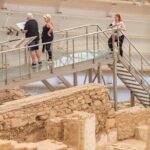
The Terrace Houses are a standout stop if you want more than monumental public buildings. You’ll spend about 30 minutes here.
They sit on a hill opposite Hadrian Temple and are often called the homes of wealthy Romans. The tour description highlights:
- the Hippodamian plan idea (roads at right angles)
- six residential units on three terraces
- long use—starting around the 1st century BC and lasting as residences until roughly the 7th century AD
- protective roofing and conserved mosaics and frescos
- two houses open as a museum area
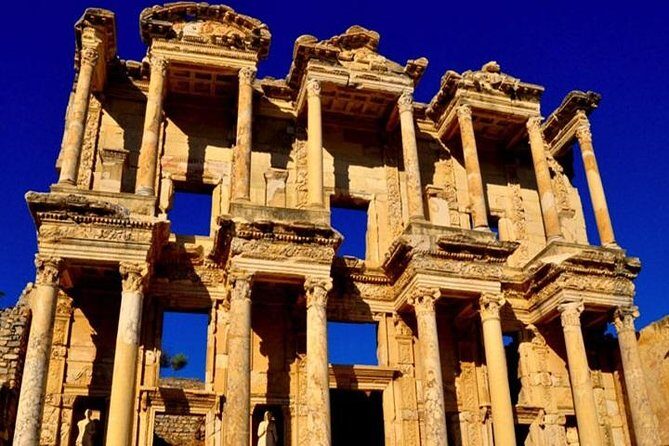
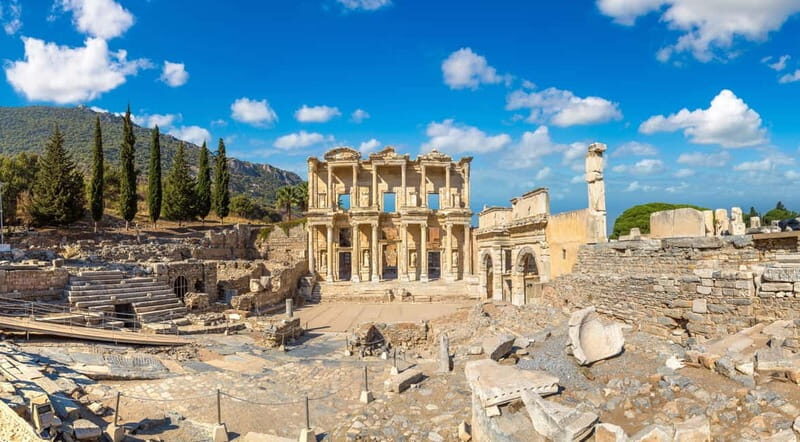
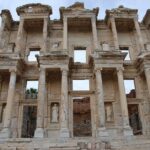
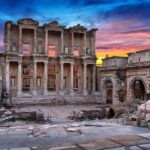
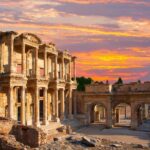
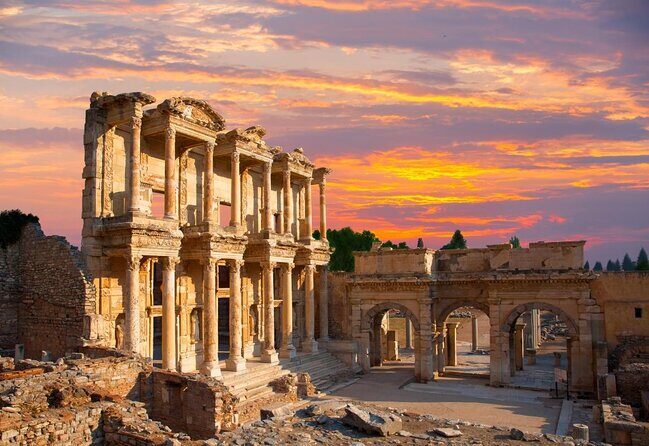
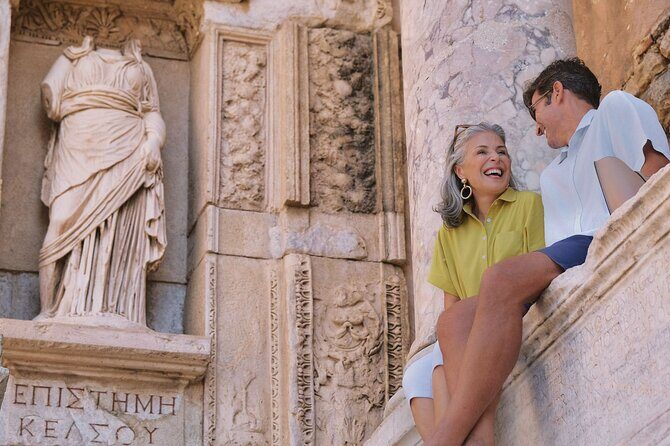
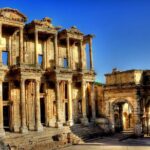
Then comes the Library of Celsus for about 15 minutes. Even if you’ve seen pictures, it’s worth being there in person because the building is both a library and a monumental tomb. It was built in 117 AD as the tomb for Gaius Julius Celsus Polemaeanus, with the grave described as beneath the ground floor and a statue of Athena referenced above.
You’ll also hear about the scroll storage approach—niches in the walls and double-wall design to manage temperature and humidity. The capacity is noted as more than 12,000 scrolls. That’s the kind of detail that makes a ruin feel like a system, not just a shell.
Great Theatre and Basilica of St John: public life and Christian memory
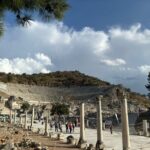
Next is the Ephesus Ancient Greek Theatre, about 15 minutes. It’s described as the most magnificent structure in Ephesus, first built in the Hellenistic period (3rd century BC) and later enlarged under the Romans.
The numbers matter here:
- capacity noted at 25,000 seats
- 66 rows divided by walkways into three sections
- usage beyond entertainment—religious, political, philosophical discussions, plus gladiator and animal fights
After the theatre, you’ll move to the Basilica of St. John for about 30 minutes. This is a very different tone from the theatre. The tour frames tradition around the evangelist St. John spending his last years near Ephesus and being buried on the southern slope of Ayosolug Hill. It also connects to the idea of a small chapel built in the 4th century and later basilica changes during Emperor Justinian’s period (527–565 AD).
There’s also a timeline explanation tying early Christian persecution and the writing of the Gospel and Revelation to the Ephesus region traditions. Even if you don’t care about religious history in a formal way, it adds a human layer to the ruins.
Entrance fee here is extra: €6.00 per person.
Temple of Artemis: the foundations of a Seven Wonder
The tour ends the major Ephesus arc with the Temple of Artemis. You’ll have about 25 minutes. It’s free to visit here, based on the provided info.
The temple itself is not standing anymore—you’ll see the ruins and foundations. The site is linked to the ancient Seven Wonders idea and described as a marble temple with sculptured column capitals and shafts. The explanation also notes the location shifted over centuries, turning into a swampy area.
A helpful detail to keep in mind: you’re not looking at a complete building. You’re looking at the footprint and the scale implied by what remains. Your guide’s storytelling is what turns “foundations” into something you can picture.
Ottoman stop and a free Kusadasi bazaar hour
After Artemis, the tour includes an Ottoman-era break at Okuz Mehmet Pasa KervansarayI (about 10 minutes). This caravanserai was commissioned by Öküz Mehmed Pasha, and constructed between 1615 and 1618. It was built like a fortress and used as a customshouse. Renovation took place starting in 1954 and continued until 1966.
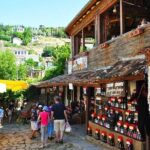
Then comes free time in the Kusadasi Bazaar (about 1 hour). This is your chance to browse Turkish goods, leather items, sweets, knick-knacks, and yes, the famously available watch-and-clothing knockoffs. It’s also a practical wrap-up time after a long day of ancient stones.
Lunch, carpet weaving, and the fine line between culture and sales
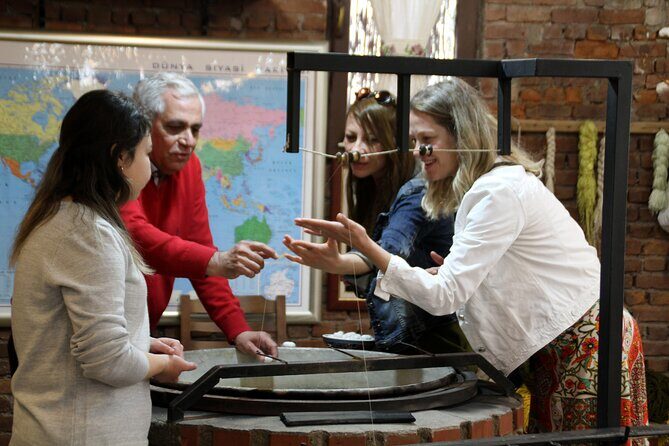
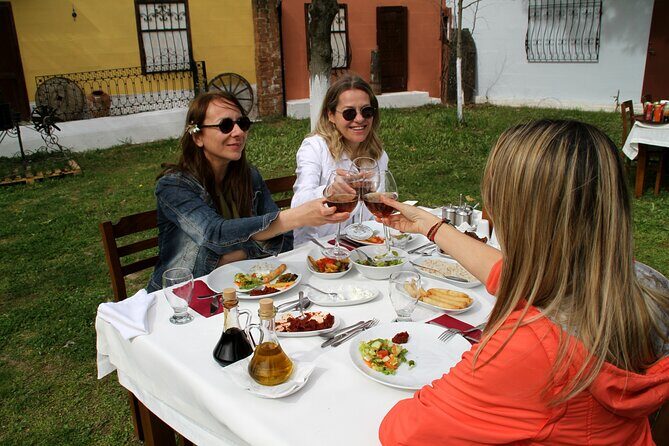
Lunch is included, and it’s a real part of the experience rather than a random stop. The day often includes a meal at a restaurant connected to a local carpet weaving school setup, with a short demonstration tied to how silk production works and how carpets are made.
Here’s the honest take: you’ll likely be shown the process and the showroom side of the craft. In some cases, it feels like a gentle cultural stop. In other cases, it can feel more like a sales push. The difference often comes down to your guide’s approach and how you engage.
The good news is that buying is not required. You can appreciate the craft, ask questions, and skip the purchase decision without turning it into an argument.
If you’re worried about being pressured, tell your guide upfront. Many guides in this program are used to handling that conversation.
Pace, crowd timing, and how the day avoids feeling rushed
The tour’s big strength is pacing control. Guides operating in this program have a track record of adjusting schedules so you don’t feel rushed. There’s also consistent attention to crowd timing, including getting you to certain places when the flow of people is lighter.
One small detail that matters in real life: Ephesus has stone and marble surfaces, and pacing is safer when you’re careful. One guide is noted for checking in about footing, since marble pavers can get slippery.
So if you’re the kind of person who wants breathing room for photos and questions, you’ll probably like how the day is run.
Who this tour fits best (and who should think twice)
This is a great match if you:
- want a private, guide-led day across major Ephesus sights
- care about both Roman ruins and Christian sites like the Basilica of St. John and the Virgin Mary House
- value flexibility—being able to spend longer at the parts you love
- prefer comfort between stops (A/C van, private driver, pickup/drop-off)
Think twice if you:
- don’t want to pay additional entrance fees for multiple sites
- have mobility limits and need to minimize stairs and steep walking
- only want a quick highlight tour rather than a structured day that includes Agora, Odeion, temples, and theatre
Bring your best walking shoes. Bring water if you’re able. And pace your expectations: this is a “big day” whether you love ruins or just tolerate them.
Should you book this private Ephesus tour?
I’d book it if you want a guided Ephesus day that feels personal and organized. The private format, professional English guide, A/C transport, and included lunch make a long route much more manageable. You also get more than the headline sites—stops like State Agora and Odeion add real texture.
I would not book it if entrance fees will be a deal-breaker for your budget, or if you’re hoping for a very low-walking, chill experience. The Virgin Mary House and Ephesus terrain mean you’ll be on your feet a lot.
If you’re planning ahead, note that this tour is commonly booked well in advance (about 63 days on average), so snagging a spot early is smart.
FAQ
What’s included in the price?
You get a professional licensed English-speaking guide, pickup and drop-off for cruise guests, guaranteed skip-the-line tickets, transportation in a brand new A/C Mercedes Vito with a private driver, and a delicious local lunch.
What entrance fees are not included?
Entrance fees are not included for Ephesus Ancient City (€40.00), the Virgin Mary House (€18.00), the Terrace Houses (€15.00), and the St John Basilica (€6.00). The Temple of Artemis, Okuz Mehmet Pasa KervansarayI, and the Kusadasi Bazaar are listed as free.
How long is the tour?
It’s listed as 6 to 8 hours (approx.), with stop durations ranging from 10 minutes to about 1 hour and 30 minutes for Ephesus Ancient City.
Is this tour private?
Yes. It’s private, so only your group participates.
Do cruise passengers get pickup?
Yes. For cruise passengers, the meeting point is the exit gate of the Immigration Terminal at the Kusadasi cruise port, with an OTTI Travel sign.
Do hotel guests get pickup too?
Yes. For pickups from Kusadasi hotels, the guide meets you at the hotel reception.
Is the tour offered in English?
Yes, it’s offered in English.
Is there an optional add-on?
Yes. A stop to Siringe Village is offered for $50.00 per booking.
Can I cancel for a full refund?
Yes. Free cancellation is available up to 24 hours in advance of the experience start time for a full refund. Changes made less than 24 hours before the start time are not accepted.